About the Church
The Church of St Dominic in Palėvenė is one of the finest and most valuable sacred monuments in Lithuania. This church, founded in the 17th century, stands in a picturesque location, near the right bank of the River Lėvuo, and is an interesting object of architecture and history.
The church's founder was Mykolas Laurynas Počobutas, who laid the first foundations of this building in 1671. Thanks to him and his wife, Marijona Siesickaitė, on 13 November 1676 the Bishop of Vilnius, Steponas Mikalojus Pacas, and the Sejm of the Polish–Lithuanian Commonwealth confirmed the deed of foundation. This is regarded as the official date of the Dominicans' establishment in Palėvenė.
The church's architectural ensemble is unique and represents a combination of Baroque and Neoclassicist styles. The building has a cross plan with a three-sided apse, and inside, three aisles with barrel vaults. The most important feature of the interior is eight late Baroque and Rococo altars, which form a unified composition together with a combined confessional and pulpit. The decoration and details of the altars, such as cartouches bearing the founders' coats of arms, attract numerous art lovers and researchers.
One of the most striking works in this church is the altar of the "Chapel of Christ's Passion", with its Crucifix renowned for miracles. Historical sources mention that it is one of the most impressive 17th-century works depicting the Saviour's Passion.
Over its long history the church suffered various upheavals and changes. In the early 18th century rebuilding work began following the devastation caused by war and plague. In 1725 its tower was finally completed, and the tower rising above the main facade became an important architectural feature. Additional chapels were later added, further enriching the church's architectural composition.
In the first half of the 19th century the Dominicans of Palėvenė constantly maintained and cared for the church and its adjoining buildings. Even during the repression of the tsarist authorities, when in 1865 the monastery was closed and the monks moved elsewhere, the parish did not cease its activity. The church continued to serve as a spiritual centre, where local residents were buried and religious rites and events took place.
In the 20th century the church was likewise actively maintained and renovated. In 1948, during the Soviet period, an inventory of the church's property was drawn up, and after a fire broke out in 1955 the church's roof was restored on the initiative of the parish priest Pranciškus Masilionis. In 1988, marking the Year of the Blessed Virgin Mary, a wayside shrine pillar was erected in the churchyard, and in 1993 a memorial plaque was unveiled marking the birth anniversary of the local-born Laurynas Stuoka-Gucevičius.
Since 1992 the building ensemble of the Dominican monastery of Palėvenė has been entered in the Register of Cultural Property, and intensive restoration work began in 2005. This reflects not only wide recognition of the church's historical and cultural value but also ongoing efforts to preserve this unique heritage for future generations.
The Church of St Dominic in Palėvenė is not only a spiritual centre for the local community but also a significant symbol of Lithuanian culture and history.
Gallery and Resources
Archive captions are shown in Lithuanian.
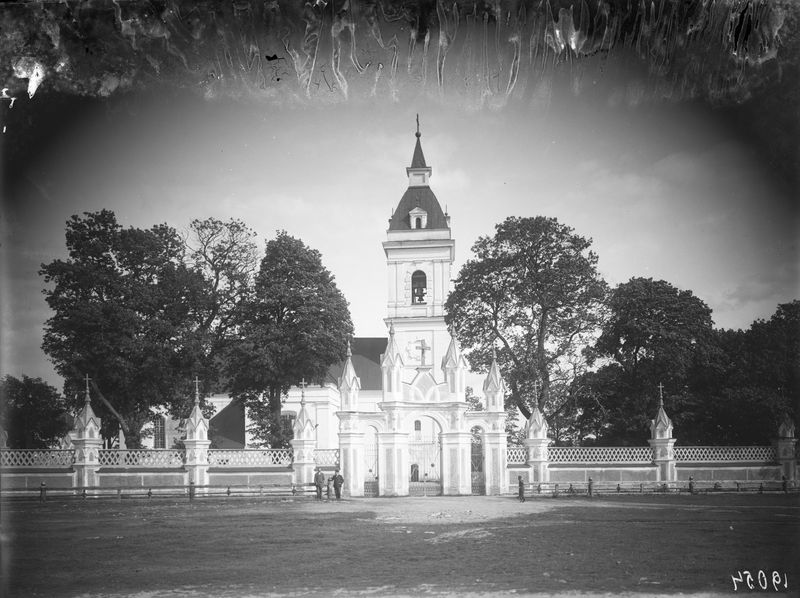
Palėvenės šv. Domininko bažnyčia.
Ši, baroko ir neoklasicizmo bruožų turinti bažnyčia, įrengta 1676 m. Pamatus jai padėjo Palėvenės dvaro savininkas bei Ukmergės žemės teismo teisėjas Mykolas Laurynas Počobutas. Šalia bažnyčios buvo įsteigtas Palėvenės dominikonų vienuolynas.
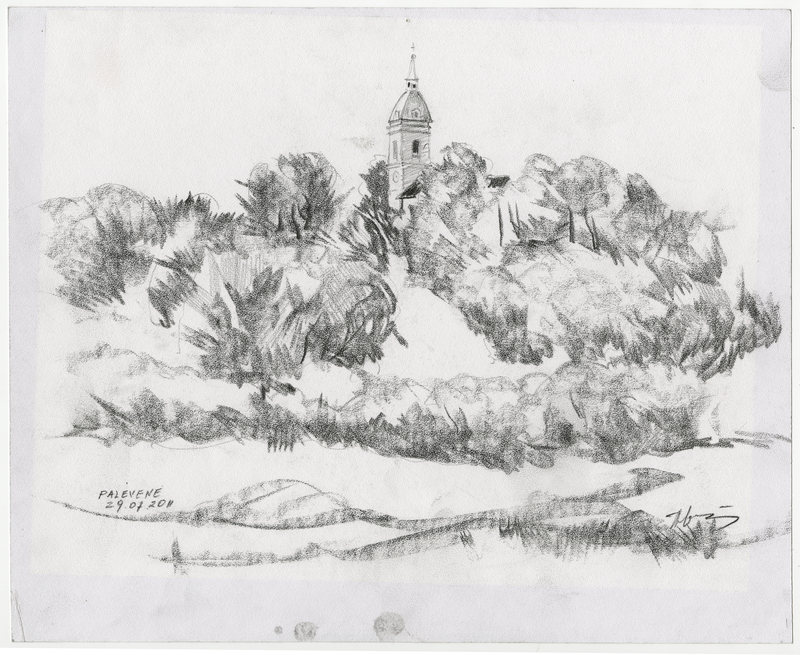
Kompozicijoje – Palėvenės Šv. Domininko bažnyčia nuo Lėvens slėnio.
Signuotas pieštuku averso apatinėje dalyje.