About the Church
The Church of the Holy Trinity at Šaukėnai is not only a religious but also a historical gem, located in the small town of Šaukėnai, Kelmė district, on the right bank of the Šona stream. It belongs to the Kelmė Deanery of the Diocese of Šiauliai and is important to local residents both for its historical significance and for its architectural beauty.
The church's history begins with the local landowners Mikalojus and Margarita Šemeta, who built the first church around 1497. During the Reformation this church was handed over to the Reformed Church and remained in its hands until the start of the 17th century. Throughout its existence the Šaukėnai church was rebuilt several times: one of the new churches was erected in 1632, another in 1763.
Church activity was not limited to religious rites alone. From 1803 a parish school operated here, and from 1909 to 1914 a branch of the Lithuanian Catholic Temperance Society worked actively. Unfortunately, the church built before the First World War burned down during the Second World War.
In 1947 a new wooden, timber-framed church was built in Šaukėnai, but the present masonry church that we see today was erected as late as 1989. This rectangular-plan church is distinguished by two turrets and a stone fence with masonry arched gates, which are included in the register of protected cultural monuments. Such gates also became the model for the gates of the old Sasnava church, which stand at Rumšiškės, in the Lithuanian Open-Air Museum of Rural Life.
In the churchyard one can find an 18th-century bell tower and the burial site of the Gorski family, which was secretly moved from the Beržėnai chapel after the war. In addition, the churchyard gates are so significant that they even adorn the town's coat of arms. A Lourdes grotto also stands here, drawing pilgrims and tourists.
The Church of the Holy Trinity at Šaukėnai excellently illustrates how, over the centuries, not only architecture but also community life has changed. It is a place where history, faith and culture come together, offering the chance to sense the deep spirit of the past.
The church's history begins with the local landowners Mikalojus and Margarita Šemeta, who built the first church around 1497. During the Reformation this church was handed over to the Reformed Church and remained in its hands until the start of the 17th century. Throughout its existence the Šaukėnai church was rebuilt several times: one of the new churches was erected in 1632, another in 1763.
Church activity was not limited to religious rites alone. From 1803 a parish school operated here, and from 1909 to 1914 a branch of the Lithuanian Catholic Temperance Society worked actively. Unfortunately, the church built before the First World War burned down during the Second World War.
In 1947 a new wooden, timber-framed church was built in Šaukėnai, but the present masonry church that we see today was erected as late as 1989. This rectangular-plan church is distinguished by two turrets and a stone fence with masonry arched gates, which are included in the register of protected cultural monuments. Such gates also became the model for the gates of the old Sasnava church, which stand at Rumšiškės, in the Lithuanian Open-Air Museum of Rural Life.
In the churchyard one can find an 18th-century bell tower and the burial site of the Gorski family, which was secretly moved from the Beržėnai chapel after the war. In addition, the churchyard gates are so significant that they even adorn the town's coat of arms. A Lourdes grotto also stands here, drawing pilgrims and tourists.
The Church of the Holy Trinity at Šaukėnai excellently illustrates how, over the centuries, not only architecture but also community life has changed. It is a place where history, faith and culture come together, offering the chance to sense the deep spirit of the past.
Gallery and Resources
Archive captions are shown in Lithuanian.

Šaukėnai - miestelis Kelmės rajone, išsidėstęs prie kelio Kelmė - Kuršėnai. Šaukėnuose yra medinė Švč. Trejybės bažnyčia (nuo 1947, su barokiniais šventoriaus vartais, turinčiais kultūros paminklo statusą), medinė bažnyčios varpinė (XVIII a.), išlikęs Šaukėnų dvaras su parku. Šaukėnai pirmąkart minimi 1479, gavę prekybinę bei dviejų karčemų privilegiją (1499), oficialiai tapo miesteliu. Ši realistinio piešinio, minkštos, laisvos linijos kompozicija perteikia bendrą miestelio vaizdą..
Aprašė Irena Dobrovolskaitė.
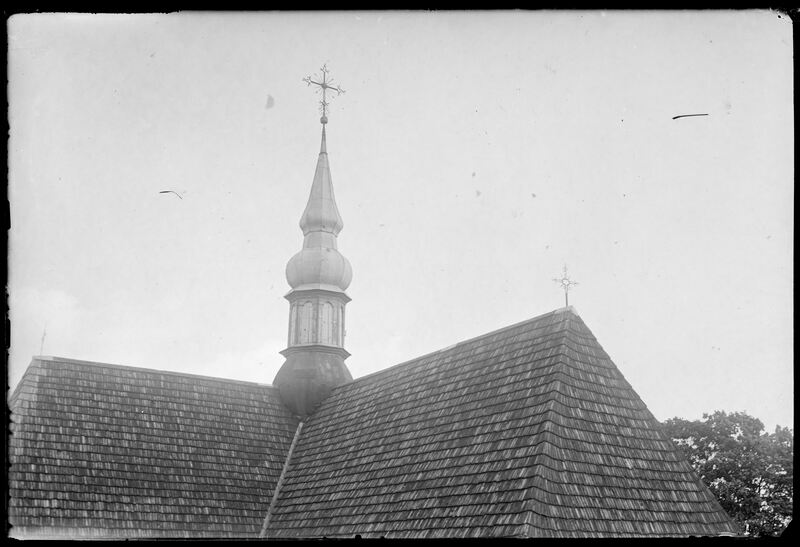
Negatyve įamžinta medinės Šaukėnų Švč. Trejybės bažnyčios bokštas, bažnyčia sudegė per Antrąjį Pasaulinį karą. Dabartinė mūro bažnyčia pastatyta 1989 m.
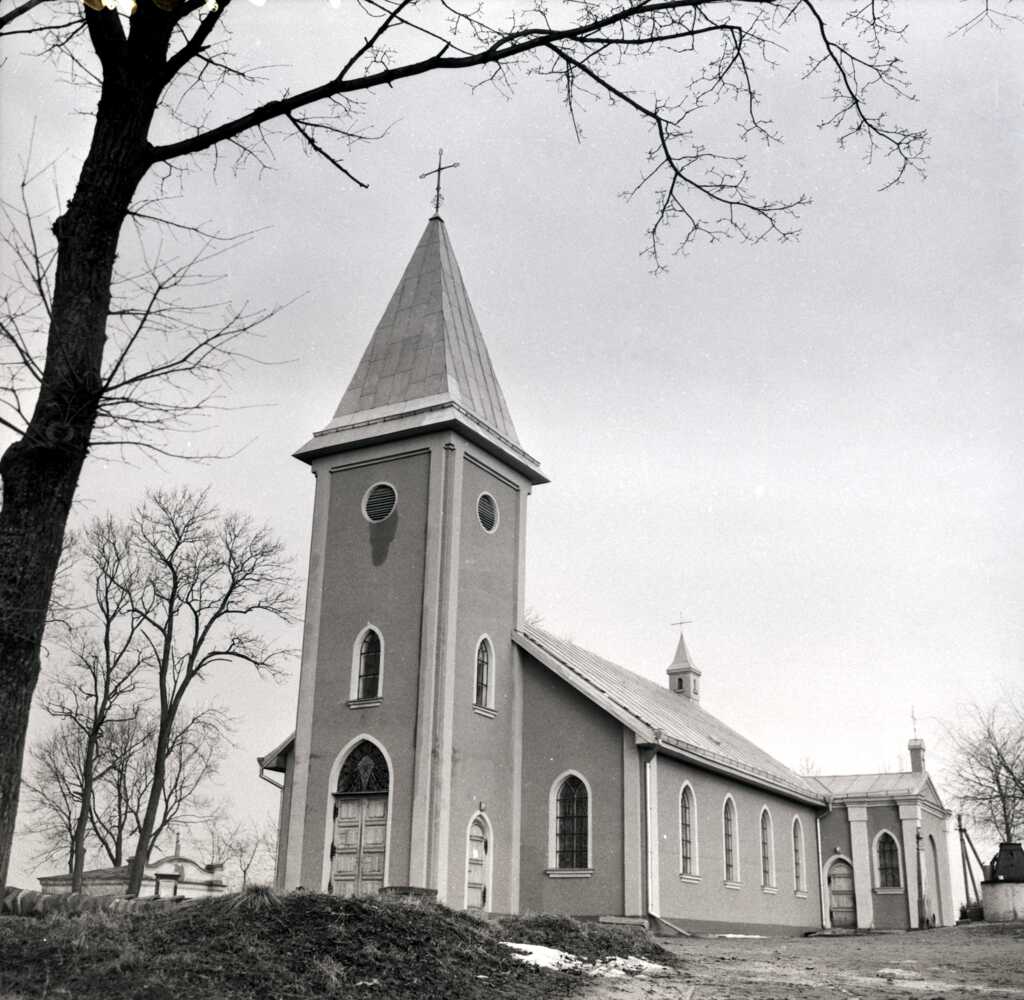
Šaukėnų bažnyčia.