About the Church
The Church of St Laurence in Videniškiai is one of those sacred and architectural monuments that reflect Lithuania's history and cultural heritage. Located in the village of Videniškiai, in Molėtai district, the church has a rich and interesting past worth knowing.
The church's origins go back to 1549, when the first wooden church was built. However, the present masonry church was begun in 1618 and completed in 1620. It was conceived as a centre for the cult of the Blessed Mykolas Giedraitis and as a mausoleum for the princely Giedraitis family. Ipolitas Žepnickis, who took an active part in the construction work, and Benediktas Kazimieras Rysinskis, a canon of Poznań cathedral, helped create a church that became a focal point not only for the clergy but also for the local community.
In 1631 a chapel with a crypt, where members of the Giedraitis family were buried, was added to the church. Unfortunately, the church suffered severely during the war of 1655–1661, but it was rebuilt and consecrated in 1684. This shows how important the building was to the local community and clergy.
Over time Videniškiai became a centre of the Lithuanian Canons Regular of Penance. The monastery next to the church played a significant role: it housed a parish school, an almshouse and a professional choir. After the monastery was closed in 1832, the church became a parish church, and the presbytery was established in the monastery building.
The church's architecture is in the Renaissance style. It has a rectangular plan, a semicircular apse, and a facade tower 42 metres high. The single-nave church with a chancel is striking for its interior. Here you will find 18th-century altars decorated with sculptures and paintings. The high altar of the Blessed Virgin Mary, the altar of St Laurence, the altar of Jesus Christ, and the altar of the Blessed Mykolas Giedraitis — all adorn this church and create a special atmosphere.
The collection of relief epitaphs deserves special attention, including an engraved tin epitaph for Stanislovas Sipaila and a granite epitaph for Martynas Marcelijus Giedraitis. The church also has an organ from the W. Biernacki workshop, which adds still more beauty and sound to this sacred building.
The Church of St Laurence in Videniškiai is not merely an architectural masterpiece; it bears witness to the twists of Lithuania's history, the importance of cultural heritage, and the spirit of the community. Every visit to this church allows one to sense the grandeur of the past and understand why such monuments are precious to our culture.
The church's origins go back to 1549, when the first wooden church was built. However, the present masonry church was begun in 1618 and completed in 1620. It was conceived as a centre for the cult of the Blessed Mykolas Giedraitis and as a mausoleum for the princely Giedraitis family. Ipolitas Žepnickis, who took an active part in the construction work, and Benediktas Kazimieras Rysinskis, a canon of Poznań cathedral, helped create a church that became a focal point not only for the clergy but also for the local community.
In 1631 a chapel with a crypt, where members of the Giedraitis family were buried, was added to the church. Unfortunately, the church suffered severely during the war of 1655–1661, but it was rebuilt and consecrated in 1684. This shows how important the building was to the local community and clergy.
Over time Videniškiai became a centre of the Lithuanian Canons Regular of Penance. The monastery next to the church played a significant role: it housed a parish school, an almshouse and a professional choir. After the monastery was closed in 1832, the church became a parish church, and the presbytery was established in the monastery building.
The church's architecture is in the Renaissance style. It has a rectangular plan, a semicircular apse, and a facade tower 42 metres high. The single-nave church with a chancel is striking for its interior. Here you will find 18th-century altars decorated with sculptures and paintings. The high altar of the Blessed Virgin Mary, the altar of St Laurence, the altar of Jesus Christ, and the altar of the Blessed Mykolas Giedraitis — all adorn this church and create a special atmosphere.
The collection of relief epitaphs deserves special attention, including an engraved tin epitaph for Stanislovas Sipaila and a granite epitaph for Martynas Marcelijus Giedraitis. The church also has an organ from the W. Biernacki workshop, which adds still more beauty and sound to this sacred building.
The Church of St Laurence in Videniškiai is not merely an architectural masterpiece; it bears witness to the twists of Lithuania's history, the importance of cultural heritage, and the spirit of the community. Every visit to this church allows one to sense the grandeur of the past and understand why such monuments are precious to our culture.
Gallery and Resources
Archive captions are shown in Lithuanian.
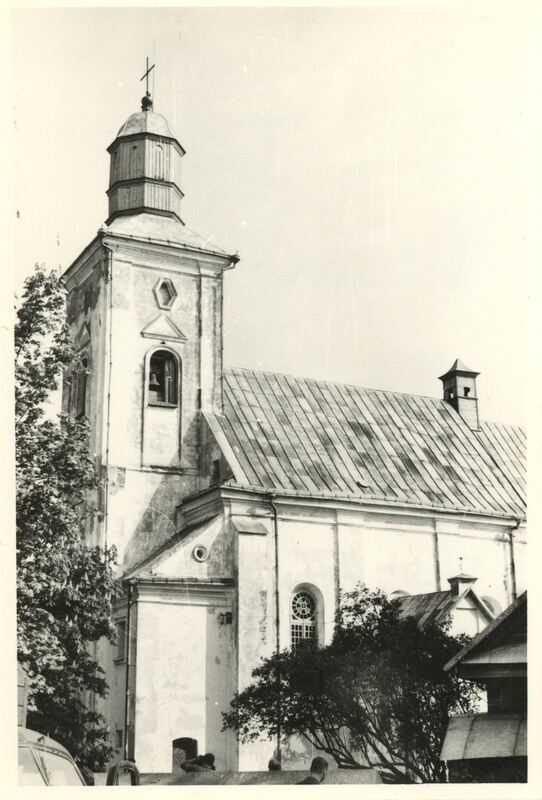
Videniškių Šv. Lauryno bažnyčia, pastatyta 1620 m. Renesansinių bruožų, mūrinė, vienbokštė. Videniškiai, 1960 m.

Videniškių Šv. Lauryno bažnyčia. Fotografijos aprašymas ant pasporto: „Videniškiai. Bažnyčia šv. Lauryno statyta 1618 m. Respubl. reikšmės architekt. paminklas. Prie bažnyčios 1618–1782 m veikė augustinų vienuolynas“.