About the Church
The Church of St Anthony of Padua in Žilinai: a living history and an architectural gem.
The Church of St Anthony of Padua in Žilinai is one of those small but exceptionally important sites of Lithuanian historical and cultural heritage. This wooden church, situated in the village of Žilinai in Varėna district, nestled against the pine forests, became the spiritual centre of the local community and is closely connected with the region's past.
Historical figures and events.
The first chapel on this site was built as far back as 1812, at which time it was the property of the manor of Žilinai. In 1862 this chapel was renovated, and in 1908 a branch of the Lithuanian Catholic Temperance Society began operating here – showing the active participation of local residents in social life.
The parish was established in 1924, when Kazimieras Meškėnas became the first parish priest. A few years later, in 1927, the present wooden church was built. After the Second World War the church was finally fitted out and decorated thanks to parish priests Česlovas Krivaitis and P. Barčinskas.
The church's history bears witness to the hard post-war years and tragic fates. Parish priest Petras Liutkus, who served in Žilinai from 1934 to 1944, was arrested in Kirdeikiai and died in Vorkuta in 1946. His successor, Donatas Linartas, also suffered repression under the Soviet regime – in 1946 he was sentenced to 10 years' imprisonment and died in Pravieniškės in 1950.
Architectural features.
The Church of St Anthony of Padua in Žilinai is notable for its unique architectural features. The rectangular building has two massive towers, between which rises a pediment, lending the church monumentality. Inside, the church boasts three naves of equal height, which create a sense of space and allow light to spread freely through the whole interior.
The timber construction and traditional folk architecture give the church a sense of cosiness and authenticity. Such buildings are living witnesses of our past, telling of times when communities cared about having their own spiritual shrine even in the most difficult moments.
In conclusion.
The Church of St Anthony of Padua in Žilinai not only reflects the religious and cultural features of the region, but also symbolises the strength and endurance of the local community. This wooden structure, surrounded by natural beauty, remains an important place of spiritual peace and a living book of history, in which are recorded centuries of faith, hope and the struggle for freedom.
The Church of St Anthony of Padua in Žilinai is one of those small but exceptionally important sites of Lithuanian historical and cultural heritage. This wooden church, situated in the village of Žilinai in Varėna district, nestled against the pine forests, became the spiritual centre of the local community and is closely connected with the region's past.
Historical figures and events.
The first chapel on this site was built as far back as 1812, at which time it was the property of the manor of Žilinai. In 1862 this chapel was renovated, and in 1908 a branch of the Lithuanian Catholic Temperance Society began operating here – showing the active participation of local residents in social life.
The parish was established in 1924, when Kazimieras Meškėnas became the first parish priest. A few years later, in 1927, the present wooden church was built. After the Second World War the church was finally fitted out and decorated thanks to parish priests Česlovas Krivaitis and P. Barčinskas.
The church's history bears witness to the hard post-war years and tragic fates. Parish priest Petras Liutkus, who served in Žilinai from 1934 to 1944, was arrested in Kirdeikiai and died in Vorkuta in 1946. His successor, Donatas Linartas, also suffered repression under the Soviet regime – in 1946 he was sentenced to 10 years' imprisonment and died in Pravieniškės in 1950.
Architectural features.
The Church of St Anthony of Padua in Žilinai is notable for its unique architectural features. The rectangular building has two massive towers, between which rises a pediment, lending the church monumentality. Inside, the church boasts three naves of equal height, which create a sense of space and allow light to spread freely through the whole interior.
The timber construction and traditional folk architecture give the church a sense of cosiness and authenticity. Such buildings are living witnesses of our past, telling of times when communities cared about having their own spiritual shrine even in the most difficult moments.
In conclusion.
The Church of St Anthony of Padua in Žilinai not only reflects the religious and cultural features of the region, but also symbolises the strength and endurance of the local community. This wooden structure, surrounded by natural beauty, remains an important place of spiritual peace and a living book of history, in which are recorded centuries of faith, hope and the struggle for freedom.
Gallery and Resources
Archive captions are shown in Lithuanian.
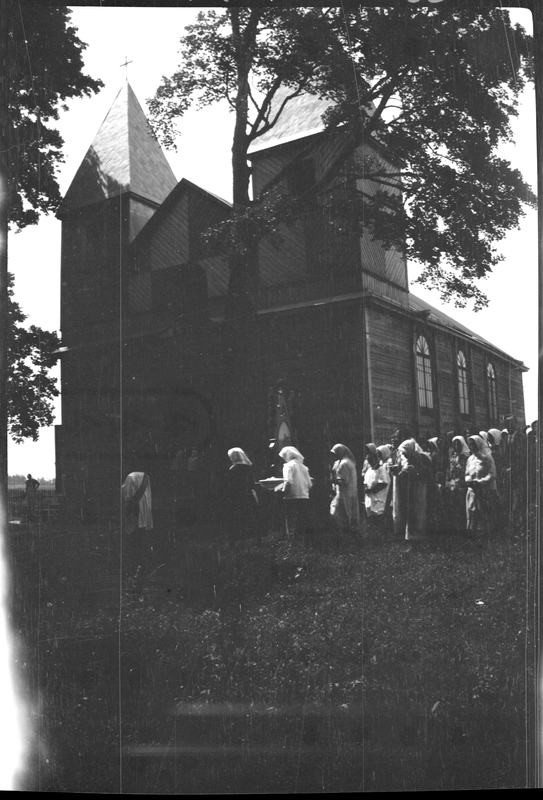
1927 m. pastatyta medinė Žilinų (dab. Varėnos raj.) Šv. Antano Paduviečio bažnyčia.