About the Church
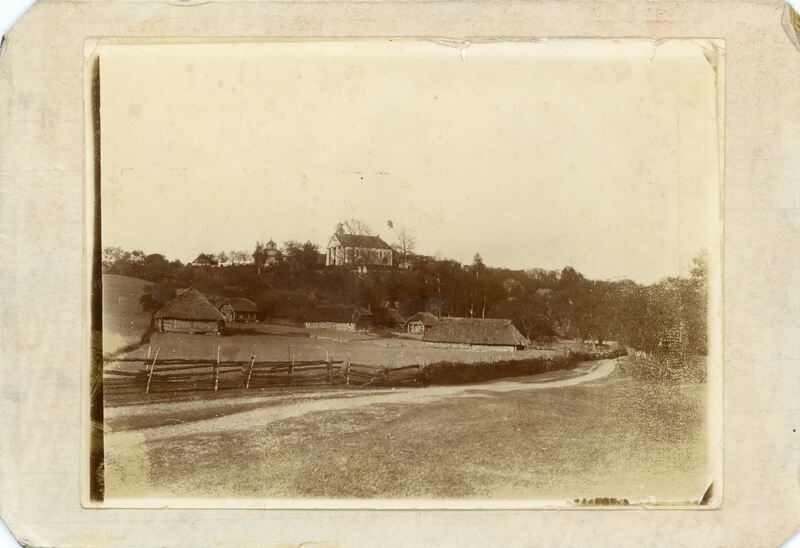
The Church of the Assumption of the Blessed Virgin Mary in Ugioniai stands in the strikingly beautiful Dubysa valley, in the village of Ugioniai, and is not only a building of religious significance but also a valuable example of architecture. The church was built in 1836 of stone masonry, with Classicist elements combined with vernacular features. It stands on old memorials that recall the rich history of this region.
History tells of the interesting origins of this church. The first church in Ugioniai belonged to the Evangelical Reformed community and was built as early as 1611. Soon afterwards, however, a Catholic chapel appeared, built around 1650 by the parish priest of Betygala and the faithful of the area. Later, in 1784, the judge Marcelinas Dirda built a wooden church and donated it to the parish. Unfortunately, this church burned down during the 1831 uprising and was rebuilt through the efforts of Marcelinas, the son of Benediktas Dirda. The new church, built using local fieldstone and fired brick, is distinguished by rectangular hewn stone blocks – leftovers from the unfinished construction of the Dubysa–Venta canal.
The church has had to endure quite a few misfortunes – in 1839 lightning set fire to much of the interior, and in 1958 a storm severely damaged the roof. During the Soviet period attempts were made to close the church, but the parishioners' persistence did not let this plan succeed.
Yet no less important than the church itself is the Ugioniai spring, regarded as miraculous. According to legend, on 28 November 1657 an image of the Mother of God appeared above this spring. This apparition attracted a great number of pilgrims who believed that the spring's water could heal the eyes. Although there was no official confirmation of the miracle, this did not stop the flow of pilgrims. A wooden chapel built over the spring became a holy place where people gathered to pray and draw the healing water.
The architecture of the Ugioniai church is highly distinctive. Its facade is adorned with a portico and a small turret, and the churchyard is surrounded by a low metal fence with masonry gates. Next to the apse stands the mausoleum of the Dirda family, above which stands a memorial monument bearing the marks of wartime bullets. By the churchyard gate stands a bell tower, holding a bronze bell cast in Kaunas at the Juozas Masalcas foundry in 1937.
The Church of the Assumption of the Blessed Virgin Mary in Ugioniai is not only a sacred place but also a testimony to times when the people's faith and culture shaped the Lithuanian landscape. It is a place where history, architecture and religion intertwine, offering a spiritual and aesthetic experience to every visitor.
History tells of the interesting origins of this church. The first church in Ugioniai belonged to the Evangelical Reformed community and was built as early as 1611. Soon afterwards, however, a Catholic chapel appeared, built around 1650 by the parish priest of Betygala and the faithful of the area. Later, in 1784, the judge Marcelinas Dirda built a wooden church and donated it to the parish. Unfortunately, this church burned down during the 1831 uprising and was rebuilt through the efforts of Marcelinas, the son of Benediktas Dirda. The new church, built using local fieldstone and fired brick, is distinguished by rectangular hewn stone blocks – leftovers from the unfinished construction of the Dubysa–Venta canal.
The church has had to endure quite a few misfortunes – in 1839 lightning set fire to much of the interior, and in 1958 a storm severely damaged the roof. During the Soviet period attempts were made to close the church, but the parishioners' persistence did not let this plan succeed.
Yet no less important than the church itself is the Ugioniai spring, regarded as miraculous. According to legend, on 28 November 1657 an image of the Mother of God appeared above this spring. This apparition attracted a great number of pilgrims who believed that the spring's water could heal the eyes. Although there was no official confirmation of the miracle, this did not stop the flow of pilgrims. A wooden chapel built over the spring became a holy place where people gathered to pray and draw the healing water.
The architecture of the Ugioniai church is highly distinctive. Its facade is adorned with a portico and a small turret, and the churchyard is surrounded by a low metal fence with masonry gates. Next to the apse stands the mausoleum of the Dirda family, above which stands a memorial monument bearing the marks of wartime bullets. By the churchyard gate stands a bell tower, holding a bronze bell cast in Kaunas at the Juozas Masalcas foundry in 1937.
The Church of the Assumption of the Blessed Virgin Mary in Ugioniai is not only a sacred place but also a testimony to times when the people's faith and culture shaped the Lithuanian landscape. It is a place where history, architecture and religion intertwine, offering a spiritual and aesthetic experience to every visitor.
Gallery and Resources