About the Church
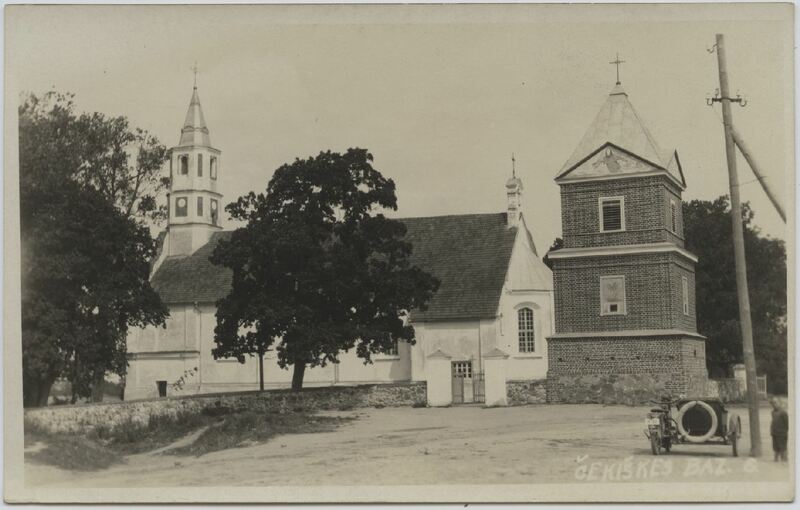
Čekiškė Holy Trinity Church has an impressive sacred history and architecture; the building stands in the small town of Čekiškė, beside the Beržtupys stream. The church, which has Classicist features, is not only a centre of religion but also an important part of the cultural and historical heritage.
The first church in Čekiškė was built as early as 1626 on the initiative of the landowner Jurgis Gedgaudas Mackevičius, who donated as much as 20 tithes of land for the priest's upkeep. In 1625 the village of Šedvydžiai, which at the time belonged to Kelmė district, was donated to the church. Unfortunately, the original church burned down in 1799. However, the local community did not falter, and as early as 1821 the present masonry church was built of brick, lengthened, and given a tower.
The church performed not only religious but also social functions. For example, in 1805 an almshouse-cum-hospital operated beside the church. In the 19th century, until 1863, a parish school operated here, educating local children. However, this period was also marked by tragic events: the Čekiškė vicar Aleksandras Vytartas, having read out an 1863 insurgents' proclamation, was shot for his courage and resistance.
In the early 20th century, from 1909 to 1914, a branch of the Lithuanian Catholic Temperance Society operated at the church, seeking to encourage people to live soberly and virtuously. In 1935 the church was rebuilt, and its architectural appearance became even more expressive.
Architecturally, Čekiškė Holy Trinity Church is basilical in form, with side annexes and a tall tower. Its interior is divided into three naves, and the churchyard fence is built of fieldstone masonry with metal-grille gates. A masonry bell tower stands in the corner of the churchyard, adding particular charm to the whole complex.
In 1996 a wayside shrine-pillar was erected in the churchyard in memory of Povilas Dovydaitis, a signatory of the 16 February Act. The church also takes pride in its organ by Aleksandras Mockevičius, which adds further spiritual and musical value to all the services.
Thus, Čekiškė Holy Trinity Church is an inseparable part of the small town of Čekiškė, linking past and present through its rich history, architecture and ongoing community activities.
The first church in Čekiškė was built as early as 1626 on the initiative of the landowner Jurgis Gedgaudas Mackevičius, who donated as much as 20 tithes of land for the priest's upkeep. In 1625 the village of Šedvydžiai, which at the time belonged to Kelmė district, was donated to the church. Unfortunately, the original church burned down in 1799. However, the local community did not falter, and as early as 1821 the present masonry church was built of brick, lengthened, and given a tower.
The church performed not only religious but also social functions. For example, in 1805 an almshouse-cum-hospital operated beside the church. In the 19th century, until 1863, a parish school operated here, educating local children. However, this period was also marked by tragic events: the Čekiškė vicar Aleksandras Vytartas, having read out an 1863 insurgents' proclamation, was shot for his courage and resistance.
In the early 20th century, from 1909 to 1914, a branch of the Lithuanian Catholic Temperance Society operated at the church, seeking to encourage people to live soberly and virtuously. In 1935 the church was rebuilt, and its architectural appearance became even more expressive.
Architecturally, Čekiškė Holy Trinity Church is basilical in form, with side annexes and a tall tower. Its interior is divided into three naves, and the churchyard fence is built of fieldstone masonry with metal-grille gates. A masonry bell tower stands in the corner of the churchyard, adding particular charm to the whole complex.
In 1996 a wayside shrine-pillar was erected in the churchyard in memory of Povilas Dovydaitis, a signatory of the 16 February Act. The church also takes pride in its organ by Aleksandras Mockevičius, which adds further spiritual and musical value to all the services.
Thus, Čekiškė Holy Trinity Church is an inseparable part of the small town of Čekiškė, linking past and present through its rich history, architecture and ongoing community activities.
Gallery and Resources
Archive captions are shown in Lithuanian.
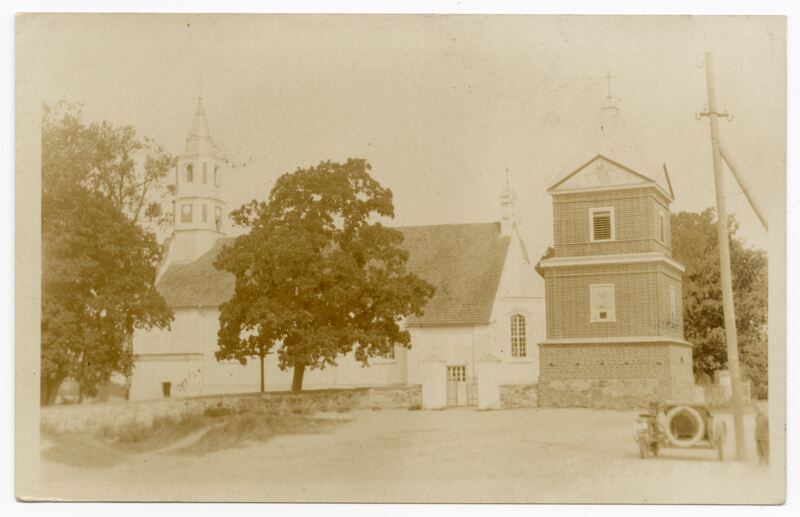
Nuotrauka „Čekiškės Švč. Trejybės bažnyčia ir varpinė “; nežinomas fotografas; fotografuota iki 1930 m. Nuotraukoje įamžintas šoninis bažnyčios fasadas ir varpinė. Bažnyčios fasadą centre užstoja medis. Apatiniame dešiniajame kampe stovi triratė motorinė transporto priemonė. Fotografijos reversas atvirkščias aversui. Apačioje ranka grafito pieštuku parašyta – „Čekiškė, Kauno raj. iki 1930 m.“. Gali būti, kad fotografas yra Kazys Lukšys, nes braižas ir fotografinis popierius toks pats kaip ir kitų dviejų tuo pačiu metu gautų fotografijų (F 1327; F 1328) ant kurių yra fotografo antspaudai su rekvizitais.