About the Church
Onuškis St Michael the Archangel Church is a distinctive church, located in the small village of Onuškis near the Latvian border. It is one of the oldest wooden churches in Rokiškis district, built in 1774 in the late Baroque style.
The church's history begins in the 17th century. The first church here was raised in 1674, and the very next year it was furnished with a bell. From 1680 registers began to be kept, recording the events of parish life. Later, in 1698, land was donated to the church, which was temporarily seized by the Chominskis family. By 1772 the first church was already in a dangerous state of disrepair, so it was decided to rebuild it.
The new wooden church was built by Ona and Konstantinas Chominskis in 1774. This new church became not only a spiritual centre but also an important place for the community. The parish priest Petras Dočkus concerned himself not only with the construction of the church but also with the social welfare of his parishioners — he set up an almshouse and put the farm buildings in order.
The long-serving parish priest Juozas Čuvinskas, who served in Onuškis from 1907 to 1933, carried out very important work: he repaired the church, consolidated its lands into a single 41-hectare plot, and founded the "Laimė" cooperative. Through his efforts a home for the elderly was set up, and in 1921 the church roof was re-covered. Sadly, in the mid-20th century, in 1949, another parish priest, Leonardas Tamošauskas, was arrested and sentenced to ten years' imprisonment.
Architecturally, this church is unique for its construction. It was built without any piers or buttresses, using only wooden pegs and joints, with no iron. The church has a cruciform plan, two towers and three altars, and on the high altar a life-size sculpture of the Crucified Christ draws particular attention.
Sadly, this historic church is now in a dangerous state of disrepair. Although heritage conservators have begun preparing documents for restoration work, the funds required amount to around two million litas. Today's visitors can not only see the church's fine architecture but also sense its deep historical roots, which link several generations and bear witness to the strength and spirituality of the local community.
The church's history begins in the 17th century. The first church here was raised in 1674, and the very next year it was furnished with a bell. From 1680 registers began to be kept, recording the events of parish life. Later, in 1698, land was donated to the church, which was temporarily seized by the Chominskis family. By 1772 the first church was already in a dangerous state of disrepair, so it was decided to rebuild it.
The new wooden church was built by Ona and Konstantinas Chominskis in 1774. This new church became not only a spiritual centre but also an important place for the community. The parish priest Petras Dočkus concerned himself not only with the construction of the church but also with the social welfare of his parishioners — he set up an almshouse and put the farm buildings in order.
The long-serving parish priest Juozas Čuvinskas, who served in Onuškis from 1907 to 1933, carried out very important work: he repaired the church, consolidated its lands into a single 41-hectare plot, and founded the "Laimė" cooperative. Through his efforts a home for the elderly was set up, and in 1921 the church roof was re-covered. Sadly, in the mid-20th century, in 1949, another parish priest, Leonardas Tamošauskas, was arrested and sentenced to ten years' imprisonment.
Architecturally, this church is unique for its construction. It was built without any piers or buttresses, using only wooden pegs and joints, with no iron. The church has a cruciform plan, two towers and three altars, and on the high altar a life-size sculpture of the Crucified Christ draws particular attention.
Sadly, this historic church is now in a dangerous state of disrepair. Although heritage conservators have begun preparing documents for restoration work, the funds required amount to around two million litas. Today's visitors can not only see the church's fine architecture but also sense its deep historical roots, which link several generations and bear witness to the strength and spirituality of the local community.
Gallery and Resources
Archive captions are shown in Lithuanian.
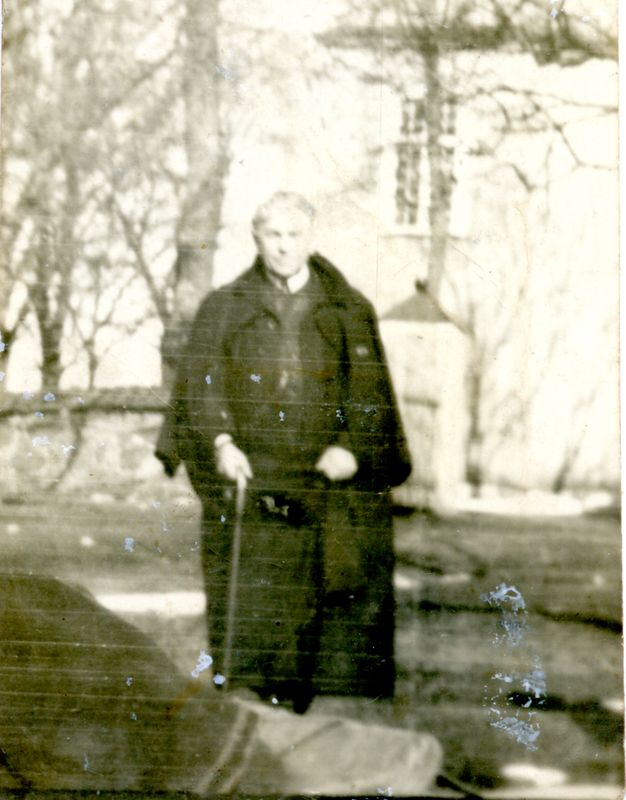
Ilgametis Onuškio Šv. arkangelo Mykolo klebonas Juozas Čuvinskas (Onuškyje klebonavo 1907-1933 m.; čia ir palaidotas) 1908 m. kapitališkai suremontavo bažnyčią, sujungė jos žemes į 41 ha sklypą, įsteigė „Laimės" kooperatyvą. Klebono rūpesčiu 1920 m. įsteigta senelių prieglauda, 1921 m. perdengtas bažnyčios stogas. Fotografuota apie 1933 m.
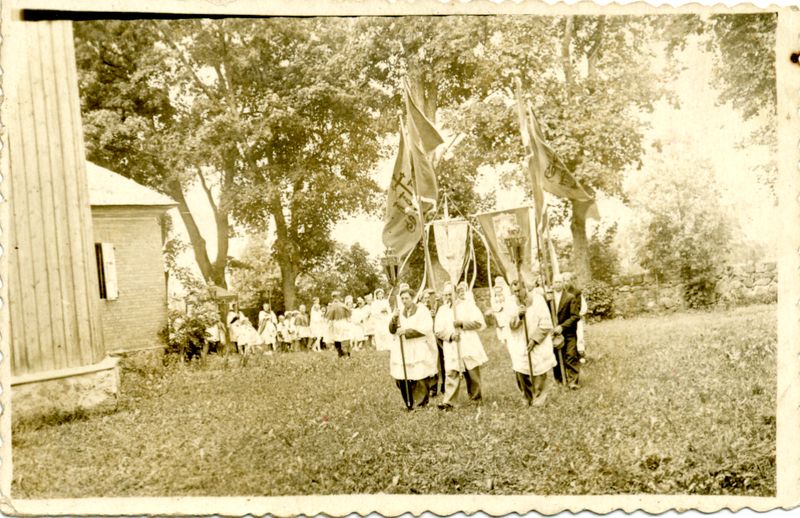
Bažnytinės procesijos (pasirodymas, iškilminga eisena su maldomis, giesmėmis) dalyviai eina aplink Onuškio Šv. arkangelo Mykolo bažnyčią. Pakraščiai perforuoti.