About the Church
The church of the Ascension of Christ at Utena is one of those places that hold within them not only faith but also a wealth of historical stories. In this building various eras, experiences and human destinies intertwine.
A church is first mentioned at Utena as far back as 1500. It was a wooden Church of the Holy Cross, to which a tithe from the manors of Utena and Užpaliai was assigned in 1522. In later times the parish shared a parish priest with Užpaliai. By 1777 a parish school was already operating here, and right up to the end of the 19th century the life of the church was closely bound up with the everyday life of the town and its surroundings.
In 1802 the church burned down, but during the period 1796–1802 parish priest Tadas Milašius had built a new wooden church, which was also renovated in 1866. Unfortunately, it burned down again in 1879. After this disaster, services were held in a shelter built in the cemetery. Nevertheless, through the persistent efforts of the priests and parishioners, the present masonry church was built in 1884, its construction organised by parish priest Adomas Vyšniauskas. This imposing building was consecrated in 1898 by Bishop Gasparas Cirtautas.
The church is notable for its Historicist architecture, its Greek-cross plan and its two-tower structure. Inside there are three aisles, four altars and splendid artistic details. Interestingly, three bells were acquired for the church before the First World War, though in 1915 they were taken away to Russia – after the war two of them returned home, but one was already damaged.
Throughout its existence the church has seen many changes and renovations. In 1927, through the efforts of its long-serving parish priest Jonas Asminavičius, the church underwent a major overhaul. In 1979 the high altar was restored.
Today the church of the Ascension of Christ at Utena is not merely a place of prayer – it is also an important cultural heritage site, bearing witness to the town's history, its people and their fragile yet at the same time firm values. Visiting this church, one can sense the spirit of the past and understand what an important place faith held, and continues to hold, in the lives of the people of this region.
A church is first mentioned at Utena as far back as 1500. It was a wooden Church of the Holy Cross, to which a tithe from the manors of Utena and Užpaliai was assigned in 1522. In later times the parish shared a parish priest with Užpaliai. By 1777 a parish school was already operating here, and right up to the end of the 19th century the life of the church was closely bound up with the everyday life of the town and its surroundings.
In 1802 the church burned down, but during the period 1796–1802 parish priest Tadas Milašius had built a new wooden church, which was also renovated in 1866. Unfortunately, it burned down again in 1879. After this disaster, services were held in a shelter built in the cemetery. Nevertheless, through the persistent efforts of the priests and parishioners, the present masonry church was built in 1884, its construction organised by parish priest Adomas Vyšniauskas. This imposing building was consecrated in 1898 by Bishop Gasparas Cirtautas.
The church is notable for its Historicist architecture, its Greek-cross plan and its two-tower structure. Inside there are three aisles, four altars and splendid artistic details. Interestingly, three bells were acquired for the church before the First World War, though in 1915 they were taken away to Russia – after the war two of them returned home, but one was already damaged.
Throughout its existence the church has seen many changes and renovations. In 1927, through the efforts of its long-serving parish priest Jonas Asminavičius, the church underwent a major overhaul. In 1979 the high altar was restored.
Today the church of the Ascension of Christ at Utena is not merely a place of prayer – it is also an important cultural heritage site, bearing witness to the town's history, its people and their fragile yet at the same time firm values. Visiting this church, one can sense the spirit of the past and understand what an important place faith held, and continues to hold, in the lives of the people of this region.
Gallery and Resources
Archive captions are shown in Lithuanian.
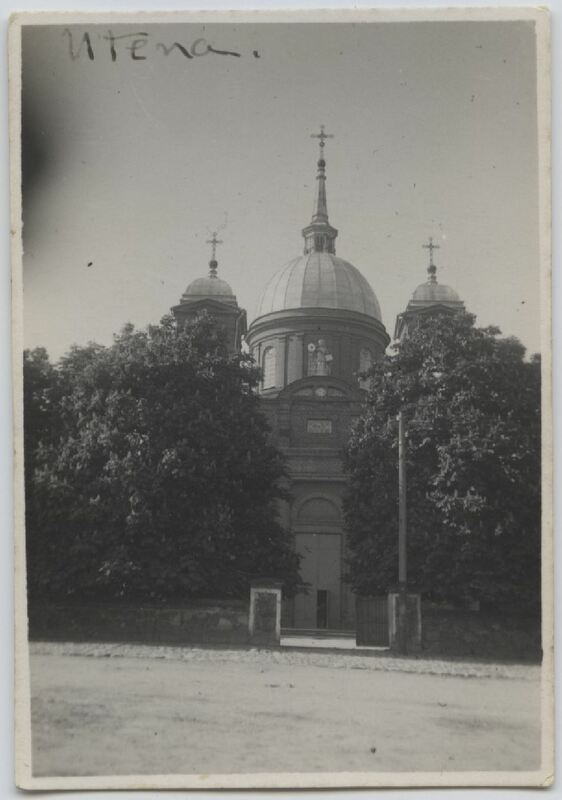
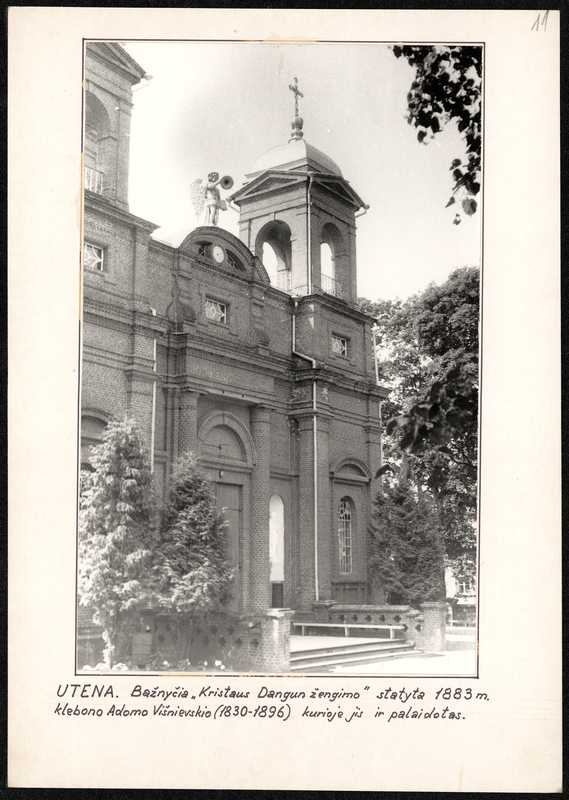
Utenos Kristaus Žengimo į dangų bažnyčia. Fotografijos aprašymas ant pasporto: „UTENA. Bažnyčia „Kristaus Dangun žengimo“ statyta 1883 m. klebono Adomo Višnievskio (1830–1896) kurioje jis ir palaidotas.“