About the Church
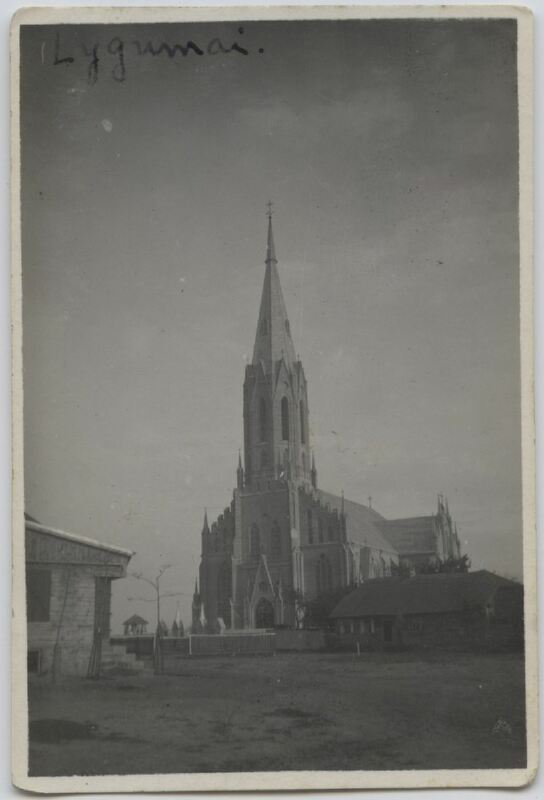
The Church of the Holy Trinity in Lygumai is an impressive architectural monument, standing in the town of Lygumai, on a right tributary of the river Kruoja. This church undoubtedly draws attention for its history and architecture, a fine example of the Gothic Revival style.
The church's history goes back as far as the 15th century, when the first chapel was built at the Lygumai manor in 1426. Only a few years later, in 1436, the manor already had a resident priest, showing that the place had significant religious importance. Historical sources mention that in 1524–1526 the manor owner Liucijus Viekavičius built the first church on the bank of the Kruoja, setting aside a plot of land and an inn for its upkeep.
At the end of the 16th century the church had been taken over by the Reformed Evangelicals, but in the 17th century it returned to the Catholics. Since then an altaria had been established in the parish, which in 1760 received a generous gift from the priest S. Bukauskas – 2.5 dessiatines of meadow. More than a century later, in 1790, the parish priest Kristupas Volfas, together with the parishioners, built a new wooden church.
In the early 19th century the parish also included the surrounding villages, and in 1842 the Russian authorities confirmed ownership of the land. On the initiative of the parish priest J. Beniusevičius and other parishioners, additional land was purchased. The new masonry church, designed by the architect Nikolai Andreyev, began construction in 1908. The building work lasted until 1914, and during this period services were held in a temporary cemetery chapel. The church was consecrated by Bishop Pranciškus Karevičius in 1915.
Interestingly, in building this church the local residents contributed not only money but also unusual building "materials". They collected the eggshells of domestic poultry, which were used as a source of calcium and chalk for the binding mixture, since cement was not yet available, or could not be obtained, at the time.
Architecturally the Church of the Holy Trinity in Lygumai is a true masterpiece of the Gothic Revival. Its Latin-cross plan and single tower create an impressive silhouette. Inside, the church has three naves, which give a sense of spaciousness and let natural light flood the interior. The tall churchyard wall was built of stone, further reinforcing the impression of solidity and permanence.
The cultural heritage sites near the church – the Lygumai cemetery chapel and the Sereikiai chapel – further bear witness to the region's rich historical past and religious heritage. This is a place where history, architecture and community stories come together, creating a particular atmosphere that invites deeper discovery.
The church's history goes back as far as the 15th century, when the first chapel was built at the Lygumai manor in 1426. Only a few years later, in 1436, the manor already had a resident priest, showing that the place had significant religious importance. Historical sources mention that in 1524–1526 the manor owner Liucijus Viekavičius built the first church on the bank of the Kruoja, setting aside a plot of land and an inn for its upkeep.
At the end of the 16th century the church had been taken over by the Reformed Evangelicals, but in the 17th century it returned to the Catholics. Since then an altaria had been established in the parish, which in 1760 received a generous gift from the priest S. Bukauskas – 2.5 dessiatines of meadow. More than a century later, in 1790, the parish priest Kristupas Volfas, together with the parishioners, built a new wooden church.
In the early 19th century the parish also included the surrounding villages, and in 1842 the Russian authorities confirmed ownership of the land. On the initiative of the parish priest J. Beniusevičius and other parishioners, additional land was purchased. The new masonry church, designed by the architect Nikolai Andreyev, began construction in 1908. The building work lasted until 1914, and during this period services were held in a temporary cemetery chapel. The church was consecrated by Bishop Pranciškus Karevičius in 1915.
Interestingly, in building this church the local residents contributed not only money but also unusual building "materials". They collected the eggshells of domestic poultry, which were used as a source of calcium and chalk for the binding mixture, since cement was not yet available, or could not be obtained, at the time.
Architecturally the Church of the Holy Trinity in Lygumai is a true masterpiece of the Gothic Revival. Its Latin-cross plan and single tower create an impressive silhouette. Inside, the church has three naves, which give a sense of spaciousness and let natural light flood the interior. The tall churchyard wall was built of stone, further reinforcing the impression of solidity and permanence.
The cultural heritage sites near the church – the Lygumai cemetery chapel and the Sereikiai chapel – further bear witness to the region's rich historical past and religious heritage. This is a place where history, architecture and community stories come together, creating a particular atmosphere that invites deeper discovery.
Gallery and Resources
Archive captions are shown in Lithuanian.

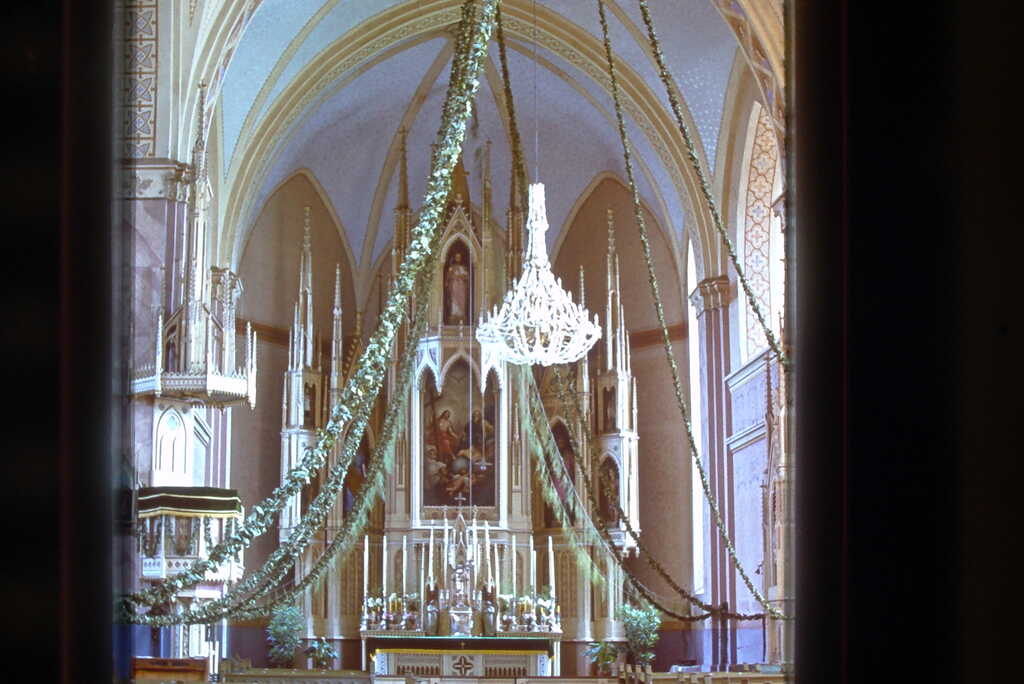
Lygumų Švč. Trejybės bažnyčios centrinis altorius. Priekyje - puošnus šviestuvas ir centrinės navos dalis.