About the Church
The Church of the Assumption of the Blessed Virgin Mary in Kartena is one of those Lithuanian churches worth visiting not only for their spiritual value but also for their unique historical and architectural significance. It stands in the small town of Kartena, on the picturesque bank of the Minija river valley.
The church's history goes back to the 17th century, when in 1634 Mykolas Sapiega granted jurisdiction to the town of Kartena and the Gudelikė farmstead together with several villages. This was an important step towards founding the church. Just a few years later, in 1639, Mykolas Sapiega also endowed a parish school, which testifies to his concern not only for religious but also for educational matters.
In 1764 a wooden church was built in the town, but unfortunately it burned down on 23 May 1873. Long discussions then followed about the construction of a new church – whether it should be of masonry or wood. Although there was a wish to build a masonry church, the permit obtained only allowed a wooden one to be built. So, after 1875, the present wooden church, in the Neo-Baroque style, was built in Kartena.
In 1881 the church was consecrated by Bishop Aleksandras Beresnevičius, a significant event for local Catholics. In addition, from 1909 to 1914 a branch of the Lithuanian Catholic Temperance Society operated here, contributing to the moral education of the local community.
Architecturally, the church is distinctive for its Neo-Baroque facade, adorned with scrollwork unusual for woodworking technique. A square front tower, resembling a miniature bell tower, rises from the church roof, giving it a distinctive character. The church has a rectangular plan, with two small turrets and attached sacristies. Inside, visitors are greeted by a wide, tall central nave flanked by two lower side aisles. The beauty of the three altars and the finely worked pulpit truly deserves attention.
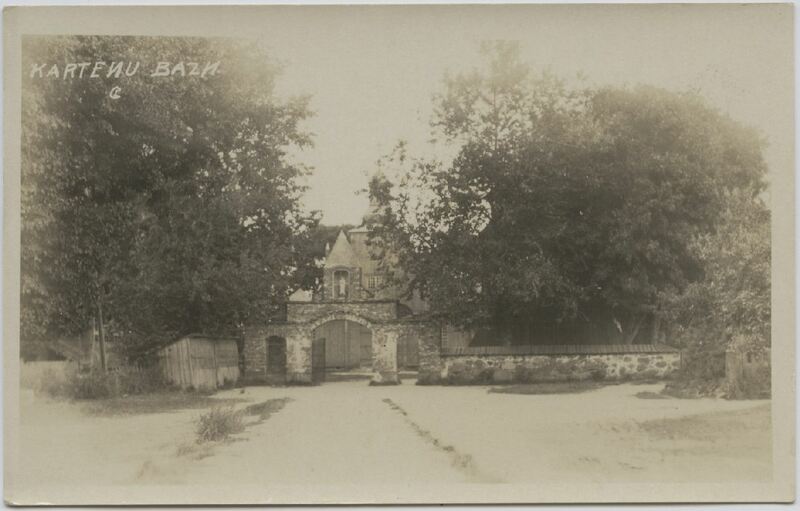
The churchyard is enclosed by a stone wall with a pseudo-Gothic brick gate, decorated with a pyramidal turret and ornamented wrought-iron crosses. Around the edges stand 14 stone-masonry wayside shrines, several crosses and shrine-posts, and in the southern corner a large wooden bell tower, built back in 1860.
A visit to the Church of the Assumption of the Blessed Virgin Mary in Kartena is not only a spiritual experience but also a journey through time, allowing one to feel the breath of history and the beauty of its architecture.
The church's history goes back to the 17th century, when in 1634 Mykolas Sapiega granted jurisdiction to the town of Kartena and the Gudelikė farmstead together with several villages. This was an important step towards founding the church. Just a few years later, in 1639, Mykolas Sapiega also endowed a parish school, which testifies to his concern not only for religious but also for educational matters.
In 1764 a wooden church was built in the town, but unfortunately it burned down on 23 May 1873. Long discussions then followed about the construction of a new church – whether it should be of masonry or wood. Although there was a wish to build a masonry church, the permit obtained only allowed a wooden one to be built. So, after 1875, the present wooden church, in the Neo-Baroque style, was built in Kartena.
In 1881 the church was consecrated by Bishop Aleksandras Beresnevičius, a significant event for local Catholics. In addition, from 1909 to 1914 a branch of the Lithuanian Catholic Temperance Society operated here, contributing to the moral education of the local community.
Architecturally, the church is distinctive for its Neo-Baroque facade, adorned with scrollwork unusual for woodworking technique. A square front tower, resembling a miniature bell tower, rises from the church roof, giving it a distinctive character. The church has a rectangular plan, with two small turrets and attached sacristies. Inside, visitors are greeted by a wide, tall central nave flanked by two lower side aisles. The beauty of the three altars and the finely worked pulpit truly deserves attention.
The churchyard is enclosed by a stone wall with a pseudo-Gothic brick gate, decorated with a pyramidal turret and ornamented wrought-iron crosses. Around the edges stand 14 stone-masonry wayside shrines, several crosses and shrine-posts, and in the southern corner a large wooden bell tower, built back in 1860.
A visit to the Church of the Assumption of the Blessed Virgin Mary in Kartena is not only a spiritual experience but also a journey through time, allowing one to feel the breath of history and the beauty of its architecture.
Gallery and Resources