About the Church
The first church in Seda was built as early as 1508, thanks to the tėvūnas (steward) of Dirvėnai, Vaclovas Bartasevičius, and his wife Elžbieta Juškaitė. This was a modest church, but even from then it became an important spiritual centre of the community. The first parish priest is mentioned in 1528, and in 1538 the village of Beržėnai was donated to the parish and a parish school was established.
In 1769–1770, on the initiative of the parish priest Jonas Mykolas Domaševičius, the church was rebuilt and significantly enlarged. The new church is remarkable for its Latin-cross plan, its hall-type interior structure, two sacristies and five small towers. Although the church stands on stone foundations, its wooden walls, often repaired and renewed, still retain an authentic 18th-century spirit to this day.
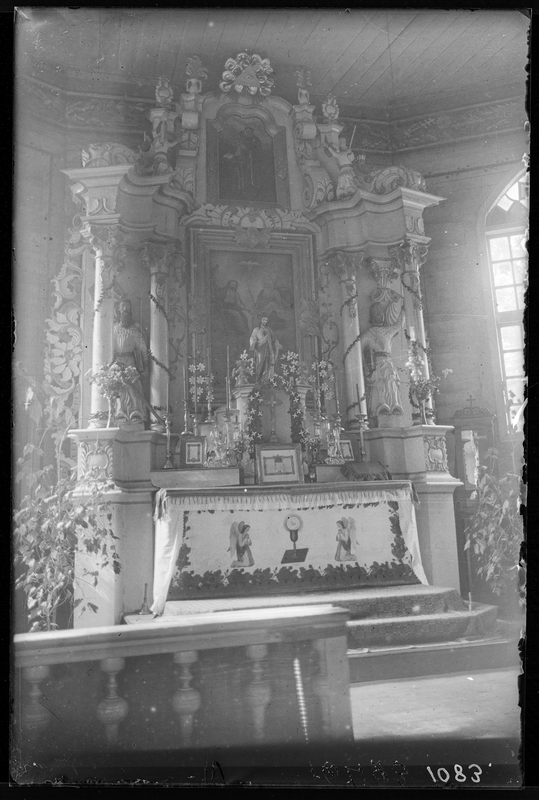
Inside the church one can find as many as five Baroque altars, created in the 18th century: the high altar, and those of St John Nepomucene, St Anthony of Padua, Our Lady of Mount Carmel, and Jesus Christ. Also worth mentioning is the wonderful organ, made in 1803 by late Baroque masters from Vilnius. This organ, although repaired many times, still sounds and delights listeners.
The Seda Church of the Assumption of the Blessed Virgin Mary is also famous for its churchyard with a stone masonry wall and a wooden bell tower, built in 1851. In the bell tower hang three historic bells, one of them cast in 1762 at the expense of the priest Domaševičius and the Confraternity of the Scapular. In the area surrounding the church, a Way of the Cross with wayside shrine-posts has been set up, which further strengthens the sacred character of the place.
In 2006 the church complex was augmented with an impressive Lourdes grotto, which became a place of attraction not only for prayer but also for tourists. This grotto highlights the church's special importance for the local community and visitors.
Over its long history the church has been administered by many well-known parish priests, such as Kazimieras Genys, Juozas Šiurys and Saulius Katkus. The current parish priest, Virginijus Palionis, continues the long-standing traditions, caring for the well-being of the church and the parish.
The Seda Church of the Assumption of the Blessed Virgin Mary is not only a religious but also a cultural and historical treasure of the small town of Seda, inviting people to discover Lithuania's heritage and admire a unique masterpiece of vernacular architecture.
Gallery and Resources
Archive captions are shown in Lithuanian.
Medinė bažnyčia, dengta dvišlaičiu stogu su svogūno formos smailėmis ir kryžiais stogo briaunoje, užfiksuota iš galo kartu su mūriniais šventoriaus vartais ir prie jų esančiais koplytstulpiais. Prie šventoriaus vartų stovi du vyrai, pasipuošę tamsiais šventadienio drabužiais.
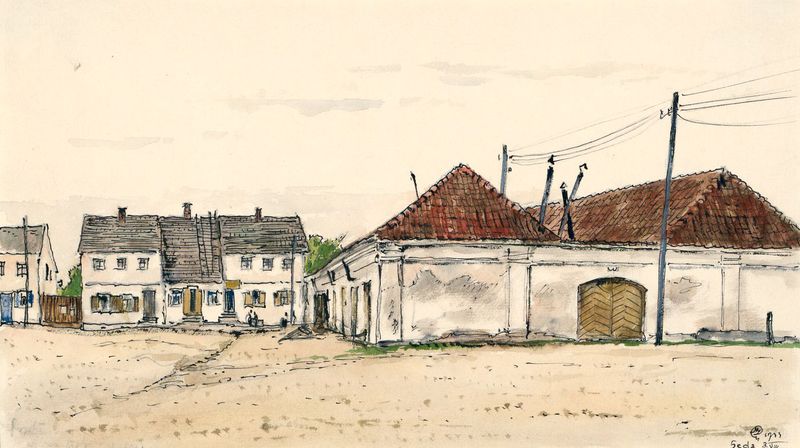
Seda - miestelis Mažeikių rajone, Seniūnijos centras. Miestelyje yra dvi medinės bažnyčios - Sedos Švč. Mergelės Marijos Ėmimo į dangų bažnyčia (nuo 1770) ir Sedos Šv. Jono Nepomuko bažnyčia (1783). Sedos miestelis minimas nuo XIII amžiaus. Buvusi Sedos turgaus aikštė išlaikiusi XVIII a. pavidalą. (urbanistinis paminklas). Pirmą kartą paminėta 1694 sudarytame Sedos inventoriuje. Miestelis buvo privatus - nuo XVIII a. I pusės Sedą valdė Sapiegų giminė. Aleksandras Sapiega, LDK kancleris, norėdamas pagyvinti miestelio gyvenimą, 1780 išsirūpino privilegiją kasmet rengti dvisavaitinį prekymetį. Šiandien aikštė atrodo kitaip nei Dobužinskio piešinyje - čia skveras. Namai, matomi kitoje pusėje, perstatyti, dešinėje stovėję senieji kromai po karo nugriauti.
Aprašė Irena Dobrovolskaitė.