About the Church
The Church of St Joachim and St Anne at Naujasis Daugėliškis is one of those cosy wooden Lithuanian churches whose history and architecture captivate believers and lovers of cultural heritage alike. Standing in the village of Naujasis Daugėliškis, near Ignalina, this church was built in 1889 and has since become an important centre of local spiritual and cultural life.
The church's history began several centuries earlier. The first church in this area was built in 1511 at Seniškis, a few kilometres north of the present church's site. Later, in 1776, a new church was built there, but it was destroyed by fire in 1915. After the First World War the church was rebuilt.
At Senasis Daugėliškis, near Naujasis Daugėliškis, Albertas Vaitiekus Goštautas built a parish church in 1526, which was later rebuilt and repaired several times. However, the church burned down in 1886, and although a masonry church was planned, the tsarist authorities would not grant permission for it. A wooden church was therefore built at Naujasis Daugėliškis in 1889, led by the parish priest Jonas Burba, a noted awakener of national consciousness.
This wooden church has a distinctive architecture. It has a rectangular plan, is of basilica type, and has two towers. The building stands out for its abundance of carved wooden ornament, adorning both the exterior and interior of the church. Inside, three naves are divided by columns decorated with carved acanthus leaves. The central altar resembles a small chapel, decorated with openwork wood carving, and the lower part of the chancel walls is patterned with Lithuanian designs.
The organ-loft balustrade is also unusual – massive, with a cornice carved with fine, tooth-like detail. The whole church is original in its decoration and radiates authenticity and love of tradition.
The church's churchyard is enclosed by a stone masonry fence, and a cross stands by the gate, bearing witness to the long and rich history of this place. It is a place where spiritual heritage and national culture intertwine, inviting one to stop, reflect and feel the flow of history.
The church's history began several centuries earlier. The first church in this area was built in 1511 at Seniškis, a few kilometres north of the present church's site. Later, in 1776, a new church was built there, but it was destroyed by fire in 1915. After the First World War the church was rebuilt.
At Senasis Daugėliškis, near Naujasis Daugėliškis, Albertas Vaitiekus Goštautas built a parish church in 1526, which was later rebuilt and repaired several times. However, the church burned down in 1886, and although a masonry church was planned, the tsarist authorities would not grant permission for it. A wooden church was therefore built at Naujasis Daugėliškis in 1889, led by the parish priest Jonas Burba, a noted awakener of national consciousness.
This wooden church has a distinctive architecture. It has a rectangular plan, is of basilica type, and has two towers. The building stands out for its abundance of carved wooden ornament, adorning both the exterior and interior of the church. Inside, three naves are divided by columns decorated with carved acanthus leaves. The central altar resembles a small chapel, decorated with openwork wood carving, and the lower part of the chancel walls is patterned with Lithuanian designs.
The organ-loft balustrade is also unusual – massive, with a cornice carved with fine, tooth-like detail. The whole church is original in its decoration and radiates authenticity and love of tradition.
The church's churchyard is enclosed by a stone masonry fence, and a cross stands by the gate, bearing witness to the long and rich history of this place. It is a place where spiritual heritage and national culture intertwine, inviting one to stop, reflect and feel the flow of history.
Gallery and Resources
Archive captions are shown in Lithuanian.
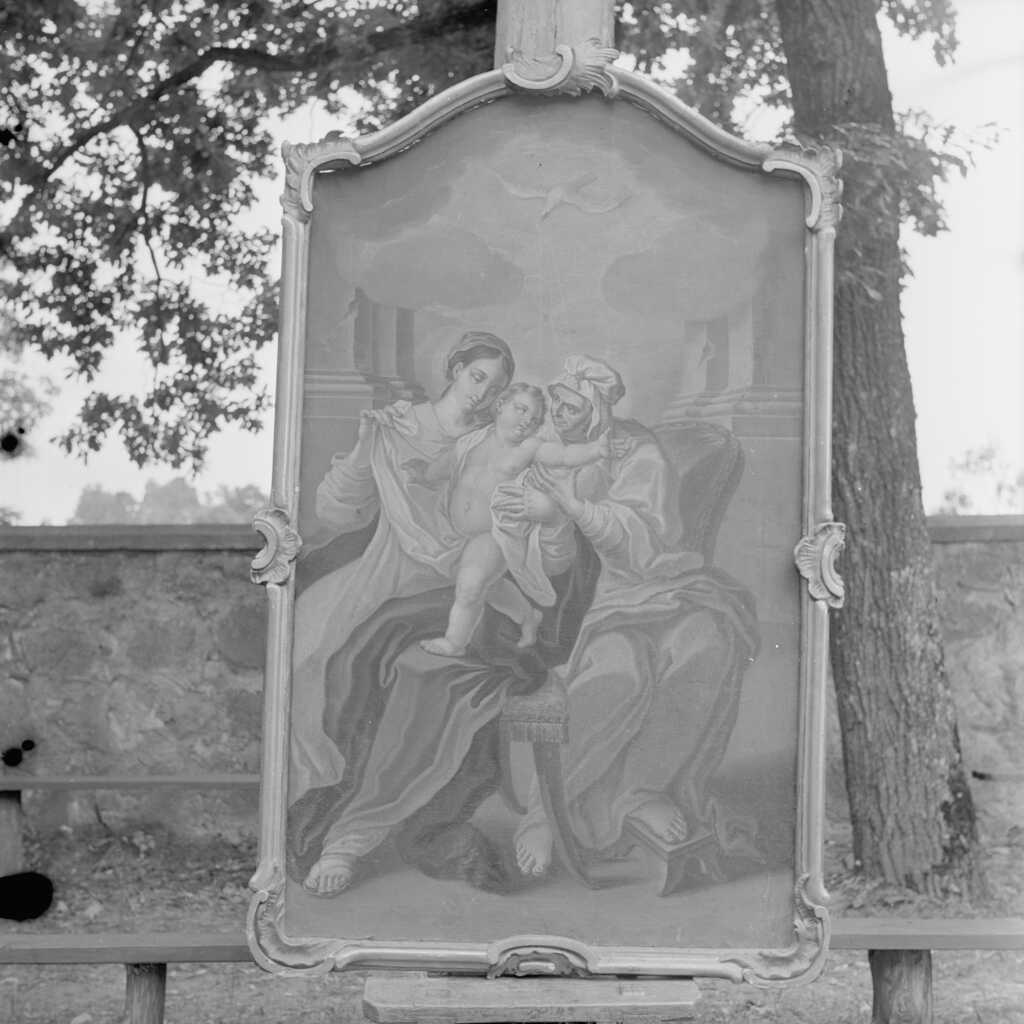
Daugėliškio Šv. Joakimo ir Onos bažnyčios paveikslas.