About the Church
Butrimonys Church of the Saviour is a distinctive historical monument standing in the town of Butrimonys, in Alytus district. Built beside the quietly flowing Plasaupis stream, this church forms part not only of the region's religious but also its architectural heritage.
The church's history goes back to the 18th century. The first manor chapel was built before 1744. Unfortunately, it burned down in 1787, but already in 1797 a temporary wooden-plank church with a single altar was set up on the site. Later, in 1842–1843, the priest Vincentas Jezerskis built a new wooden, towerless church, notable for its vernacular architectural features.
Despite efforts and dedication, the church did not go without challenges. From 1885 to 1898 Butrimonys had no resident priest. Only in 1899 did Kazimieras Daukša begin holding services in Lithuanian, which significantly contributed to reviving the spiritual life of the local community.
A design for a more modern church was approved in 1906, drawn up by the architect A. Filipovičius-Dubovikas. The foundations of the new church were blessed in 1908, but construction proceeded slowly because of various obstacles and interruptions. By 1915 the walls had been built up to the windows, and only in 1922-1926, under the parish priest Juozapas Deksnys together with Steponas Verbauskas and Vincas Pavalkis, was construction continued. However, the tower envisaged in the original design was never built.
From 1938 to 1941 the church was led by the parish priest Petras Laskauskas, who carried out important repair work and installed a new organ. After 1956 the parish priest Vaitiekus Želnys, a Siberian deportee, also contributed to the renovation of the church.
Architecturally the church is in the Historicist style, with elements of the Romantic period visible in it. Its structure, built of stone and brick masonry, gives it a sense of massiveness and stability. Although the church's tower was left unfinished, its solid construction and the expressive stone masonry churchyard fence leave an indelible impression on every visitor.
Butrimonys Church of the Saviour is not only a house of prayer but also a living witness to the past, reflecting the strength and spirit of the local community over many years.
The church's history goes back to the 18th century. The first manor chapel was built before 1744. Unfortunately, it burned down in 1787, but already in 1797 a temporary wooden-plank church with a single altar was set up on the site. Later, in 1842–1843, the priest Vincentas Jezerskis built a new wooden, towerless church, notable for its vernacular architectural features.
Despite efforts and dedication, the church did not go without challenges. From 1885 to 1898 Butrimonys had no resident priest. Only in 1899 did Kazimieras Daukša begin holding services in Lithuanian, which significantly contributed to reviving the spiritual life of the local community.
A design for a more modern church was approved in 1906, drawn up by the architect A. Filipovičius-Dubovikas. The foundations of the new church were blessed in 1908, but construction proceeded slowly because of various obstacles and interruptions. By 1915 the walls had been built up to the windows, and only in 1922-1926, under the parish priest Juozapas Deksnys together with Steponas Verbauskas and Vincas Pavalkis, was construction continued. However, the tower envisaged in the original design was never built.
From 1938 to 1941 the church was led by the parish priest Petras Laskauskas, who carried out important repair work and installed a new organ. After 1956 the parish priest Vaitiekus Želnys, a Siberian deportee, also contributed to the renovation of the church.
Architecturally the church is in the Historicist style, with elements of the Romantic period visible in it. Its structure, built of stone and brick masonry, gives it a sense of massiveness and stability. Although the church's tower was left unfinished, its solid construction and the expressive stone masonry churchyard fence leave an indelible impression on every visitor.
Butrimonys Church of the Saviour is not only a house of prayer but also a living witness to the past, reflecting the strength and spirit of the local community over many years.
Gallery and Resources
Archive captions are shown in Lithuanian.
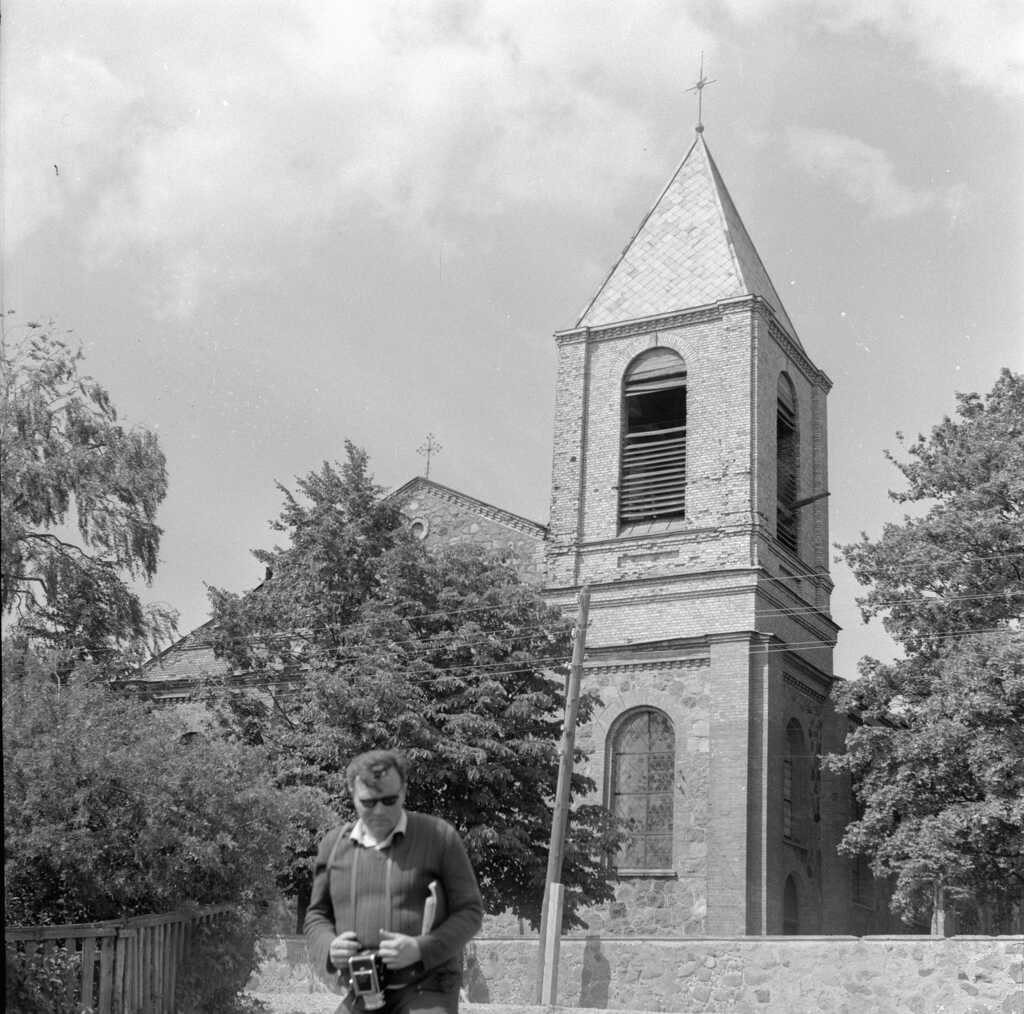
Butrimonių miestelio Išganytojo bažnyčios pagrindinis fasadas.