About the Church
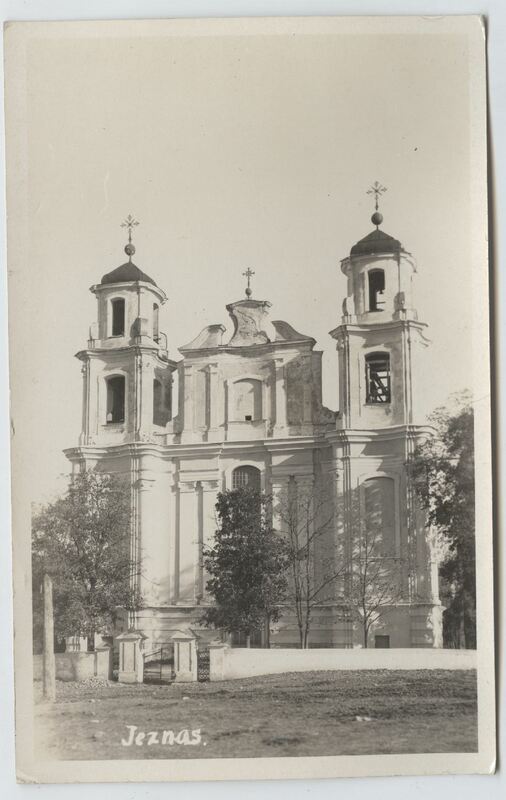
The Church of St Michael the Archangel and St John the Baptist in Jieznas is a true gem of Lithuania's architectural and historical heritage, rising in the town of Jieznas, right by Lake Jieznas. This wonderful Baroque church not only breathes deep historical legacy but also amazes with its beauty and grandeur.
The church's history begins in the 16th century, when a wooden church was most likely built for the first time. A house of prayer of the Evangelical Reformed Church is recorded in 1611, and an inventory of a Catholic church is already found in 1640. But a particularly important moment in this church's history was the initiative of Steponas Kristupas Pacas. Thanks to him, construction of a masonry church began in 1655, and it was completed and consecrated in 1670.
At the beginning of the 18th century, the church was further enriched and embellished. Through the care of Antanas and Teresė Pacas, it was enlarged, and two towers, a chancel and two side sacristies were built. The church's interior was adorned with frescoes that still delight visitors with their artistic value today. The church was consecrated a second time in 1772, but soon after, in 1794, it was plundered by the Russian army.
This church faced difficulties and dangers more than once, but it was always rebuilt and restored. In 1876 a major renovation was carried out, for which the authorities allocated as much as 4000 roubles. The storm of the Second World War that followed did not spare the walls of this fortified church either. The parish priest Vincentas Vaičiulis was deported to Siberia and, after returning to Lithuania, died in Jieznas.
Despite all the hardships, the church became not only a spiritual centre but also a hub of culture. This is attested by the parish school, founded at the end of the 18th century, and the new cemetery, established around 1765, where the Chapel of the Holy Cross stands.
Bronius Bulika, who served as parish priest from 1974 to 1988, did a great deal of work renewing the church and putting its surroundings in order. His sincerity and the deep meaning of his sermons remained deeply engraved in the hearts of the parishioners.
Architecturally the church is Baroque, of rectangular plan. Inside one can find works of art, among which the painting “Michael the Archangel” by Nikodemas Silvanavičius stands out in particular. The underground crypts hold the remains of the Pacas family and other nobles, which testify to the rich history of the church and its patrons.
So if you ever travel around Lithuania, be sure to visit this wonderful place in Jieznas. Its Baroque towers, artistic frescoes and spirit of history will not leave you indifferent.
The church's history begins in the 16th century, when a wooden church was most likely built for the first time. A house of prayer of the Evangelical Reformed Church is recorded in 1611, and an inventory of a Catholic church is already found in 1640. But a particularly important moment in this church's history was the initiative of Steponas Kristupas Pacas. Thanks to him, construction of a masonry church began in 1655, and it was completed and consecrated in 1670.
At the beginning of the 18th century, the church was further enriched and embellished. Through the care of Antanas and Teresė Pacas, it was enlarged, and two towers, a chancel and two side sacristies were built. The church's interior was adorned with frescoes that still delight visitors with their artistic value today. The church was consecrated a second time in 1772, but soon after, in 1794, it was plundered by the Russian army.
This church faced difficulties and dangers more than once, but it was always rebuilt and restored. In 1876 a major renovation was carried out, for which the authorities allocated as much as 4000 roubles. The storm of the Second World War that followed did not spare the walls of this fortified church either. The parish priest Vincentas Vaičiulis was deported to Siberia and, after returning to Lithuania, died in Jieznas.
Despite all the hardships, the church became not only a spiritual centre but also a hub of culture. This is attested by the parish school, founded at the end of the 18th century, and the new cemetery, established around 1765, where the Chapel of the Holy Cross stands.
Bronius Bulika, who served as parish priest from 1974 to 1988, did a great deal of work renewing the church and putting its surroundings in order. His sincerity and the deep meaning of his sermons remained deeply engraved in the hearts of the parishioners.
Architecturally the church is Baroque, of rectangular plan. Inside one can find works of art, among which the painting “Michael the Archangel” by Nikodemas Silvanavičius stands out in particular. The underground crypts hold the remains of the Pacas family and other nobles, which testify to the rich history of the church and its patrons.
So if you ever travel around Lithuania, be sure to visit this wonderful place in Jieznas. Its Baroque towers, artistic frescoes and spirit of history will not leave you indifferent.
Gallery and Resources
Archive captions are shown in Lithuanian.
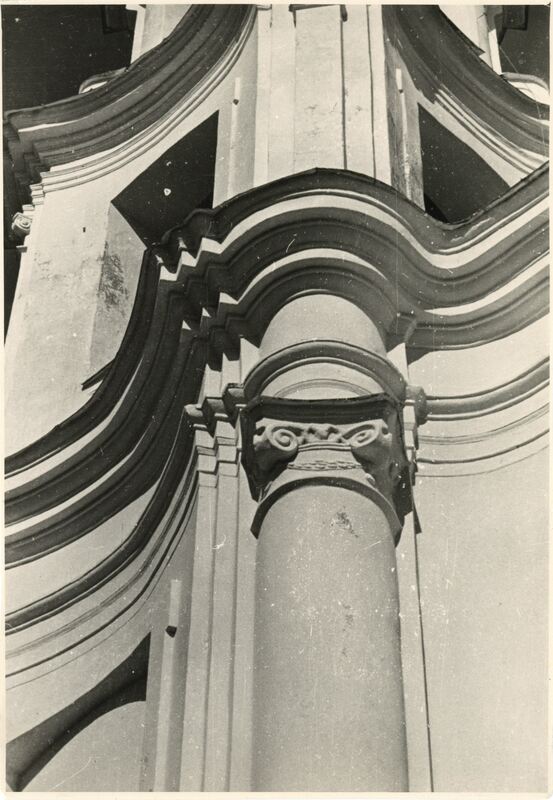
Jiezno Šv. arkangelo Mykolo ir Jono Krikštytojo bažnyčios kolona. Bažnyčia statyta 1750 m. Jieznas, 1960 m.