About the Church
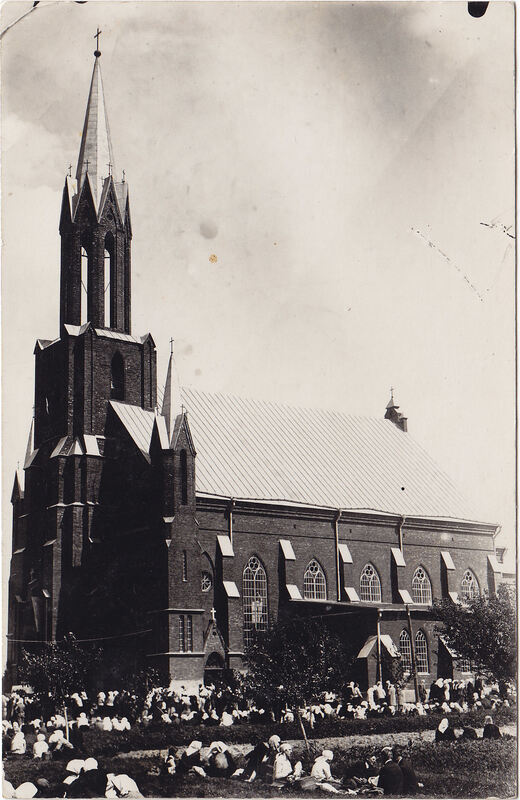
The Cathedral of the Transfiguration of Christ in Kaišiadorys is one of the most impressive monuments of Gothic Revival architecture in Lithuania, located in the very heart of the town of Kaišiadorys. This majestic structure, built of masonry, is a site of not only religious but also historical significance.
The history of the church's construction began as far back as 1906, when a church-building committee was founded. The then owner of the Stasiūnai (Vladikiškiai) manor generously donated two tithes of land for the construction of the future church. Although the first design was already prepared in 1907, it was not carried out, and a temporary church was set up instead in a former grain warehouse.
In 1912 parish priest Alfonsas Varnas decided to begin construction of a new stone-masonry church, but during the First World War most of the building materials were stolen, so the work stopped. In 1914 the engineer Vaclovas Michnevičius prepared a third design for the church. Despite the difficulties, Kaišiadorys became an important cultural centre – in 1913 a branch of the "Rytas" Society was founded here, which in 1914 staged the first public performance in the village of Kiemeliai.
In 1920 the town was visited by Archbishop A. Ratti, who later became Pope Pius XI. In 1922 the administration of the part of the Diocese of Vilnius lying within the Republic of Lithuania was established in Kaišiadorys, and in 1926 Kaišiadorys became the centre of a diocese.
In 1932 the church was finally built, and in 1934 the curia house. On 10 May 1936 the church was solemnly consecrated as a cathedral. On the same day Pope Pius XI sent a gift – a monstrance. Alfonsas Varnas was appointed canon of the chapter and rector of the cathedral; he was buried beside the cathedral after his death in 1952.
In 1944 the cathedral's tower was damaged during the war, but it was repaired after the war. Over the course of its existence the cathedral underwent many changes. In the mid-20th century the churchyard was enclosed by a stone wall with ornate gates, but these were demolished in 1966. After the rebirth of independent Lithuania, the wall was rebuilt in 1992, though not as ornate as before.
The cathedral's architecture is distinctly Gothic Revival. The building has a tall central tower and smaller turrets at the corners. The interior is divided into three naves, separated by multi-faceted piers with cross vaults. The churchyard is enclosed by an iron-post fence; it contains several crosses, and the musicologist Father Teodoras Brazys is also buried there.
On 2 July 2017 the Chapel of Teofilius Matulionis was consecrated in the cathedral, lending even greater significance to this religious and historic site.
The Cathedral of the Transfiguration of Christ in Kaišiadorys is without doubt one of the most important places in Kaišiadorys district, one that not only adorns the town but also preserves its rich history and traditions.
The history of the church's construction began as far back as 1906, when a church-building committee was founded. The then owner of the Stasiūnai (Vladikiškiai) manor generously donated two tithes of land for the construction of the future church. Although the first design was already prepared in 1907, it was not carried out, and a temporary church was set up instead in a former grain warehouse.
In 1912 parish priest Alfonsas Varnas decided to begin construction of a new stone-masonry church, but during the First World War most of the building materials were stolen, so the work stopped. In 1914 the engineer Vaclovas Michnevičius prepared a third design for the church. Despite the difficulties, Kaišiadorys became an important cultural centre – in 1913 a branch of the "Rytas" Society was founded here, which in 1914 staged the first public performance in the village of Kiemeliai.
In 1920 the town was visited by Archbishop A. Ratti, who later became Pope Pius XI. In 1922 the administration of the part of the Diocese of Vilnius lying within the Republic of Lithuania was established in Kaišiadorys, and in 1926 Kaišiadorys became the centre of a diocese.
In 1932 the church was finally built, and in 1934 the curia house. On 10 May 1936 the church was solemnly consecrated as a cathedral. On the same day Pope Pius XI sent a gift – a monstrance. Alfonsas Varnas was appointed canon of the chapter and rector of the cathedral; he was buried beside the cathedral after his death in 1952.
In 1944 the cathedral's tower was damaged during the war, but it was repaired after the war. Over the course of its existence the cathedral underwent many changes. In the mid-20th century the churchyard was enclosed by a stone wall with ornate gates, but these were demolished in 1966. After the rebirth of independent Lithuania, the wall was rebuilt in 1992, though not as ornate as before.
The cathedral's architecture is distinctly Gothic Revival. The building has a tall central tower and smaller turrets at the corners. The interior is divided into three naves, separated by multi-faceted piers with cross vaults. The churchyard is enclosed by an iron-post fence; it contains several crosses, and the musicologist Father Teodoras Brazys is also buried there.
On 2 July 2017 the Chapel of Teofilius Matulionis was consecrated in the cathedral, lending even greater significance to this religious and historic site.
The Cathedral of the Transfiguration of Christ in Kaišiadorys is without doubt one of the most important places in Kaišiadorys district, one that not only adorns the town but also preserves its rich history and traditions.
Gallery and Resources
Archive captions are shown in Lithuanian.
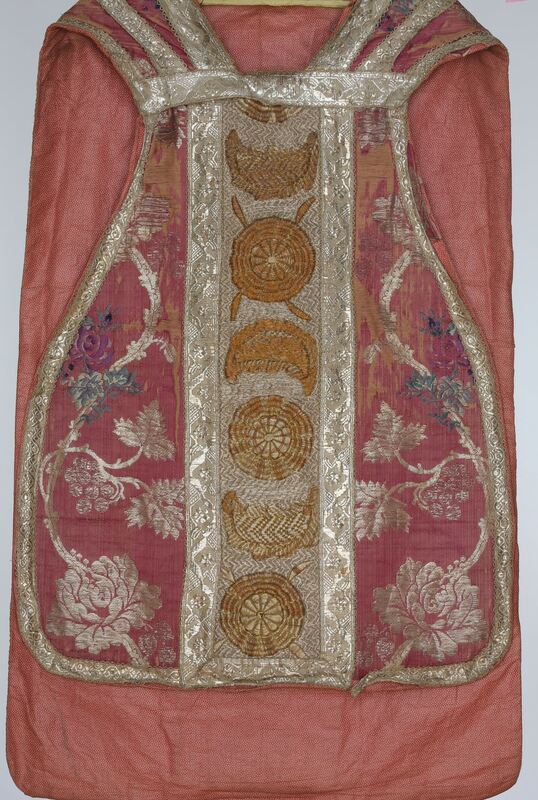
Arnotas. Kolonos – Osmanų imperija. XVII a. II pusė. Auksuoto sidabro ir sidabro siūlai; siuvinėjimas, tekstilės aplikacija. Šonų audinys – Rusija. XIX a. vid. Medvilnės brokatas. Violetinio brokato, atausto gėlių girliandomis: didelės sidabrinės rožės ir mažesnės, tamsiai violetinės su žalsvais lapais. Priekyje ir nugaroje įstatytos plačios juostos, siuvinėtos rankomis, standžiais blizgančiais aukso ir sidabro spalvos siūlais stilizuotomis gėlėmis bei lapais. Arnotas papuoštas blizgančia sidabro spalvos juostele. Pamušalas rožinio perkelio, baltais taškeliais. Kaišiadorių Kristaus Atsimainymo katedra.