About the Church
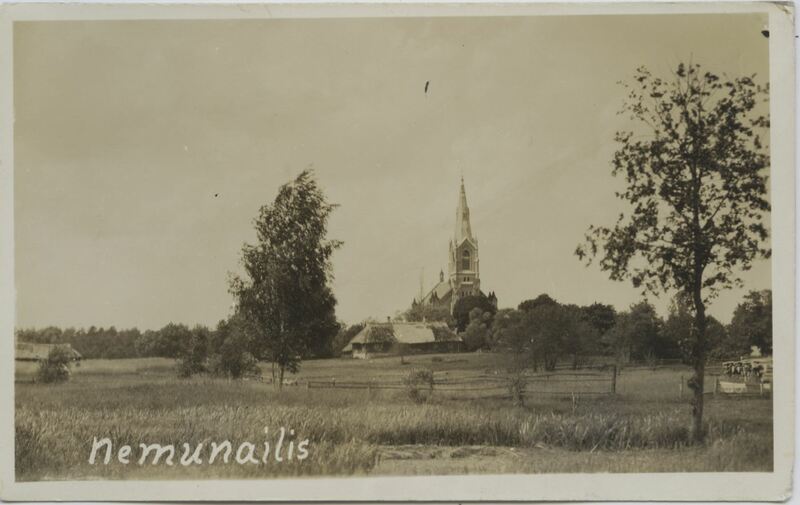
The Church of the Nativity of the Blessed Virgin Mary in Nemunaitis is an architectural masterpiece, situated in the quiet small town of Nemunaitis, on the right bank of the Nemunas. This church in the Gothic Revival style is not only an important religious centre, but also a rich witness to historical events.
The first church in Nemunaitis was built as far back as the early 17th century, when in 1625–1626 Mykolas and Kazimieras Sapiega founded a wooden shrine and parish here. Interestingly, Sigismund Vasa, the renowned King of Poland and Grand Duke of Lithuania, donated three villages with a farmstead to the parish. Unfortunately, this first church was destroyed by the flames of the war with Russia in 1655. But the local people did not give up: by 1669 a new, larger church had been built, which was later rebuilt in 1752.
In the early 19th century fate was again unkind. In 1831 the church was struck by lightning and caught fire, but it was soon rebuilt from pine logs. At that time parish priest Punkevičius planted a large orchard here, which became the pride of the parish.
The present church was built in 1904 on the initiative of parish priest Feliksas Baltuška. The design was prepared by the engineer Vaclovas Michnevičius. It is a substantial masonry church with a tall tower and side turrets, which give it a distinctive Gothic Revival style. Inside, the church has three naves with vaulted ceilings, which create an impression of divine space and peace.
Interestingly, parish priest Feliksas Baltuška did not confine himself to building the church alone. He also built a presbytery and outbuildings and began staging Lithuanian-language performances, and in 1916 founded teacher-training courses of the "Rytas" Society, through which he trained 18 teachers.
In 1930 the new parish priest, Adalbertas Vaitiekus Želnys, arrived in Nemunaitis and continued his predecessor's work: he built an almshouse with a parish hall, repaired the church and set up a Lourdes grotto in the churchyard. The parish priest also cared for the spiritual well-being of the townspeople, but his life was embittered by exile to Siberia for his ties with the partisans. Fortunately, after a decade the exiled priest returned to Lithuania in 1956.
The church's churchyard is enclosed by a fence with an arched gate and wayside chapel-pillars, which further emphasises its historical and artistic value. Near the church a monument can be seen in the churchyard, along with other historical features that recall past events and people's determination to preserve their faith and culture.
The Church of the Nativity of the Blessed Virgin Mary in Nemunaitis is not only a house of prayer, but also a living witness to history, a personal part of the local community's story and of the religious and cultural history of the whole of Lithuania.
The first church in Nemunaitis was built as far back as the early 17th century, when in 1625–1626 Mykolas and Kazimieras Sapiega founded a wooden shrine and parish here. Interestingly, Sigismund Vasa, the renowned King of Poland and Grand Duke of Lithuania, donated three villages with a farmstead to the parish. Unfortunately, this first church was destroyed by the flames of the war with Russia in 1655. But the local people did not give up: by 1669 a new, larger church had been built, which was later rebuilt in 1752.
In the early 19th century fate was again unkind. In 1831 the church was struck by lightning and caught fire, but it was soon rebuilt from pine logs. At that time parish priest Punkevičius planted a large orchard here, which became the pride of the parish.
The present church was built in 1904 on the initiative of parish priest Feliksas Baltuška. The design was prepared by the engineer Vaclovas Michnevičius. It is a substantial masonry church with a tall tower and side turrets, which give it a distinctive Gothic Revival style. Inside, the church has three naves with vaulted ceilings, which create an impression of divine space and peace.
Interestingly, parish priest Feliksas Baltuška did not confine himself to building the church alone. He also built a presbytery and outbuildings and began staging Lithuanian-language performances, and in 1916 founded teacher-training courses of the "Rytas" Society, through which he trained 18 teachers.
In 1930 the new parish priest, Adalbertas Vaitiekus Želnys, arrived in Nemunaitis and continued his predecessor's work: he built an almshouse with a parish hall, repaired the church and set up a Lourdes grotto in the churchyard. The parish priest also cared for the spiritual well-being of the townspeople, but his life was embittered by exile to Siberia for his ties with the partisans. Fortunately, after a decade the exiled priest returned to Lithuania in 1956.
The church's churchyard is enclosed by a fence with an arched gate and wayside chapel-pillars, which further emphasises its historical and artistic value. Near the church a monument can be seen in the churchyard, along with other historical features that recall past events and people's determination to preserve their faith and culture.
The Church of the Nativity of the Blessed Virgin Mary in Nemunaitis is not only a house of prayer, but also a living witness to history, a personal part of the local community's story and of the religious and cultural history of the whole of Lithuania.
Gallery and Resources