About the Church
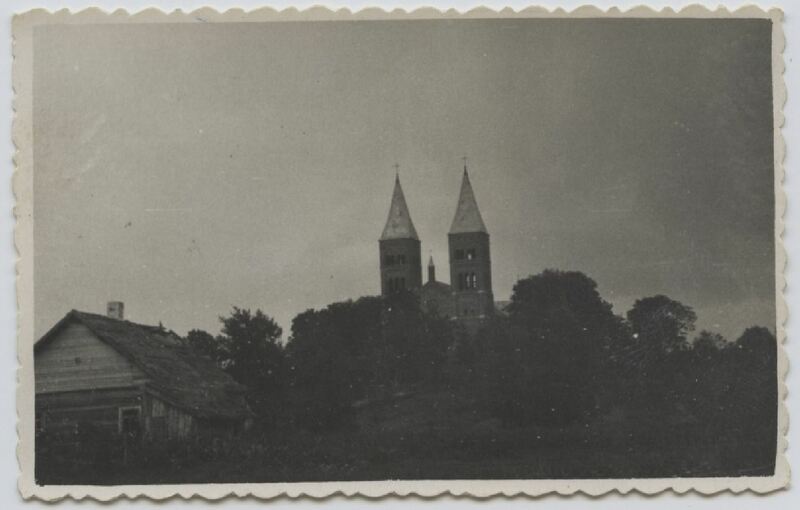
Balninkai's Church of St Stanislaus, Bishop, is one of those Lithuanian shrines whose history and architecture leave no one indifferent. Situated by the Anykščiai–Želva road, near Lake Piršenas, the church is a fine combination of Neo-Gothic and Romanticist elements.
The history of the parish begins as far back as the 16th century, when the first parish was established by 1544. Thanks to the eminent Jesuit S. Rostovskis, in 1585 the Gospel was read and sermons preached in Lithuanian in Balninkai – a significant moment in the life of the local faithful. Sadly, during the wars of the 17th century the parish records were destroyed, so few written accounts of the community's early activity survive.
In 1736 the elder of Balninkai, Juozapas Zybergas, built a new wooden church, which was fitted out and consecrated by the priest Tomas Polujanas. However, over time this wooden structure began to fall into disrepair, so in 1908–1910 the parish priest A. Jusis, together with parishioners, built the present masonry church. It was consecrated by Bishop Pranciškus Karevičius in 1921.
This two-towered, cruciform church has an impressive architectural style. Its Historicist architecture, with Neo-Gothic and Romanticist features, gives it particular charm. Inside, the church has three naves with vaulted ceilings, and the stone-masonry churchyard fence adds to the shrine's beauty.
In 1911–1914 a branch of the Lithuanian Catholic Temperance Society was active here, reflecting the local community's efforts to strengthen morals and a healthy way of life.
The church in Balninkai stands out not only for its architecture but also for its rich history, reflecting various periods and events. It is a place where spiritual peace and historical heritage intertwine, inviting both local residents and visitors to look back at the past and enjoy the atmosphere of this beautiful shrine.
The history of the parish begins as far back as the 16th century, when the first parish was established by 1544. Thanks to the eminent Jesuit S. Rostovskis, in 1585 the Gospel was read and sermons preached in Lithuanian in Balninkai – a significant moment in the life of the local faithful. Sadly, during the wars of the 17th century the parish records were destroyed, so few written accounts of the community's early activity survive.
In 1736 the elder of Balninkai, Juozapas Zybergas, built a new wooden church, which was fitted out and consecrated by the priest Tomas Polujanas. However, over time this wooden structure began to fall into disrepair, so in 1908–1910 the parish priest A. Jusis, together with parishioners, built the present masonry church. It was consecrated by Bishop Pranciškus Karevičius in 1921.
This two-towered, cruciform church has an impressive architectural style. Its Historicist architecture, with Neo-Gothic and Romanticist features, gives it particular charm. Inside, the church has three naves with vaulted ceilings, and the stone-masonry churchyard fence adds to the shrine's beauty.
In 1911–1914 a branch of the Lithuanian Catholic Temperance Society was active here, reflecting the local community's efforts to strengthen morals and a healthy way of life.
The church in Balninkai stands out not only for its architecture but also for its rich history, reflecting various periods and events. It is a place where spiritual peace and historical heritage intertwine, inviting both local residents and visitors to look back at the past and enjoy the atmosphere of this beautiful shrine.
Gallery and Resources