About the Church
The church's history goes back to the 16th century, when the first chapel was built at Josvainiai manor. At the initiative of parish priest Motiejus Kobilinskis, a wooden church was built here in 1590, officially consecrated in 1604. However, this first church did not escape the blows of fate – it is thought to have been destroyed during the wars of the mid-17th century and was rebuilt only in 1665.
Over the centuries the church changed and expanded: in 1818 the timber structure was renewed, in 1855 two side chapels were added, and in 1858 a masonry chapel was built. The greatest change came at the end of the 19th century, when in 1897 a design for a new masonry church was approved, prepared by architect Florianas Vyganovskis. Construction work began in 1898, and by 1903 the church was solemnly opened to parishioners.
Architecturally, the church has a cruciform plan and represents the Gothic Revival style. A triangular gable between two facade towers, and the tall nave vaults joined by pointed arches, lend it a sense of lightness, even though the structure has a massive masonry construction. The buttresses of the facade and side walls taper in steps, and the high altar is decorated with Gothic details and statues.
One of the most interesting elements of the Josvainiai church is the unique "Betleikos" paintings. The writer Česlovas Grincevičius described these moving paintings as a unique local invention not found anywhere else in Lithuania. These paintings, turned by a special spring mechanism during Good Friday and Holy Saturday, depicted the Passion of Christ and made a great impression on parishioners.
Besides its religious functions, the church was also an active cultural centre. From the early 20th century, various organisations operated here, such as the Lithuanian Catholic Temperance Society, the Pavasaris youth movement and many others. Priest Pranciškus Vasiliauskas contributed greatly to parish life, organising various activities and events.
Today the Church of All Saints in Josvainiai is not only a sacred place but also a significant monument of culture, recalling the long and rich history of the Josvainiai region.
Gallery and Resources
Archive captions are shown in Lithuanian.
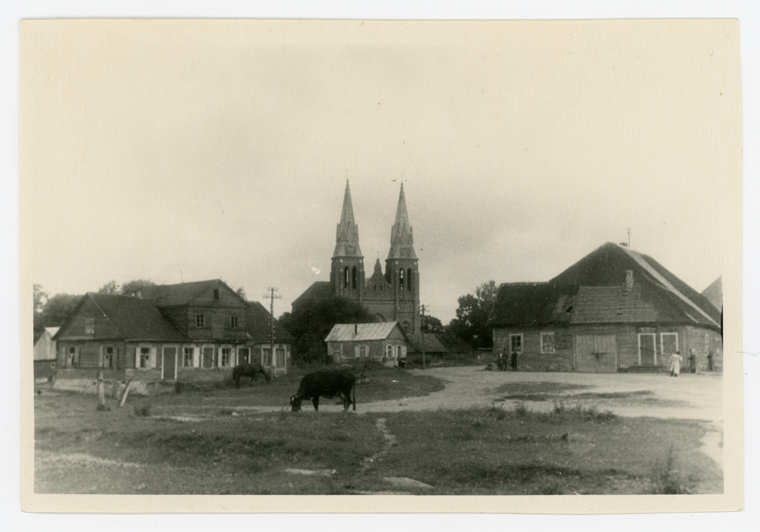
Josvainių Visų Šventųjų bažnyčia, neogotikinė, kryžminio plano, dvibokštė, trinavė. Pradėta statyti 1898 m. pagal architekto Florijono Vyganovskio projektą. Statybos meistras Aniulis. Bažnyčia pastatyta 1903 m. Apgriauta per I pasaulinį karą, konsekruota po rekonstrukcijos 1920 m. Didysis altorius sukurtas A.Zaborskio 1905 m. Bažnyčios interjerą 1907 m. kūrė dailininkas Petras Vaitkevičius. 1935 m. įrengti dabar tebesantys vargonai. Bažnyčia iš naujo dekoruota 1940 m., atnaujinti altoriai ir visas bažnyčios interjeras. Šioje bažnyčioje yra išlikęs 1634 m. žalvarinis varpas ir Švč. Mergelės Marijos paveikslas, tapytas XVIII a.
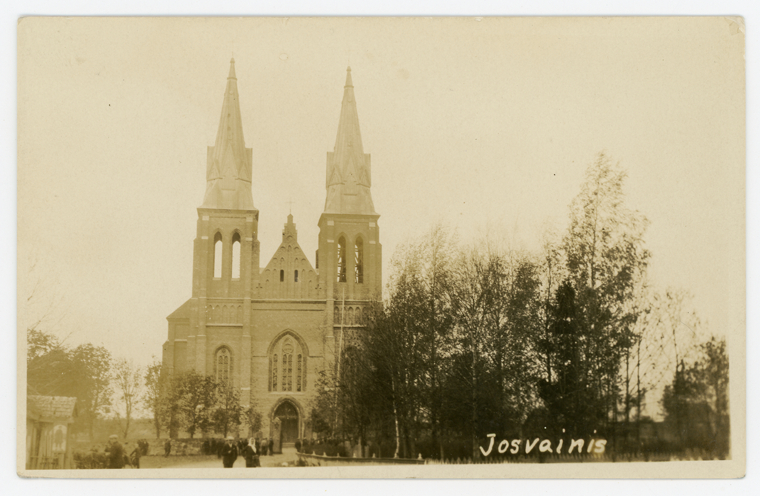
Josvainių Visų Šventųjų bažnyčia, neogotikinė, kryžminio plano, dvibokštė, trinavė. Pradėta statyti 1898 m. pagal architekto Florijono Vyganovskio projektą. Statybos meistras Aniulis. Bažnyčia pastatyta 1903 m. Apgriauta per I pasaulinį karą, konsekruota po rekonstrukcijos 1920 m. Didysis altorius sukurtas A.Zaborskio 1905 m. Bažnyčios interjerą 1907 m. kūrė dailininkas Petras Vaitkevičius. 1935 m. įrengti dabar tebesantys vargonai. Bažnyčia iš naujo dekoruota 1940 m., atnaujinti altoriai ir visas bažnyčios interjeras. Šioje bažnyčioje yra išlikęs 1634 m. žalvarinis varpas ir Švč. Mergelės Marijos paveikslas, tapytas XVIII a.