About the Church
The church's history is full of dramatic events and changes. Its walls are thought to have been built on the foundations of an ancient Lithuanian castle. First mentioned in written sources in 1518, the Church of St George became a centre not only of religious life but also of the community. In the mid-16th century it was handed over to the Protestants – a period when the Reformation was spreading strongly in Lithuania. However, after long litigation, the church returned to the Catholic community in 1627 and was consecrated in 1662.
In 1758 the church was rebuilt to adapt it to new liturgical requirements – it was lowered, and the side aisles were covered with vaults. In the second half of the 18th century a parish school operated nearby. Unfortunately, by 1782 the church had burned down and was badly damaged. However, through the efforts of the community it was rebuilt and renovated again in 1839–1840.
Architectural solutions and details testify to the church's historical value. The building has a rectangular plan with a three-sided apse, a two-storey annex and a low tower. Inside there are three naves separated by piers: the central nave is covered by cross vaults, and the side ones by cylindrical vaults. These architectural elements give the church a special beauty and grandeur.
Residents of the surrounding area and townspeople still gather here every Sunday to attend Mass. The parish covers the eastern part of Kėdainiai and the surrounding villages, so the church remains an important centre of religious and cultural life.
Over the centuries the Church of St George in Kėdainiai has undergone many changes and trials, but it has retained its significance and beauty to this day. It is not only a house of prayer but also an important historical monument of the town, telling of past events and the lives of its people.
Gallery and Resources
Archive captions are shown in Lithuanian.
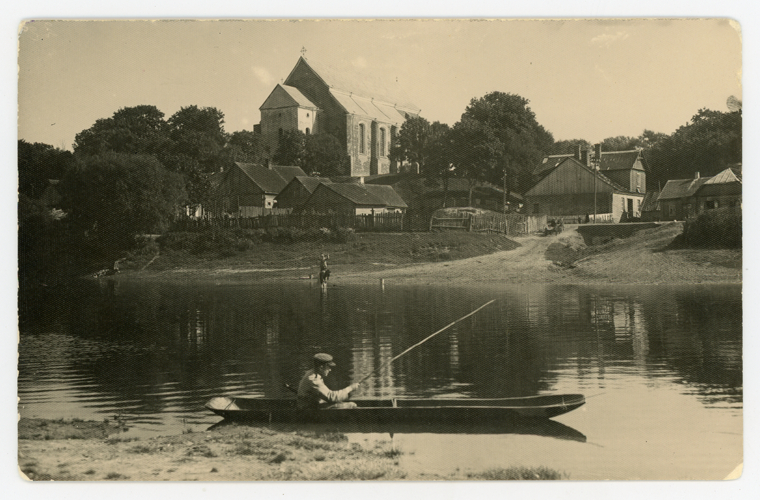
Kėdainių gotikinė šv. Jurgio bažnyčia, baigta statyti XV a. antroje pusėje. Manoma, jog ši bažnyčia pastatyta iš torūniškų plytų. XVI a., priekinio fasado pristatyta žemesnė už bažnyčią renesansinė varpinė. 1758 m. bažnyčia buvo rekonstruota: pažemintas stogas, šoninės navos įgijo skliautus. 1839-1840 m. pagrindinė nava padengta kryžminiais skliautais. Stogas buvo perdengtas čerpėmis, pataisytos mūro sienos, tinkuoti karnizai, smailiarkiai langai tapo pusapvaliomis arkomis. 1918 m. buvo išmūryti nauji kontraforsai vietoje sienų piliastrų (ne visų), dar po dešimties metų uždengtas skardinis stogas.
Nuo XVI a. vid. iki 1627 m. bažnyčia priklausė evangelikams reformatams.
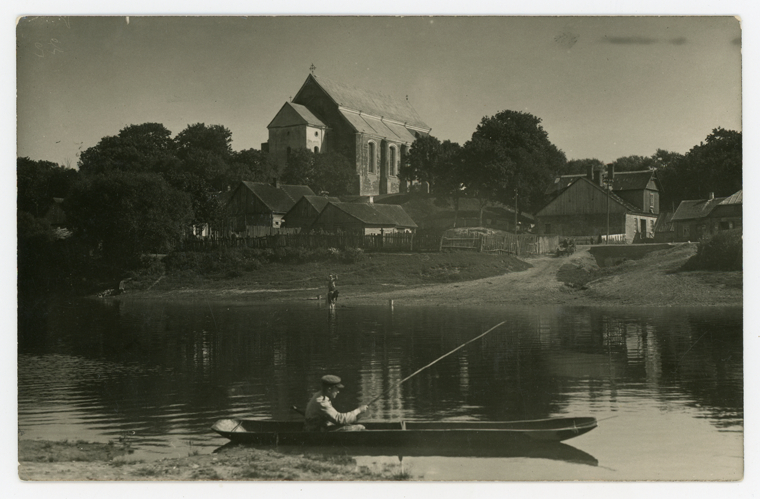
Kėdainių gotikinė šv. Jurgio bažnyčia, baigta statyti XV a. antroje pusėje. Manoma, jog ši bažnyčia pastatyta iš torūniškų plytų. XVI a., priekinio fasado pristatyta žemesnė už bažnyčią renesansinė varpinė. 1758 m. bažnyčia buvo rekonstruota: pažemintas stogas, šoninės navos įgijo skliautus. 1839-1840 m. pagrindinė nava padengta kryžminiais skliautais. Stogas buvo perdengtas čerpėmis, pataisytos mūro sienos, tinkuoti karnizai, smailiarkiai langai tapo pusapvaliomis arkomis. 1918 m. buvo išmūryti nauji kontraforsai vietoje sienų piliastrų (ne visų), dar po dešimties metų uždengtas skardinis stogas.
Nuo XVI a. vid. iki 1627 m. bažnyčia priklausė evangelikams reformatams.