About the Church
The founding of this church is closely linked to the establishment of the parish in 1933. At that time the parish of St Anthony of Padua was set up in Žaliakalnis, and parish priest Juozapas Želvys was appointed to lead it. The first temporary church was set up in an old people's home, but as the parish grew it was decided to build a permanent house of prayer.
On 26 January 1936 construction of the present masonry church began, to a design by engineer Antanas Bistrickas. The building work was successfully completed the same year, and on 20 September 1942 the church was consecrated by Archbishop Juozapas Skvireckas.
Architecturally the church has a rectangular plan, a single tower and three aisles, the central nave being higher than the side ones. The churchyard fence is built of brick masonry, which lends additional solidity and historical value to the appearance of the whole complex. Interestingly, the church's builder, Juozapas Želvys, is buried in the churchyard, and in 2021 the martyr Elena Spirgevičiūtė, who became a symbol of faith and faithfulness in difficult times, was reburied here.
The interior also catches the eye with its beauty and detail. Fine organs, sculptures and wall decorations contribute to the church's spiritual and aesthetic value. It is worth noting that the church is close to the Zoo, so a visit here can be an excellent way to spend a weekend for both families and individual visitors.
St Anthony of Padua's Church in Kaunas is without doubt an important religious and cultural site, recalling the history of the city and the strength of its people. It is a place where one can find peace and quiet reflection, and its history preserves many valuable memories of times when faith and community unity were especially important.
Gallery and Resources
Archive captions are shown in Lithuanian.
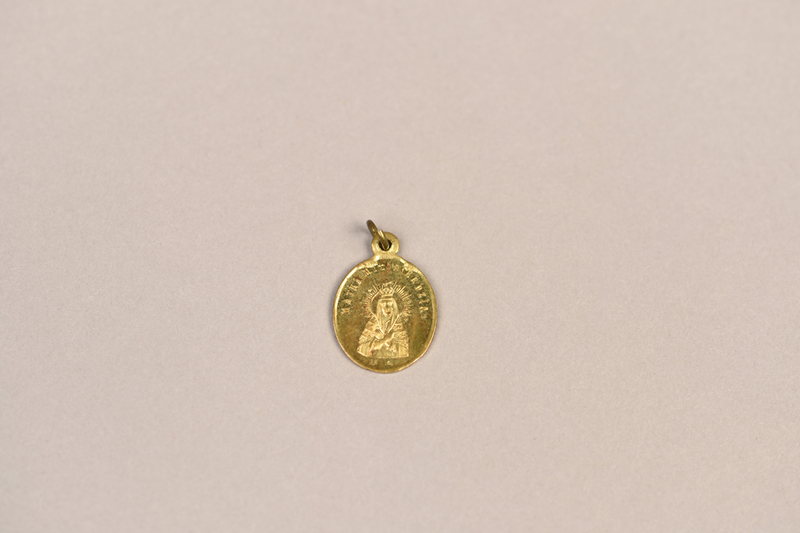
Medaliukas. Averse aplink Aušros Vartų Dievo motinos atvaizdą yra legenda „MATKA MILOSIERDZIA“ (Aušros Vartų Dievo motina). Apačioje yra monograma – medaliuką gaminusio meistro inicialai P. B. [Pawelas Bitschanas] ir dirbtuvių ženklas – avino galvutė. Reverse „S. ANTONI PADEWSKI“ (Šv. Antano Paduviečio) atvaizdas. Gaminta Varšuvoje [Lenkija], XIX a. antroje pusėje. Prie medaliuko yra aselė, per kurią pervertas grandinėlės žiedas.
Pawełas Bitschanas žinomas kaip Varšuvos medalininkas. Informacija paimta iš Reginos Razaliūnaitės straipsnio „XVIII-XX a. Švč. Mergelės Marijos atvaizdų karūnavimo medaliukai Lietuvos nacionaliniame muziejuje“ [Numizmatika, t. 4-5, metraštis 2003-2004 m., p. 72-73.]
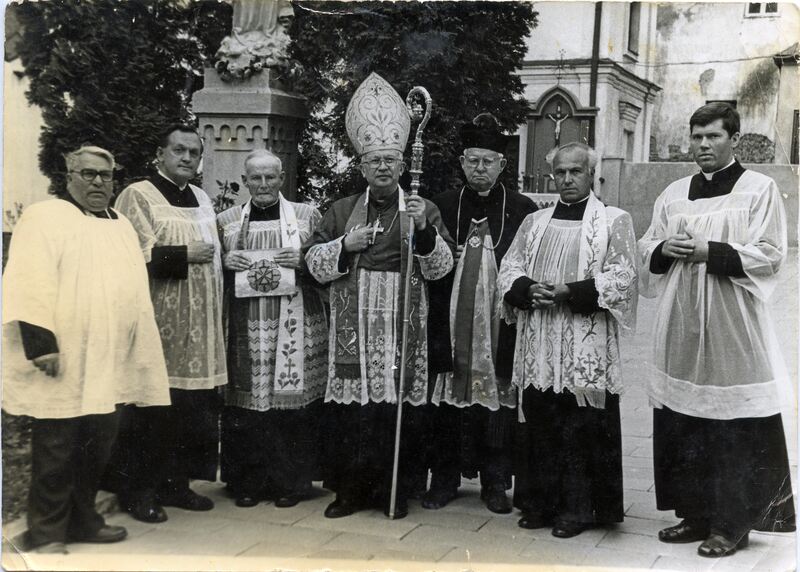
FOTOGRAFIJA, nespalvota, grupinė, horizontalaus formato. Telšių vyskupas Antanas Vaičius, apsuptas šešių dvasininkų ir patarnautojų prie Telšių katedros. Iš kairės į dešinę stovi: 2) kun. Juozapas Pačinskas OFM (1935–1996), Telšių Katedros klebonu buvęs iki 1988 m.; 3) kun. Juozapas Gasiūnas (1901–1989); 4) vysk. Antanas Vaičius (1926–2008); 5) kan. Jonas Beinorius (1908ؘ–1985), Telšių vyskupijos kurijos kancleris; 6) kun. Petras Dumbliauskas (1929–2017); 7) klierikas Jonas Kusas, pabaigęs tris Kauno kunigų seminarijos kursus. Nuotrauka padaryta 1984 m. rugpjūčio mėn. Telšių katedros šventoriuje Sutvirtinimo sakramento teikimo proga. Už nugaros matosi Telšių kunigų seminarijos pastatas, kuris tuo metu buvo kurčnebylių mokykla. Fone kairiau matomas Mergelės Marijos skulptūros postamentas (skulptūra po seminarijos atgavimo grąžinta į seminarijos sodą).
Vaičius Antanas (1926-04-05, Geidučiai, Mosėdžio vlsč., Kretingos apskr. – 2008-11-25Telšiai, palaidotas Telšių katedros šventoriuje), Telšių vyskupas. Klaipėdos universiteto garbės dr. (1997). 1943–46 studijavo Telšių, 1946–51 – Kauno kunigų seminarijoje. 1950 įšventintas kunigu. 1951–52 Plungės, 1952–54 Klaipėdos parapijos vikaras (1953–54 laikinai ėjo ir klebono pareigas), 1954–59 Žygaičių, 1959–62 Salantų, 1962–65 Lauko Sodos parapijų klebonas. 1965–75 ėjo Akmenės klebono ir Viekšnių dekanato vicedekano pareigas. 1973–75 Telšių katedros klebonas ir Telšių vyskupijos kurijos kancleris. 1975 išrinktas Telšių vyskupijos ir Klaipėdos prelatūros kapituliniu vikaru, 1982 paskirtas apaštaliniu administratoriumi. 1986–99 Dvasininkijos (kunigų) kongregacijos Vatikane narys. 1988–93 Lietuvos Vyskupų Konferencijos pirmininko pavaduotojas. 1987 Romoje dalyvavo Lietuvos krikšto 600 m. jubiliejaus minėjime ir J. Matulaičio beatifikacijos iškilmėse (vienintelis Lietuvos vyskupas, gavęs sovietų valdžios leidimą). 1989–2001 Telšių vyskupijos ordinaras, 2001–02 Telšių vyskupijos apaštalinis administratorius, nuo 2003 vyskupas emeritas. Gedimino ordino Komandoro kryžius (1998).
Pačinskas Juozapas (1935-04-11, Lagedžių k., Anykščių r. – 1996-02-25, Plungė), kunigas, vienuolis pranciškonas, tikėjimo gynėjas. Baigė Anykščių Jono Biliūno vidurinę mokyklą. Atliko privalomąją karinę tarnybą sovietinėje kariuomenėje. 1959–1964 m. studijavo Kauno tarpdiecezinėje kunigų seminarijoje. 1964 m. kovo 25 d. Kauno arkikatedroje J. Pačinskas buvo įšventintas kunigu. Pirmąsias Šv. Mišias jis aukojo gimtosios Anykščių parapijos bažnyčioje. Nuo 1964 m. beveik dešimtmetį J. Pačinskas tarnavo vikaru Mažeikiuose, paskui buvo Palangos vikaras. Paskirtas iki 1980 m., apie dešimtmetį, iki 1988 m., jis buvo Telšių Šv. Antano Paduviečio katedros klebonas ir Viešvėnų (Telšių r.) Švč. Trejybės parapijos administratorius. Telšiuose jis organizavo itin aktyvią pogrindinės religinės ir patriotinės literatūros leidybą, išleido ir išplatino apie 200 leidinių, kartu su vikaru, būsimuoju Panevėžio vyskupu Jonu Kaunecku kasmet parduodavo Lietuvos parapijų kunigams iki 50 tūkst. leidinių – daugiausia katekizmų ir maldaknygių. Sovietmečiu slapčia priėmęs vienuolio pranciškono įžadus, J. Pačinskas OFM buvo slaptasis pranciškonų veiklos koordinatorius Lietuvoje. Paskirtas 1988 m. birželio 3 d., 1988–1996 m., iki gyvenimo pabaigos, jis tarnavo Plungės Šv. Jono Krikštytojo parapijos klebonu, buvo Plungės dekanato dekanas. Lietuvos Atgimimo metais J. Pačinskas aktyviai dalyvavo Sąjūdžio renginiuose, valstybės švenčių minėjimuose, sakydamas įkvepiančias dvasingas kalbas. Amžininkų prisiminimuose jis išliko kaip asketiško gyvenimo būdo dvasininkas, visas jėgas skyręs tarnystei Dievui ir žmonėms. Mirė 1996 m. vasario 25 d. Plungėje. Palaidotas Plungės Šv. Jono Krikštytojo bažnyčios šventoriuje.
Gasiūnas Juozapas (1901-06-20, Stasių k., Rokiškio apskr. – 1989-09-18, Lauko Soda, Telšių r.), katalikų kunigas, hitlerinės okupacijos metais gelbėjęs žydų šeimas. Nuo 1928 studijavo Telšių kunigų seminarijoje, kunigu įšventintas 1936-06-06. Vikaras Pikeliuose, Tveruose, Šventojoje, Kražiuose, 1950–1965 – Akmenės parapijos klebonas, vėliau klebonas Varniuose, Tveruose, Lauko Sodoje.
Beinorius Jonas (1908–1985). 1933 m., baigęs Telšių kunigų seminariją, J. Beinorius buvo Skuodo, Klaipėdos gimnazijos kapelionas. Nuo 1940 m. – Tauragės klebonas, po 1955 m. – Mažeikių, Žarėnų-Latvelių, Veiviržėnų, Palangos klebonas, nuo 1965 m. – kanauninkas. 1975–1985 m. J. Beinorius buvo Telšių vyskupijos kurijos kancleris. Mirė 1985 m., palaidotas Švėkšnos kapinėse esančiame Beinorių šeimos kape.
Dumbliauskas Petras SDB (1929-12-02, Bartelių k., Veisiejų vlsč. – 2017-10-04, Marijampolė). 1940 m. baigė Veisiejų vidurinę mokyklą. 1959-03-25 baigė Kauno kunigų seminariją, vyskupo Julijono Steponavičiaus įšventintas kunigu. Vikaru ir klebonu dirbo įvairiose Lietuvos vietose. 1959–1961 m. – Leipalingyje. 1974 m. kartu su kunigais Sigitu Tamkevičiumi, Juozu Zdebskiu, Lionginu Kunevičiumi ir Pranu Adomaičiu pasirašė kreipimąsi į TSRS žmogaus teisių gynimo komitetą, reikalaudami išlaisvinti už Lietuvos Katalikų Bažnyčios kroniką areštuotus okupuotos Lietuvos piliečius. 1978–1979 m., dirbdamas Tabariškėse (Kauno r.), parapijiečių padedamas, atstatė bažnyčią ir pastatė kleboniją, Šv. Kazimiero statulą. 1985-01-31 davė amžinuosius vienuolinius įžadus kunigo Bosko saleziečių Draugijoje. 1989–1995 m. buvo Alytaus klebonas ir Alytaus dekanato dekanas. Čia pradėjo statyti parapijos namus naujajai Švč. Mergelės Marijos, Krikščionių Pagalbos, parapijai. 1995-09-14 atvyko į Kauno Palemono Švč. Mergelės Marijos, Rožančiaus Karalienės, parapiją. 1996 metais perkeltas į Vilniaus Šv. Jono Bosko parapiją, o 1999 metais buvo paskirtas Vilniaus Saleziečių namų direktoriumi. Vėliau paskirtas Rumšiškių parapijos klebonu ir nuo 2001 metų sugrįžo į Palemono parapiją, buvo jos klebonu, po to – vikaru ir rezidentu. Nuo 2014-11-06 – Marijampolės Šv. Vincento Pauliečio parapijos altaristas ir tarnavo iki sveikatos pablogėjimo. Vėliau gydėsi Marijampolės ligoninėje ir ten mirė, palaidotas Veisiejų kapinėse prie kitų kunigų.