About the Church
The Archcathedral Basilica of Sts Peter and Paul, Apostles, in Kaunas is one of the most outstanding architectural monuments in Lithuania, located in the very heart of Kaunas, in the Old Town, by Town Hall Square. This vast Gothic church was built in the 15th century, but over the centuries it changed and acquired features of the Renaissance, Baroque and Neo-Gothic.
The story of this church begins with the Grand Duke of Lithuania Vytautas the Great, who initiated its construction at the beginning of the 15th century. First mentioned in 1413, the church had already become an important religious and cultural centre by that time. Over time the church was repaired, extended and rebuilt several times, and each period left its mark on its architecture.
The church owned several chapels, altar benefices and plots of land in various places, and noble families generously donated funds for its upkeep and development. For example, in 1525 Barbora Juškienė donated the Šėtijai farmstead, and in 1531 Margarita Ačėnaitė donated a masonry house.
In the 17th century the church suffered a good deal of misfortune: a fire in 1655 destroyed the wooden structures and interior decorations, and a city fire in 1732 burned the roof and brought down the vaults of the chancel. Nevertheless, after each such disaster the church was restored and decorated even more beautifully.
One of the most important moments in the church's history came in 1895, when Pope Leo XIII granted it the title of cathedral. This meant that it became the principal church of the diocese. Later, in 1921, Pope Pius XI granted the cathedral the status of a minor basilica, and in 1926, when the Lithuanian ecclesiastical province was established, it became an archcathedral.
The interior of the archcathedral is particularly impressive for its Late Baroque ensemble of seven altars and pulpit. The crystalline vaults of the sacristy are especially valuable, and are considered among the widest in Europe. Buried in the crypt beneath the church are famous bishops such as Motiejus Valančius and Vincentas Sladkevičius, as well as the poet Maironis.
This church houses many valuable works of art, among them the painting "Our Lady of Sorrows", dating from the turn of the 16th and 17th centuries, and canvases by Mykolas Elvyras Andriolli. On the outer wall of the cathedral can be seen the granite mausoleum, with a bas-relief portrait, of the famous poet Jonas Mačiulis-Maironis.
The Archcathedral Basilica of Sts Peter and Paul, Apostles, in Kaunas is not only an important architectural monument but also a significant cultural and religious site, where the most important religious events of the archdiocese begin and where Holy Mass is celebrated. It is a place that bears witness to past prosperity, severe trials and unceasing renewal.
The story of this church begins with the Grand Duke of Lithuania Vytautas the Great, who initiated its construction at the beginning of the 15th century. First mentioned in 1413, the church had already become an important religious and cultural centre by that time. Over time the church was repaired, extended and rebuilt several times, and each period left its mark on its architecture.
The church owned several chapels, altar benefices and plots of land in various places, and noble families generously donated funds for its upkeep and development. For example, in 1525 Barbora Juškienė donated the Šėtijai farmstead, and in 1531 Margarita Ačėnaitė donated a masonry house.
In the 17th century the church suffered a good deal of misfortune: a fire in 1655 destroyed the wooden structures and interior decorations, and a city fire in 1732 burned the roof and brought down the vaults of the chancel. Nevertheless, after each such disaster the church was restored and decorated even more beautifully.
One of the most important moments in the church's history came in 1895, when Pope Leo XIII granted it the title of cathedral. This meant that it became the principal church of the diocese. Later, in 1921, Pope Pius XI granted the cathedral the status of a minor basilica, and in 1926, when the Lithuanian ecclesiastical province was established, it became an archcathedral.
The interior of the archcathedral is particularly impressive for its Late Baroque ensemble of seven altars and pulpit. The crystalline vaults of the sacristy are especially valuable, and are considered among the widest in Europe. Buried in the crypt beneath the church are famous bishops such as Motiejus Valančius and Vincentas Sladkevičius, as well as the poet Maironis.
This church houses many valuable works of art, among them the painting "Our Lady of Sorrows", dating from the turn of the 16th and 17th centuries, and canvases by Mykolas Elvyras Andriolli. On the outer wall of the cathedral can be seen the granite mausoleum, with a bas-relief portrait, of the famous poet Jonas Mačiulis-Maironis.
The Archcathedral Basilica of Sts Peter and Paul, Apostles, in Kaunas is not only an important architectural monument but also a significant cultural and religious site, where the most important religious events of the archdiocese begin and where Holy Mass is celebrated. It is a place that bears witness to past prosperity, severe trials and unceasing renewal.
Gallery and Resources
Archive captions are shown in Lithuanian.

Fotografija. Kauno miesto vaizdas. Valančiaus gatvė. Kairėje užfiksuota Šv. apaštalų Petro ir Povilo arkikatedra bazilika. Fotografas nežinomas.
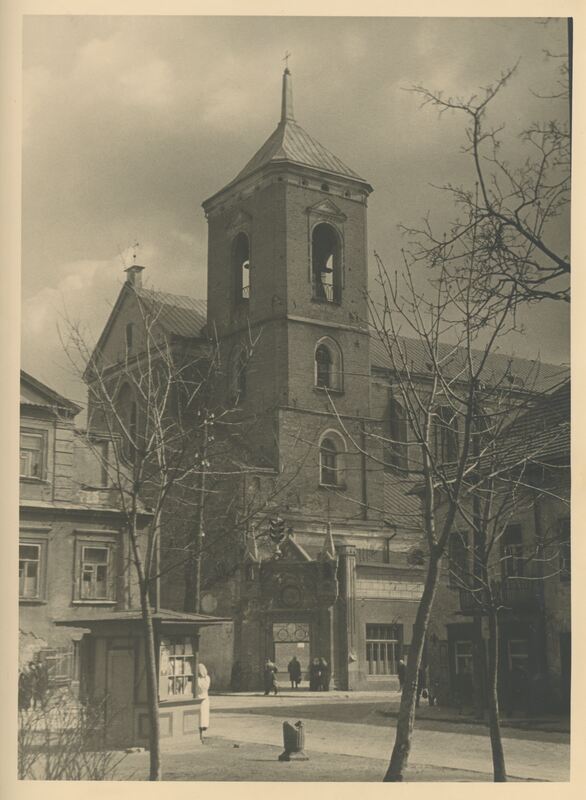
Didžiausias gotikos statinys Lietuvoje (matmenys plane 83 × 34 m, aukštis 30 m, bokšto aukštis 55 m).