About the Church
In the 16th century significant religious changes took place in the Duchy of Biržai. Mikalojus Radvila Rudasis converted to Protestantism and persecuted Catholics, so the first church fell into disrepair, and the second was demolished by Kristupas I Radvila. However, at the end of the 17th century the Bishop of Vilnius, Steponas Pacas, initiated the construction of a new Catholic church, on which Andrius Maciejevičius began work, and he built a chapel.
In 1692 Liudvika Karolina Radvilaitė supported the fitting-out of another Catholic church. The new church was wooden, small, with one altar and three bells, but had no sacristy. In the 18th century Ona Sanguškaitė-Radvilienė endowed yet another wooden church, which had five towers and five altars.
In the early 19th century Biržai passed to the counts Tiškevičius. Jonas Tiškevičius financed the construction of the present masonry church in 1853–1861, to a design by the architect Tomas Tišeckis. Construction was supervised by Laurynas Cezaris Anikinis. The church was blessed in 1861 by Justinas Dovydavičius, secretary to Bishop M. Valančius.
The church has features of Baroque and Classicism. It is a hall church with a rectangular plan (45 × 25 m), with two towers reaching a height of 43 m. Inside there are three naves, separated by piers; the central nave is 15 m wide, and the side ones are 4.3 m each. Inside can be found impressive cross vaults and Classicist-style masonry altars with paintings by the artist Vladislovas Majerovskis.
The church also has one of the largest pneumatic instruments in Lithuania – the organ built by Jurgis Astrauskas in 1935. Several notable clergy are buried in the churchyard next to the church, and the church itself serves not only as a place of prayer but also as a centre of culture and community, with active youth, family and choir activities.
The Biržai Church of St John the Baptist is not only an important religious site but also a significant part of Lithuania's cultural heritage, remembered for its rich history and architectural beauty.
Gallery and Resources
Archive captions are shown in Lithuanian.
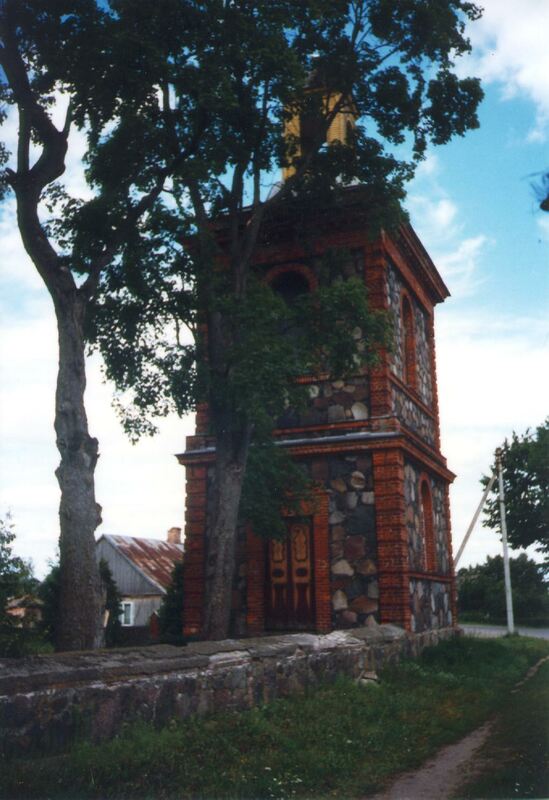
Pastatyta 1880 m.
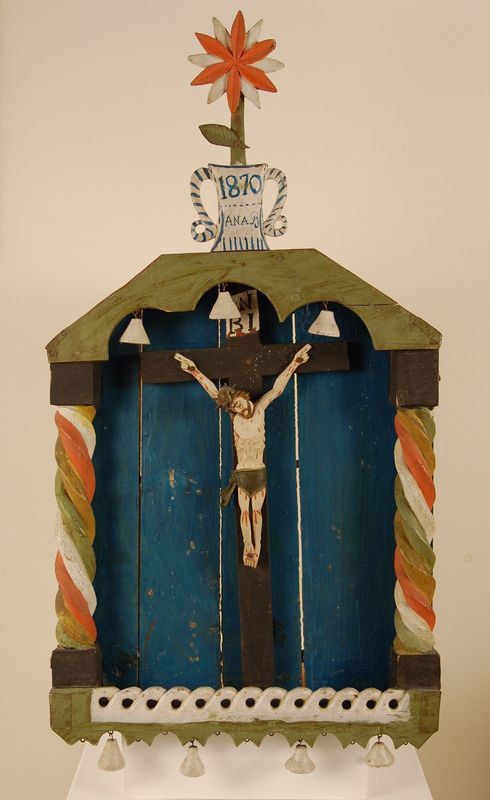
Koplytėlė. 1870 m. Meistras Stepas Jurevičius (1818 m. Astravo dvare - 1893 m. Vaitkūnų k., Biržų raj.)
Talentingo liaudies meistro, interjerinių medžio darbų autoriaus, skulptoriaus ir raižytojo Stepo Jurevičiaus sukurti meniniu požiūriu vertingi darbai - mediniai paneliai, frizai, karnizai, parketinės su inkrustacijomis grindys puošė grafų Tiškevičių rūmus Astrave, Tiškevičiaus šeimos ložės ir medinės presbiterijos grotelės — šv. Jono Krikštytojo bažnyčią. Po ilgo ir įtempto darbo Astravo dvare apie 1885 m. meistras buvo apgyvendintas Vaitkūnų kaime. Nebeturėdamas sudėtingesnių darbo įrankių, pradėjo dirbti medines skulptūrėles, kryžius, koplytėles, antkapinius paminklus, kraitines skrynias, medžio raižinius. Iki šių dienų išliko negausus meistro darbų palikimas, saugomas Biržų, Kauno M.K.Čiurlionio dailės muziejuose, privačiose kolekcijose. Dalis darbų yra neatpažinti.
1931 m. koplytėlę BIržų muziejui padovanojo Kazė Mockūnaitė iš Lamokėlių k., Biržų vls.