About the Church
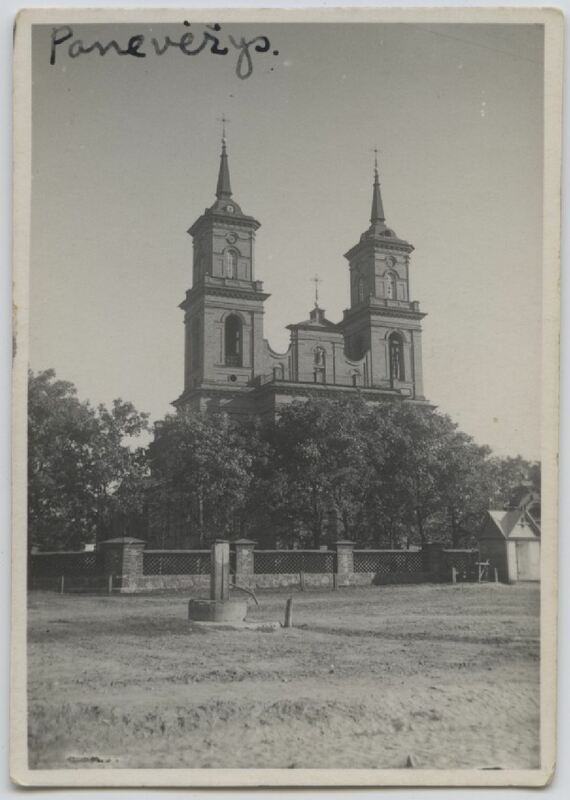
In Panevėžys, on Smėlynės Street, stands the impressive Church of Sts Peter and Paul, Apostles – a unique example of Romanesque Revival architecture. The church's history goes back to 1507, when the first wooden church was built on the right bank of the Nevėžis. Over the long centuries it underwent numerous changes, losses and rebuildings.
The first church, though wooden and small, had three altars and a small turret with three bells. Beside it stood a presbytery, farm buildings, an inn, a bathhouse and even a distillery. From 1528 local children were taught at the parish school.
Despite difficulties and disasters, such as the church falling into decay in 1601 or the house of prayer being damaged during the wars of 1655, the faithful of Panevėžys kept striving to restore their church. Construction of today's masonry church began in 1877, after many attempts and setbacks. The building work was completed in 1885, and its architect was Ustinas Golinevičius.
The church's interior is also worth attention. It has three altars and a 23-register organ, installed as early as 1887. Despite the losses suffered during the First World War – bells taken away to Russia – the church was restored and continued to serve the city's community.
The postwar period is also worth mentioning, when the church was devastated, but was renovated through the efforts of canon Vladas Butvila. Later, on the initiative of prelate Kazimieras Dulksnys, new bells were acquired. During the tenure of monsignor Jonas Juodelis as parish priest (1970–2006), a new presbytery was built.
Today the Church of Sts Peter and Paul, Apostles, in Panevėžys is not only a place of religious worship but also an important cultural heritage site, recalling the city's rich history and the people loyal to it. It is a place where the spirit of former times and present-day life intertwine.
The first church, though wooden and small, had three altars and a small turret with three bells. Beside it stood a presbytery, farm buildings, an inn, a bathhouse and even a distillery. From 1528 local children were taught at the parish school.
Despite difficulties and disasters, such as the church falling into decay in 1601 or the house of prayer being damaged during the wars of 1655, the faithful of Panevėžys kept striving to restore their church. Construction of today's masonry church began in 1877, after many attempts and setbacks. The building work was completed in 1885, and its architect was Ustinas Golinevičius.
The church's interior is also worth attention. It has three altars and a 23-register organ, installed as early as 1887. Despite the losses suffered during the First World War – bells taken away to Russia – the church was restored and continued to serve the city's community.
The postwar period is also worth mentioning, when the church was devastated, but was renovated through the efforts of canon Vladas Butvila. Later, on the initiative of prelate Kazimieras Dulksnys, new bells were acquired. During the tenure of monsignor Jonas Juodelis as parish priest (1970–2006), a new presbytery was built.
Today the Church of Sts Peter and Paul, Apostles, in Panevėžys is not only a place of religious worship but also an important cultural heritage site, recalling the city's rich history and the people loyal to it. It is a place where the spirit of former times and present-day life intertwine.
Gallery and Resources