About the Church
The Church of the Blessed Virgin Mary, Queen of Mount Carmel, in Kolainiai is a special place with a rich and complex history, closely bound up with Kolainiai and its community.
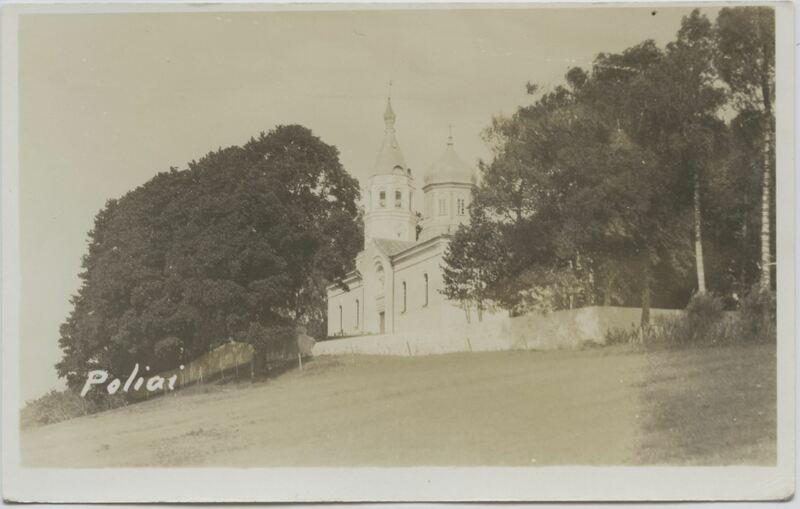
The first chapel built on this site appeared as early as around 1740, when the manor owner Jonas Adamkavičius decided to found a small masonry shrine. Carmelite friars soon joined this chapel. They not only fostered religious life but also cared for education — from 1817 to 1831 a six-grade public school operated here.
However, as the community grew, the small chapel became too cramped. In 1827 a new masonry church was built, using fragments of the old chapel and monastery.
Troubled times began in the mid-19th century. After the 1864 uprising the church was closed and in 1867 turned into an Orthodox church. Yet the Lithuanian Catholic community did not lose its spiritual strength — in 1922 the Orthodox church became a Catholic church again, while during the Second World War, in 1942, a new wooden Orthodox church was built, dedicated to the icon of the Mother of God "Smolenskaya".
During the Soviet period the church suffered enormous damage. It was not only confiscated but also badly devastated. However, after the collapse of the Soviet Union the community came together and restored its shrine. The present Church of the Blessed Virgin Mary, Queen of Mount Carmel, in Kolainiai was consecrated on 12 October 1997.
In architectural terms this church is truly impressive. It stands on a small hill, offering a splendid view over the valley of the river Venta. Its historical appearance has been restored — the layout of the churchyard has been recreated from surviving fragments, and the former gates have been rebuilt. Inside, the church has retained its single-nave space, where fragments of wall painting from the first half of the 19th century can be admired. Set into the high altar is a sculpture of the Risen Christ, created by the well-known Lithuanian artist Stanislovas Kuzma in 1997.
The Church of the Blessed Virgin Mary, Queen of Mount Carmel, in Kolainiai is more than just a religious building. It is a place that reflects a centuries-long history of people's faith and the community's strength.
The first chapel built on this site appeared as early as around 1740, when the manor owner Jonas Adamkavičius decided to found a small masonry shrine. Carmelite friars soon joined this chapel. They not only fostered religious life but also cared for education — from 1817 to 1831 a six-grade public school operated here.
However, as the community grew, the small chapel became too cramped. In 1827 a new masonry church was built, using fragments of the old chapel and monastery.
Troubled times began in the mid-19th century. After the 1864 uprising the church was closed and in 1867 turned into an Orthodox church. Yet the Lithuanian Catholic community did not lose its spiritual strength — in 1922 the Orthodox church became a Catholic church again, while during the Second World War, in 1942, a new wooden Orthodox church was built, dedicated to the icon of the Mother of God "Smolenskaya".
During the Soviet period the church suffered enormous damage. It was not only confiscated but also badly devastated. However, after the collapse of the Soviet Union the community came together and restored its shrine. The present Church of the Blessed Virgin Mary, Queen of Mount Carmel, in Kolainiai was consecrated on 12 October 1997.
In architectural terms this church is truly impressive. It stands on a small hill, offering a splendid view over the valley of the river Venta. Its historical appearance has been restored — the layout of the churchyard has been recreated from surviving fragments, and the former gates have been rebuilt. Inside, the church has retained its single-nave space, where fragments of wall painting from the first half of the 19th century can be admired. Set into the high altar is a sculpture of the Risen Christ, created by the well-known Lithuanian artist Stanislovas Kuzma in 1997.
The Church of the Blessed Virgin Mary, Queen of Mount Carmel, in Kolainiai is more than just a religious building. It is a place that reflects a centuries-long history of people's faith and the community's strength.
Gallery and Resources
Archive captions are shown in Lithuanian.
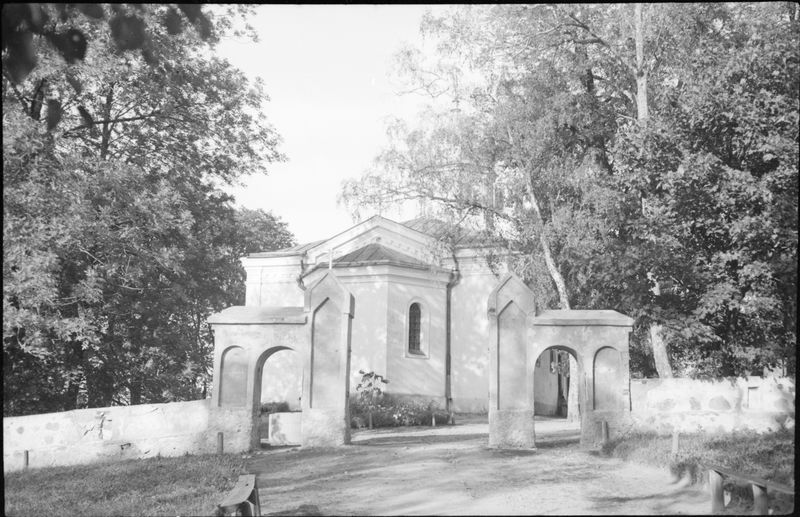
Kolainių kaimo (Užvenčio vls.) Švč. Mergelės Marijos, Karmelio kalno karalienės bažnyčios (atstatyta, pašventinta 1997 m.) fragmentas.
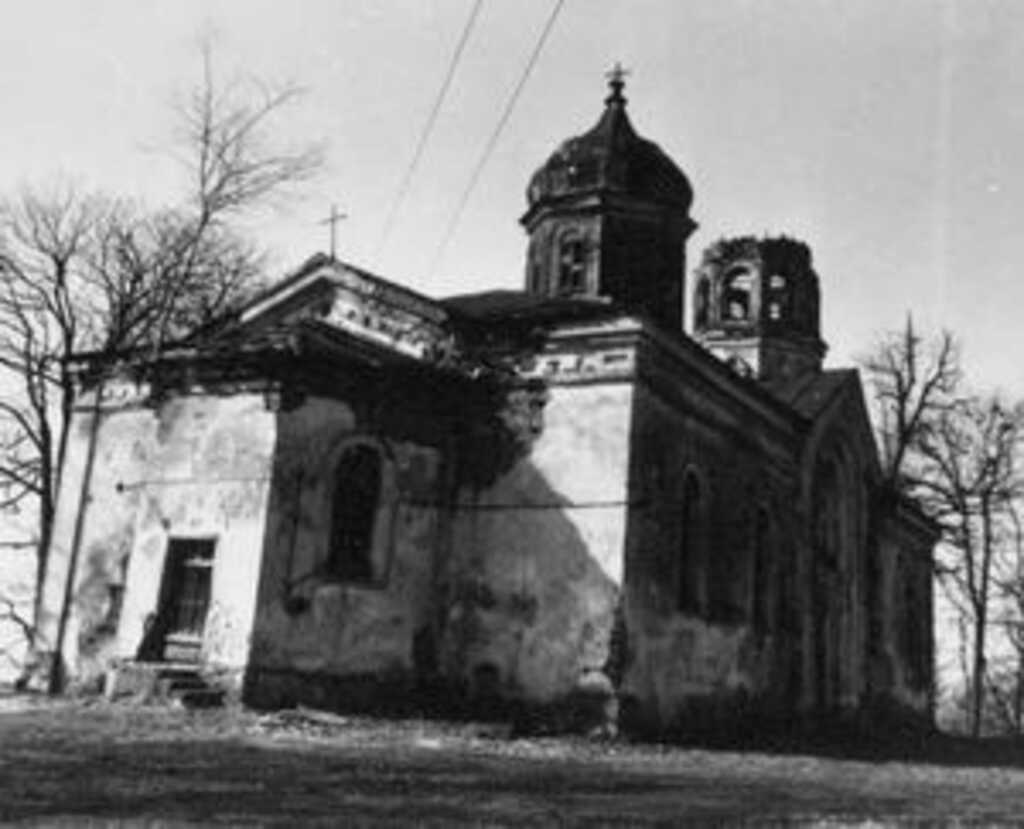
Kolainių bažnyčia.