About the Church
The Church of St Bartholomew the Apostle in Karklėnai is a distinctive monument of wooden architecture, whose history is closely tied to the faith and culture of the local people. The church stands in the centre of the small town of Karklėnai, near the Varniai–Kražiai road, and belongs to the Diocese of Šiauliai and the Kelmė Deanery.
The church's origins reach back to the 18th century, when in 1767 the Karklėnai manor owner Ignas Šiukšta built the first shrine, which was a filial church of the Pašilė parish. The church was renovated in 1779, and by 1841 it held a valakas and three margai of land. The present wooden church, as we see it today, was built in 1871. In addition, an independent parish was established in 1923, further strengthening the spiritual life of the local community.
Architecturally, the Church of St Bartholomew the Apostle in Karklėnai has a rectangular plan with a small tower and five altars. Its churchyard wall is of stone masonry, and standing within it is another unique structure — a three-tiered wooden bell tower. The church's interior is also highly valuable; it contains works of church art from the 18th century to the first half of the 20th century, which not only adorn the church but also reflect a variety of artistic styles and periods.
Interestingly, over the course of its history the church has become a place of not only religious but also cultural significance. It bears witness to the constant care the people of the Karklėnai region have shown for their shrine, and to a strong faith that continues to breathe through this place's atmosphere across generations.
On visiting the Church of St Bartholomew the Apostle in Karklėnai, we can sense not only the beauty of the architecture of those times, but also a deep spiritual heritage that is still alive in this small Lithuanian town community.
The church's origins reach back to the 18th century, when in 1767 the Karklėnai manor owner Ignas Šiukšta built the first shrine, which was a filial church of the Pašilė parish. The church was renovated in 1779, and by 1841 it held a valakas and three margai of land. The present wooden church, as we see it today, was built in 1871. In addition, an independent parish was established in 1923, further strengthening the spiritual life of the local community.
Architecturally, the Church of St Bartholomew the Apostle in Karklėnai has a rectangular plan with a small tower and five altars. Its churchyard wall is of stone masonry, and standing within it is another unique structure — a three-tiered wooden bell tower. The church's interior is also highly valuable; it contains works of church art from the 18th century to the first half of the 20th century, which not only adorn the church but also reflect a variety of artistic styles and periods.
Interestingly, over the course of its history the church has become a place of not only religious but also cultural significance. It bears witness to the constant care the people of the Karklėnai region have shown for their shrine, and to a strong faith that continues to breathe through this place's atmosphere across generations.
On visiting the Church of St Bartholomew the Apostle in Karklėnai, we can sense not only the beauty of the architecture of those times, but also a deep spiritual heritage that is still alive in this small Lithuanian town community.
Gallery and Resources
Archive captions are shown in Lithuanian.
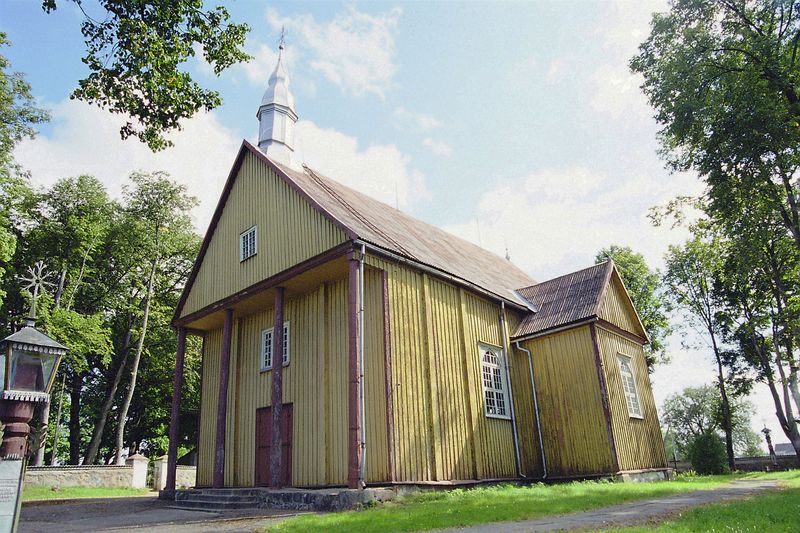
Spalvota, horizontalaus formato nuotrauka. Karklėnų Šv. apaštalo Baltramiejaus bažnyčia, Mokyklos g. 35, Karklėnų k., Kražių sen., Kelmės r. sav. Vaizdas iš šiaurės rytų pusės, nuo varpinės. Fotografas Jonas Šimkus, Kretinga, 2001 m.
Bažnyčia medinė, stačiakampio plano, su 4 kolonų paremtu frontonu, virš kurio kyla renesansinis bokštelis. Prie šoninio fasado pristatyta zakristija. Šventorių juosia akmenų mūro tvora. Jame priešais bažnyčią ir už jos stovi po koplytstulpį.
Pastatyta 1871 metais. Priklauso Motiejaus Valančiaus vyskupavimo laikotarpiu (1850–1875) pastatytoms ar restauruotoms bažnyčioms.
Aprašymą parengė Algirdas Čėsna, 2014-06-05.
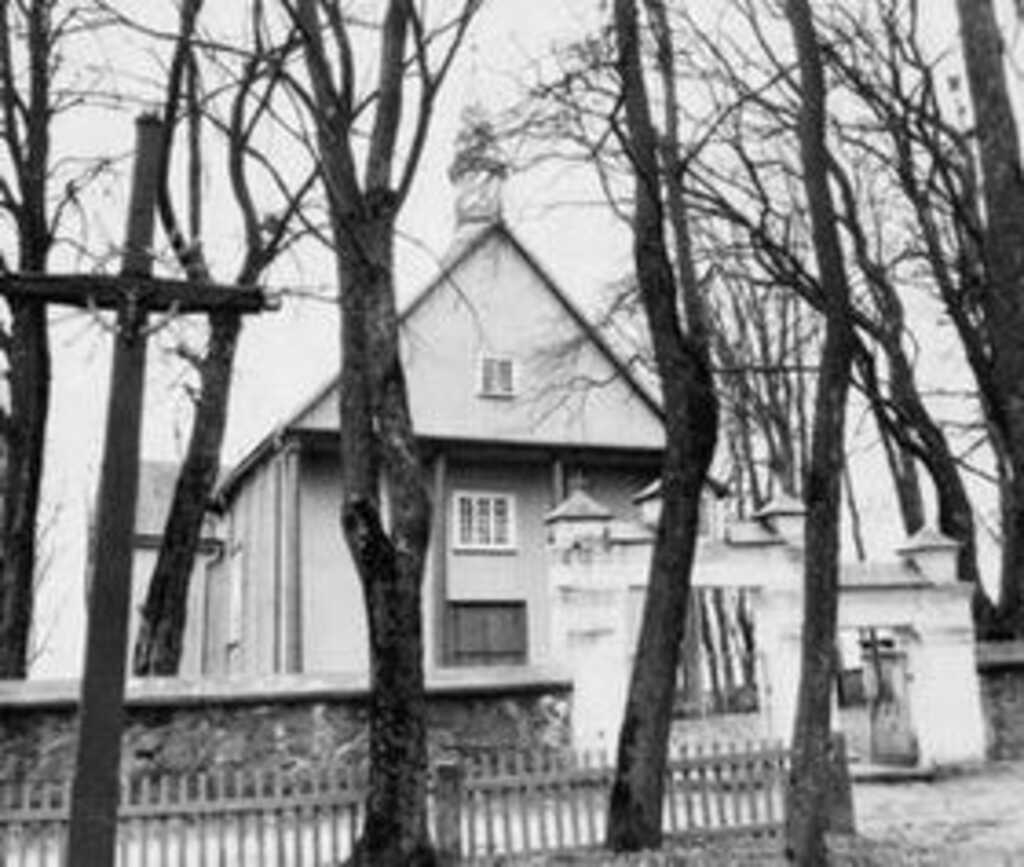
Karklėnų bažnyčia.