About the Church
The Church of the Immaculate Conception of the Blessed Virgin Mary at Kražiai is one of the most impressive and history-laden sacred buildings in Samogitia. Standing at Kražiai, on the beautiful bank of the Kražantė river, this Late Baroque-style church not only catches the eye with its architecture but also conceals a great many intriguing stories.
The first church at Kražiai was built as early as 1416 by the Samogitian elder Mykolas Kęsgaila Valimantaitis. Unfortunately it burned down, but a new one was built in 1475, which became one of the wealthiest presbyteries in Samogitia. At the start of the 16th century this church was served by the future bishop Valerijonas Protasevičius and by the poet and lawyer Petras Roizijus.
Kražiai was an important religious centre: from 1570 to 1740 a seminary for priests operated here, and in 1607 the Jesuits established a college. Later, in 1639, a Benedictine convent also appeared in the town. In 1642 Chrizostomas Mykolas Volodkevičius built a church for the Benedictine nuns, standing on the foundations of the Radvila castle. This church was the most splendid in Samogitia, with 12 stucco altars and a painting of the Blessed Virgin Mary attributed to Leonardo da Vinci.
The church's history is full of fires and rebuildings. In 1709 the parish church burned down, and on its site a wooden church was rebuilt in 1739. In 1763, however, to a design by Tomas Žebrauskas, the present masonry church was built, becoming a lasting symbol of the town.
One of the most dramatic dates in the history of the Kražiai church is 1893. On the order of Tsar Alexander III, an attempt was made to demolish the church and convent, but the determined faithful would not allow it. This resistance escalated into violent clashes with tsarist Russian Cossacks, known as the "Kražiai Massacre", in which many people were killed or wounded. Although the church was closed, its demolition was halted.
In 1908 the church was returned to the parish and reconsecrated two years later. In the 20th century the church also suffered from fires, especially in 1941, when it almost completely burned down. Yet, despite all these misfortunes, it was rebuilt and continued its religious functions.
For lovers of architecture the church is a true gem. Its rectangular-plan, single-naved, twin-towered structure with octagonal side towers remains a dominant element of the Kražiai skyline. The church's interior is likewise resplendent: the high altar is adorned with a silver-clad image of the "Assumption of the Blessed Virgin Mary", and the organ is among the largest in Samogitia.
The Kražiai church is impressive not only architecturally but also as a living monument of historical memory, bearing witness to the faith, resilience and resistance of the region's people even in the most difficult times.
The first church at Kražiai was built as early as 1416 by the Samogitian elder Mykolas Kęsgaila Valimantaitis. Unfortunately it burned down, but a new one was built in 1475, which became one of the wealthiest presbyteries in Samogitia. At the start of the 16th century this church was served by the future bishop Valerijonas Protasevičius and by the poet and lawyer Petras Roizijus.
Kražiai was an important religious centre: from 1570 to 1740 a seminary for priests operated here, and in 1607 the Jesuits established a college. Later, in 1639, a Benedictine convent also appeared in the town. In 1642 Chrizostomas Mykolas Volodkevičius built a church for the Benedictine nuns, standing on the foundations of the Radvila castle. This church was the most splendid in Samogitia, with 12 stucco altars and a painting of the Blessed Virgin Mary attributed to Leonardo da Vinci.
The church's history is full of fires and rebuildings. In 1709 the parish church burned down, and on its site a wooden church was rebuilt in 1739. In 1763, however, to a design by Tomas Žebrauskas, the present masonry church was built, becoming a lasting symbol of the town.
One of the most dramatic dates in the history of the Kražiai church is 1893. On the order of Tsar Alexander III, an attempt was made to demolish the church and convent, but the determined faithful would not allow it. This resistance escalated into violent clashes with tsarist Russian Cossacks, known as the "Kražiai Massacre", in which many people were killed or wounded. Although the church was closed, its demolition was halted.
In 1908 the church was returned to the parish and reconsecrated two years later. In the 20th century the church also suffered from fires, especially in 1941, when it almost completely burned down. Yet, despite all these misfortunes, it was rebuilt and continued its religious functions.
For lovers of architecture the church is a true gem. Its rectangular-plan, single-naved, twin-towered structure with octagonal side towers remains a dominant element of the Kražiai skyline. The church's interior is likewise resplendent: the high altar is adorned with a silver-clad image of the "Assumption of the Blessed Virgin Mary", and the organ is among the largest in Samogitia.
The Kražiai church is impressive not only architecturally but also as a living monument of historical memory, bearing witness to the faith, resilience and resistance of the region's people even in the most difficult times.
Gallery and Resources
Archive captions are shown in Lithuanian.
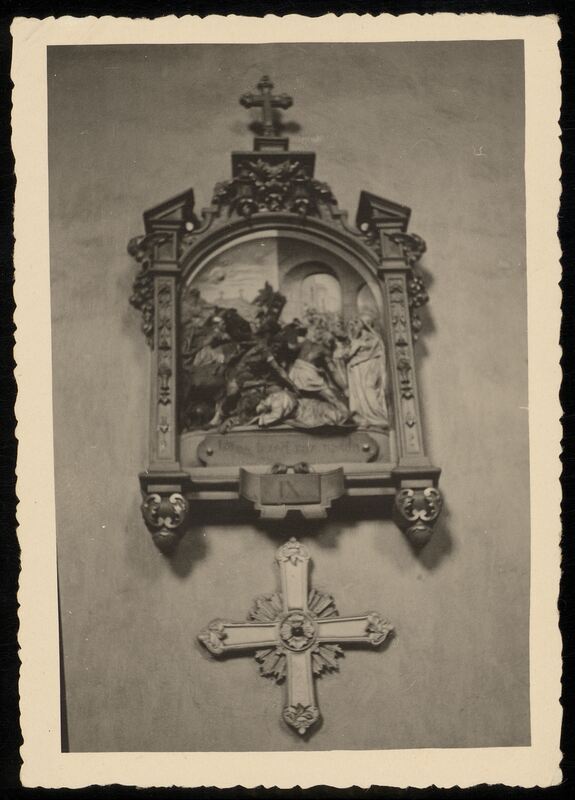
Kražių Švč. Mergelės Marijos Nekaltojo Prasidėjimo bažnyčia. Kitoje pusėje ranka įrašyta: „Kražių bažn. stacija“. 9-ta Kryžiaus kelio stotis. Viešpats Jėzus parpuola trečią kartą.
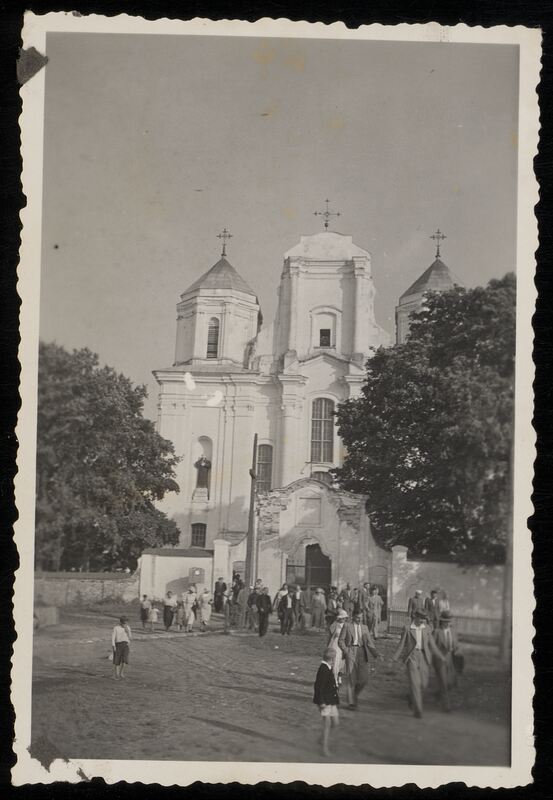
Fotografija. Kražių Švč. Mergelės Marijos Nekaltojo Prasidėjimo bažnyčia. Kitoje pusėje ranka įrašyta: „Kražių bažn.“ Kražiai, XX a. 4 deš.
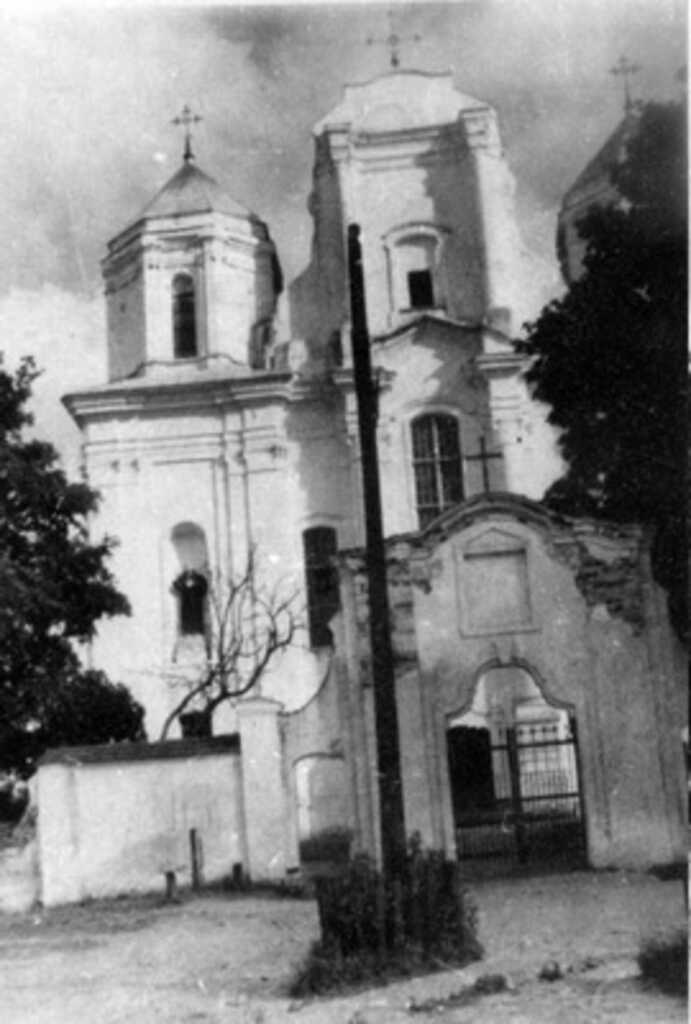
Kražių bažnyčia.