About the Church
The Church of the Assumption of the Blessed Virgin Mary in Pakapė is a splendid example of vernacular architecture, standing in the small village of Pakapė, by the road leading from Šiauliai to Tytuvėnai. This wooden church, built in 1879, holds a deep and interesting history.
Before the present church existed, a small chapel was built around 1760 on the site of the Vileikiai village cemetery. Later, in 1780, a priest came to this area, maintained by the local manor. When the Kurtuvėnai filial church was established, it was named after Pakapė. In 1860 the manor's owner, Eustachijus Karpis, built a wooden church here, allotted it 33 dessiatines of land, and promised to pay the priest 230 roubles annually.
Although the parish was officially established in 1861, as early as 1875 the villagers ran into difficulties wanting to repair the church – the authorities would not allow donations to be collected for the repair. It was only when the parish priest promised to repair the church at his own expense that permission was granted. Thus in 1879 a new, sturdier wooden church was built.
The architecture of this church is distinctive for its cruciform plan and vernacular forms. The church's turret and three-sided apse give the structure elegance and grace. The stone-masonry wall surrounding the churchyard adds still more authenticity and historical charm. A bell tower also stands in the churchyard, completing the overall ensemble.
The Pakapė church serves not only as a centre of religious life but also as cultural heritage, bearing witness to the past of this region. This small but significant wooden church is a fine example of how the support of a community and of manor owners can help preserve important cultural monuments.
If you ever have the chance to visit this place, be sure to notice the church's details, which tell their own stories of traditions spanning centuries and the community's determination to keep its heritage alive.
Before the present church existed, a small chapel was built around 1760 on the site of the Vileikiai village cemetery. Later, in 1780, a priest came to this area, maintained by the local manor. When the Kurtuvėnai filial church was established, it was named after Pakapė. In 1860 the manor's owner, Eustachijus Karpis, built a wooden church here, allotted it 33 dessiatines of land, and promised to pay the priest 230 roubles annually.
Although the parish was officially established in 1861, as early as 1875 the villagers ran into difficulties wanting to repair the church – the authorities would not allow donations to be collected for the repair. It was only when the parish priest promised to repair the church at his own expense that permission was granted. Thus in 1879 a new, sturdier wooden church was built.
The architecture of this church is distinctive for its cruciform plan and vernacular forms. The church's turret and three-sided apse give the structure elegance and grace. The stone-masonry wall surrounding the churchyard adds still more authenticity and historical charm. A bell tower also stands in the churchyard, completing the overall ensemble.
The Pakapė church serves not only as a centre of religious life but also as cultural heritage, bearing witness to the past of this region. This small but significant wooden church is a fine example of how the support of a community and of manor owners can help preserve important cultural monuments.
If you ever have the chance to visit this place, be sure to notice the church's details, which tell their own stories of traditions spanning centuries and the community's determination to keep its heritage alive.
Gallery and Resources
Archive captions are shown in Lithuanian.
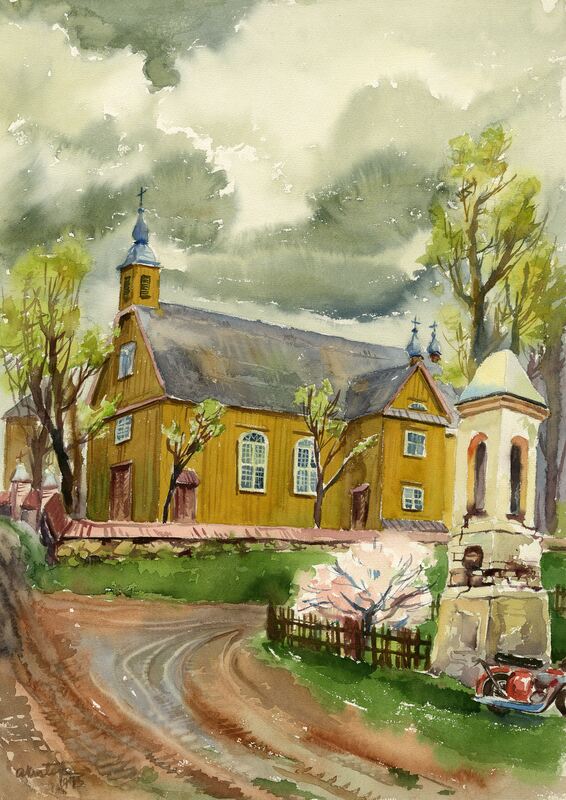
Kompozicijoje – Pakapės Švč. Mergelės Marijos ėmimo į dangų bažnyčia.
Signuotas averso apatinėje dalyje kairėje.
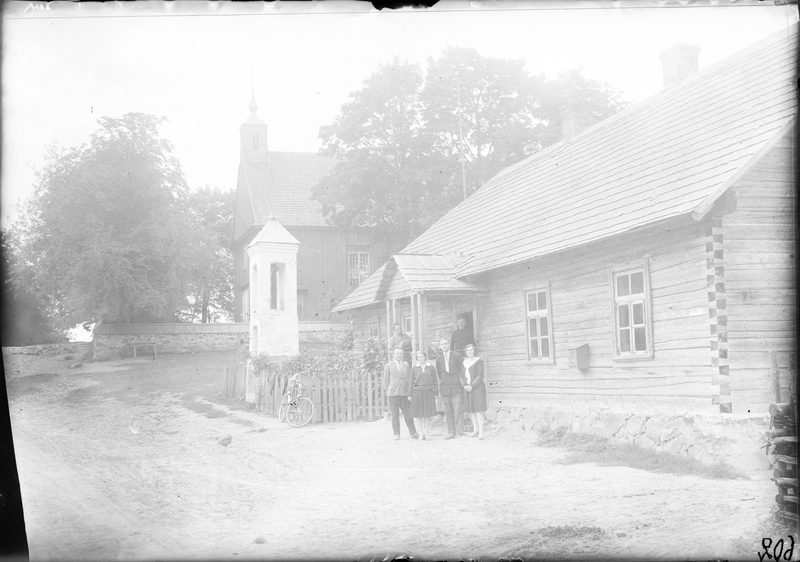
Pakapė. Fotonegatyve matoma Pakapės Švč. Mergelės Marijos ėmimo į dangų bažnyčia.