About the Church
The Church of St Joseph at Kiaunoriai is a distinctive place for both its architecture and its history. It stands in the small village of Kiaunoriai, on the Tytuvėnai–Pašiaušė road. The church's historical journey has been long and complex, full of challenges and efforts at rebuilding.
It all began in the mid-18th century, around 1766, when the first chapel was built at the Kiaunoriai manor. Later, in 1856–1859, it was replaced by a masonry chapel, which became an important religious site for the region's residents. During the First World War, however, in 1915, the German army burned this chapel down.
After the war, in 1918, the permanent priest Jurgis Deveikis arrived in Kiaunoriai and held services in the presbytery. In 1925–1926 the chapel was rebuilt, and in 1935 it became a filial church. Unfortunately the Second World War again brought disaster – in 1944 the church was destroyed, and services were afterwards temporarily held in the parish hall. But in 1959 the church caught fire again and burned down completely.
Against the backdrop of these misfortunes, tragic personal stories came to light. The priest of Kiaunoriai, Bronislovas Gaižutis, was convicted and deported to Siberia, where the curate Paulius Jasienskis was also deported, though he never returned.
The church's ruins stood until the 1980s, when permission to rebuild the shrine was finally granted. Construction work began on 5 December 1990, and already in 1991, to a design by the architect Henrikas Kęstutis Šilgalis, the church was rebuilt and began operating again. It was a triumph for the community – the surrounding collective farms donated much of the material for the construction.
Architecturally, the church was reconstructed from surviving photographs of the old, burnt-down church. The original church was built during the Romantic period and was notable for its monumentality and simplicity: a rectangular building with a portico and a turret rising above it. In the reconstructed building H. Šilgalis retained elements of the old form, but enriched it with a new masonry portico of four columns, without the turret. In the centre of the triangular pediment a semicircular window opening was incorporated, with the symbolism of the Eye of Providence, and above the pediment an openwork cross was raised.
In the interior a special place is occupied by the sculpture of Our Lady of Mount Carmel on the altar, created by the sculptor Stanislovas Kuzma. It symbolises the spirituality and aesthetics of the shrine. The church is single-naved with one altar, and the white sculpture of Mary, holding the infant Jesus in one hand and a scapular in the other, adorns the altar space on the wall on a special pedestal.
Beside the church a two-tier bell tower was planned, its forms to be modified in the Romantic style – with tall, slender rising niches and rusticated edging, lending it distinctiveness.
The Church of St Joseph at Kiaunoriai today is not only a religious centre but also a historical and cultural heritage site, telling of the determination and faith of local people in the most difficult of times.
It all began in the mid-18th century, around 1766, when the first chapel was built at the Kiaunoriai manor. Later, in 1856–1859, it was replaced by a masonry chapel, which became an important religious site for the region's residents. During the First World War, however, in 1915, the German army burned this chapel down.
After the war, in 1918, the permanent priest Jurgis Deveikis arrived in Kiaunoriai and held services in the presbytery. In 1925–1926 the chapel was rebuilt, and in 1935 it became a filial church. Unfortunately the Second World War again brought disaster – in 1944 the church was destroyed, and services were afterwards temporarily held in the parish hall. But in 1959 the church caught fire again and burned down completely.
Against the backdrop of these misfortunes, tragic personal stories came to light. The priest of Kiaunoriai, Bronislovas Gaižutis, was convicted and deported to Siberia, where the curate Paulius Jasienskis was also deported, though he never returned.
The church's ruins stood until the 1980s, when permission to rebuild the shrine was finally granted. Construction work began on 5 December 1990, and already in 1991, to a design by the architect Henrikas Kęstutis Šilgalis, the church was rebuilt and began operating again. It was a triumph for the community – the surrounding collective farms donated much of the material for the construction.
Architecturally, the church was reconstructed from surviving photographs of the old, burnt-down church. The original church was built during the Romantic period and was notable for its monumentality and simplicity: a rectangular building with a portico and a turret rising above it. In the reconstructed building H. Šilgalis retained elements of the old form, but enriched it with a new masonry portico of four columns, without the turret. In the centre of the triangular pediment a semicircular window opening was incorporated, with the symbolism of the Eye of Providence, and above the pediment an openwork cross was raised.
In the interior a special place is occupied by the sculpture of Our Lady of Mount Carmel on the altar, created by the sculptor Stanislovas Kuzma. It symbolises the spirituality and aesthetics of the shrine. The church is single-naved with one altar, and the white sculpture of Mary, holding the infant Jesus in one hand and a scapular in the other, adorns the altar space on the wall on a special pedestal.
Beside the church a two-tier bell tower was planned, its forms to be modified in the Romantic style – with tall, slender rising niches and rusticated edging, lending it distinctiveness.
The Church of St Joseph at Kiaunoriai today is not only a religious centre but also a historical and cultural heritage site, telling of the determination and faith of local people in the most difficult of times.
Gallery and Resources
Archive captions are shown in Lithuanian.

Negatyve įamžintas berniukas sėdintis ant arklio. Tolumoje matoma Kiaunorių Šv. Juozapo bažnyčia.
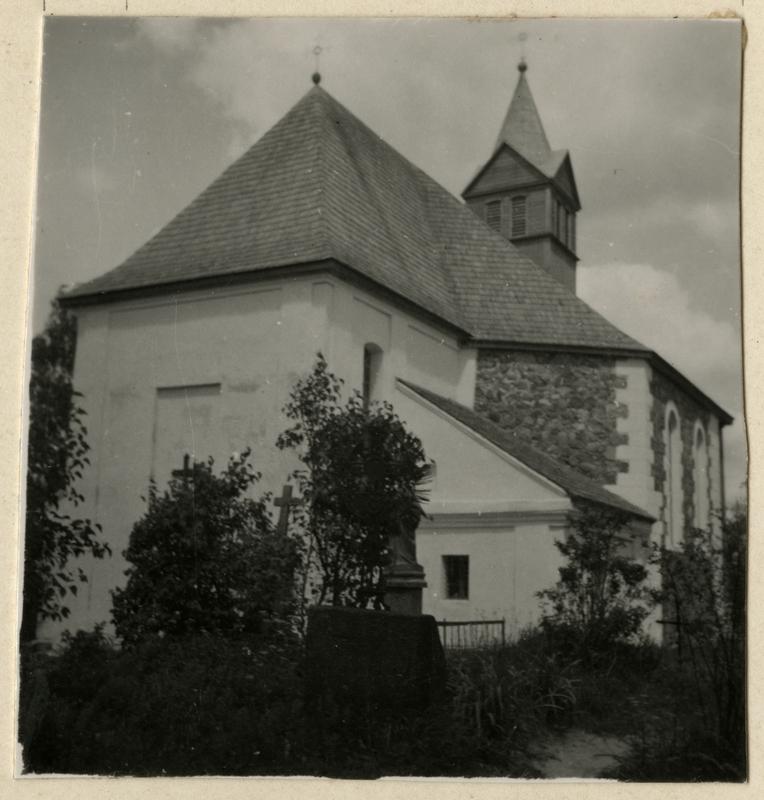
Kiaunorių (dab. Kelmės raj.) Šv. Juozapo bažnyčia. Bažnyčia sugriauta Antrojo pasaulinio karo metu, atstatyta 1991 m.
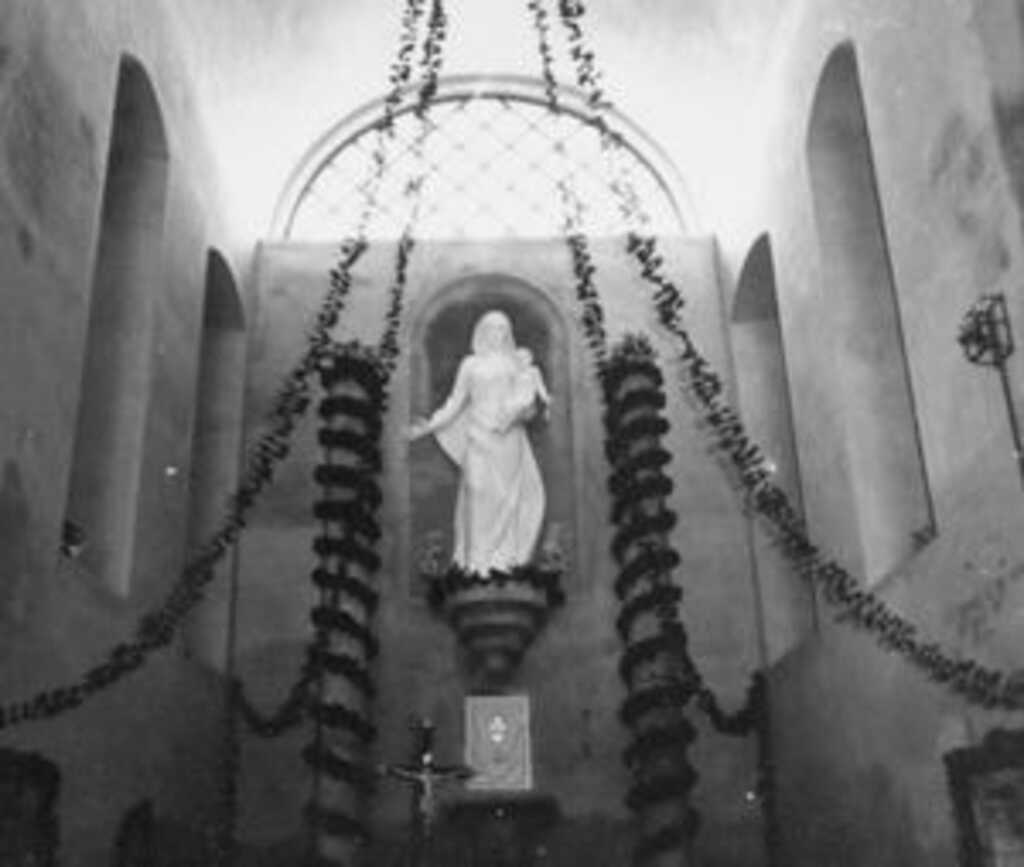
Skulptoriaus Stasio Kuzmos sukurta Dievo Motinos skulptūra atstatytoje Kiaunorių bažnyčioje.