About the Church
The Church of the Blessed Virgin Mary in Šiaudinė nestles in the village of Šiaudinė, in Akmenė district, about 8.5 kilometres south-west of Papilė, on the left bank of the Avižlys stream, a tributary of the Venta. This wooden church is a beautiful example of vernacular architecture.
The church was built in 1775 through the efforts of Liudvikas Godliauskas and for a long time was a chapel belonging to the parish of Papilė. In 1867 the owner of the Kalniškiai manor donated sixteen tithes of land. In 1901 a storm brought down the tower, which was rebuilt the following year, and in 1915 the Germans took away two bells.
The wooden church was built in the forms of vernacular architecture. The rectangular-plan church has three altars, and the churchyard is enclosed by a stone wall with a wooden bell tower. The value of this modest but charming church is also attested by the fact that in 2006 it was depicted on a Lithuanian postage stamp.
The church was built in 1775 through the efforts of Liudvikas Godliauskas and for a long time was a chapel belonging to the parish of Papilė. In 1867 the owner of the Kalniškiai manor donated sixteen tithes of land. In 1901 a storm brought down the tower, which was rebuilt the following year, and in 1915 the Germans took away two bells.
The wooden church was built in the forms of vernacular architecture. The rectangular-plan church has three altars, and the churchyard is enclosed by a stone wall with a wooden bell tower. The value of this modest but charming church is also attested by the fact that in 2006 it was depicted on a Lithuanian postage stamp.
Gallery and Resources
Archive captions are shown in Lithuanian.
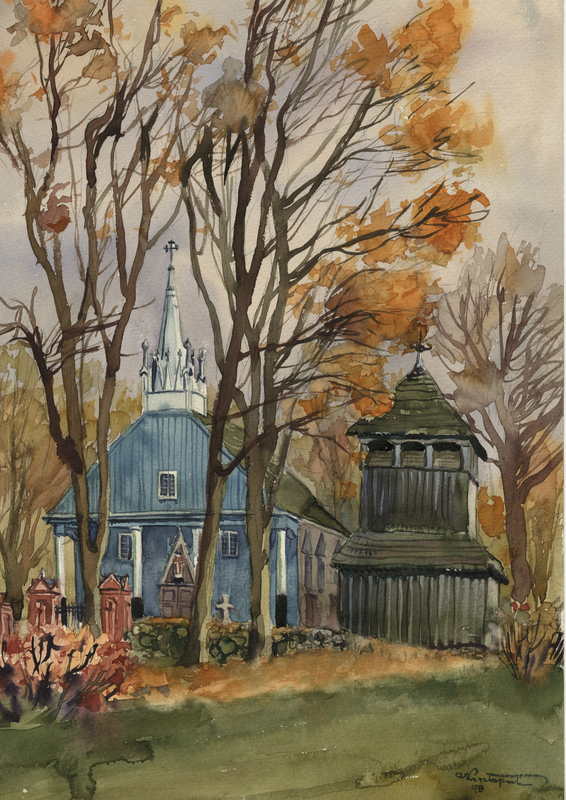
Šiaudinės Švč. Mergelės Marijos bažnyčia.
Signuotas akvarele averso apatinėje dalyje dešinėje autoriaus parašu ir data: „78“, pieštuku revrese: „ŠIAUDINĖ / 1978. X. 15 / Statyta 1775 m. / Arch. pam. bažnyčia ir varpinė“.

Šiaudinės Švč. Mergelės Marijos bažnyčia.
Signuotas akvarele averso apatinėje dalyje dešinėje autoriaus parašu ir data: „78“, pieštuku revrese: „ŠIAUDINĖ / Papilė-Tryškiai / 1978. X. 5“.