About the Church
Over the centuries the wooden churches burned down several times and were rebuilt anew. The present red-brick church rose according to the design of the Swedish architect Karl Eduard Strandmann – it was built over about five years and was consecrated by Bishop Kasparas Cirtautas on 24 July 1905, with around 15,000 pilgrims present.
The basilica, with a Latin-cross plan, is remarkable for its impressive size: 57 metres in length, with two towers rising to a height of 65 metres. The interior is adorned with no fewer than ten altars – the high altar, made in the Purger workshop in Tyrol, was donated by Count Aleksandras Pliateris. The organ was installed in 1907, and beneath the main altar lies the crypt of the clergy and founders. The churchyard is enclosed by a Gothic masonry wall with small turrets, and an original viaduct links the church with the neighbouring park.
Gallery and Resources
Archive captions are shown in Lithuanian.
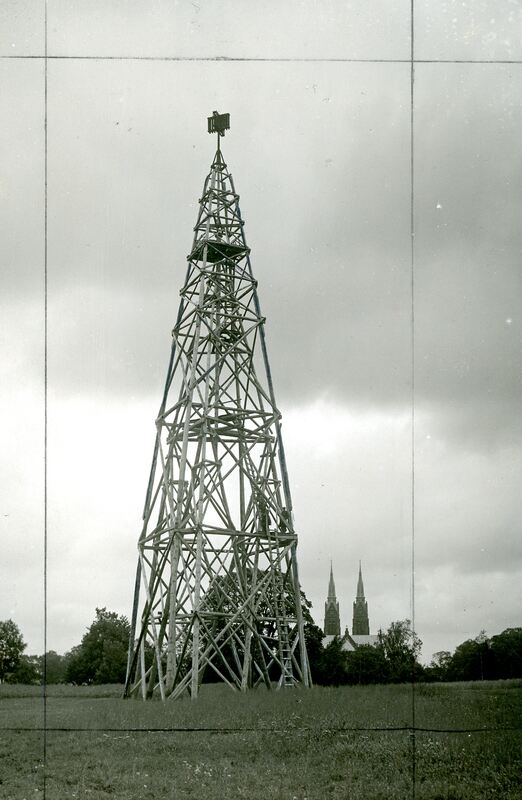
Topografinių matavimų paskirties piramidė atvirame lauke. Du kariai stovi trečiame piramidės tarpsnyje. Kadro dešinėje, žemiau prie piramidės, tolumoje stovi bažnyčia, kuri pagal architektūros elementus panaši į Švėkšnos miestelio Šv. apaštalo Jokūbo bažnyčios architektūrą.
Švėkšnoje buvo viena iš Baltijos trianguliacijos grandinės bazių (nuo 1926 m.), kuri jungė rytų Prūsijos ir Latvijos trianguliacijos tinklus. Bazė iki šiol yra išlikus ir yra saugoma kaip kultūros paveldo objektas.
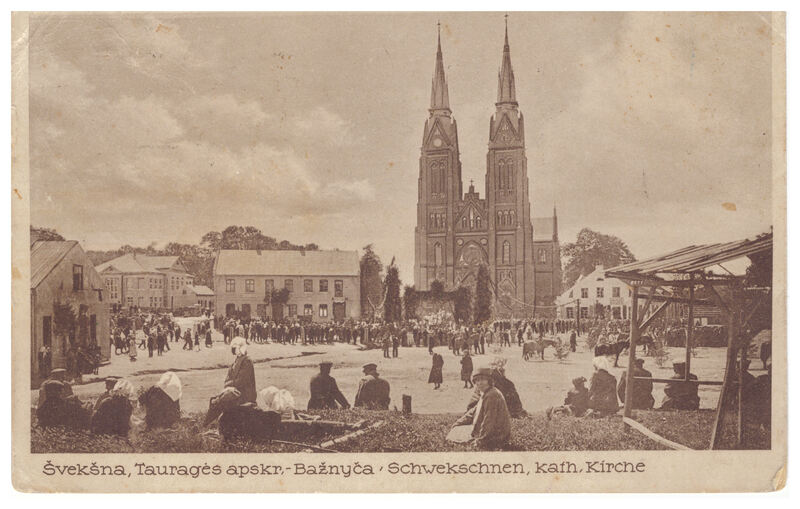
Švėkšnos turgaus aikštės vaizdas, sutinkant atvykstantį LR prezidentą Antaną Smetoną 1928 m. Foto atviruke matosi šv. apaštalo Jokūbo bažnyčia, naujai pastatyta Švėkšnos "Saulės" gimnazija, specialiai sukurta instaliacija - Gedimino stulpai. Apačioje užrašas "Švėkšna, Tauragės apskr. - Bažnyča / Schwekschnen, kath, Kirche".
Reverse ranka rašyta: "Europe - Lituania. St. Serapinui. Švėkšna. Taur. ap. Linksmių Velykų! 1930. Pr. J.Maciejauskas".