About the Church
The Church of St Anthony of Padua in Judrėnai stands in the village of Judrėnai, in Klaipėda district, and belongs to the Gargždai Deanery of the Diocese of Telšiai. This twin-towered wooden church is a fine example of vernacular sacred architecture.
The first chapel here was raised through the efforts of the elder of Judrėnai, Ludvikas Semaška, with the permission of Bishop Aleksandras Mikalojus Gorainis (1717–1735). In 1732 the feast of St Anthony of Padua was proclaimed, and in 1752, having received land, the chapel became a filial church. The present wooden church was built in 1780, and an independent parish was established in 1906.
The rectangular-plan interior, with a five-sided apse, is divided into three aisles separated by slender columns. Five Baroque altars have survived here – the most ornate is the central one, dedicated to St Anthony of Padua. A special treasure of the church is the organ, built around 1810, considered the latest surviving example of such construction in Lithuania. The churchyard is enclosed by a stone masonry wall.
The first chapel here was raised through the efforts of the elder of Judrėnai, Ludvikas Semaška, with the permission of Bishop Aleksandras Mikalojus Gorainis (1717–1735). In 1732 the feast of St Anthony of Padua was proclaimed, and in 1752, having received land, the chapel became a filial church. The present wooden church was built in 1780, and an independent parish was established in 1906.
The rectangular-plan interior, with a five-sided apse, is divided into three aisles separated by slender columns. Five Baroque altars have survived here – the most ornate is the central one, dedicated to St Anthony of Padua. A special treasure of the church is the organ, built around 1810, considered the latest surviving example of such construction in Lithuania. The churchyard is enclosed by a stone masonry wall.
Gallery and Resources
Archive captions are shown in Lithuanian.
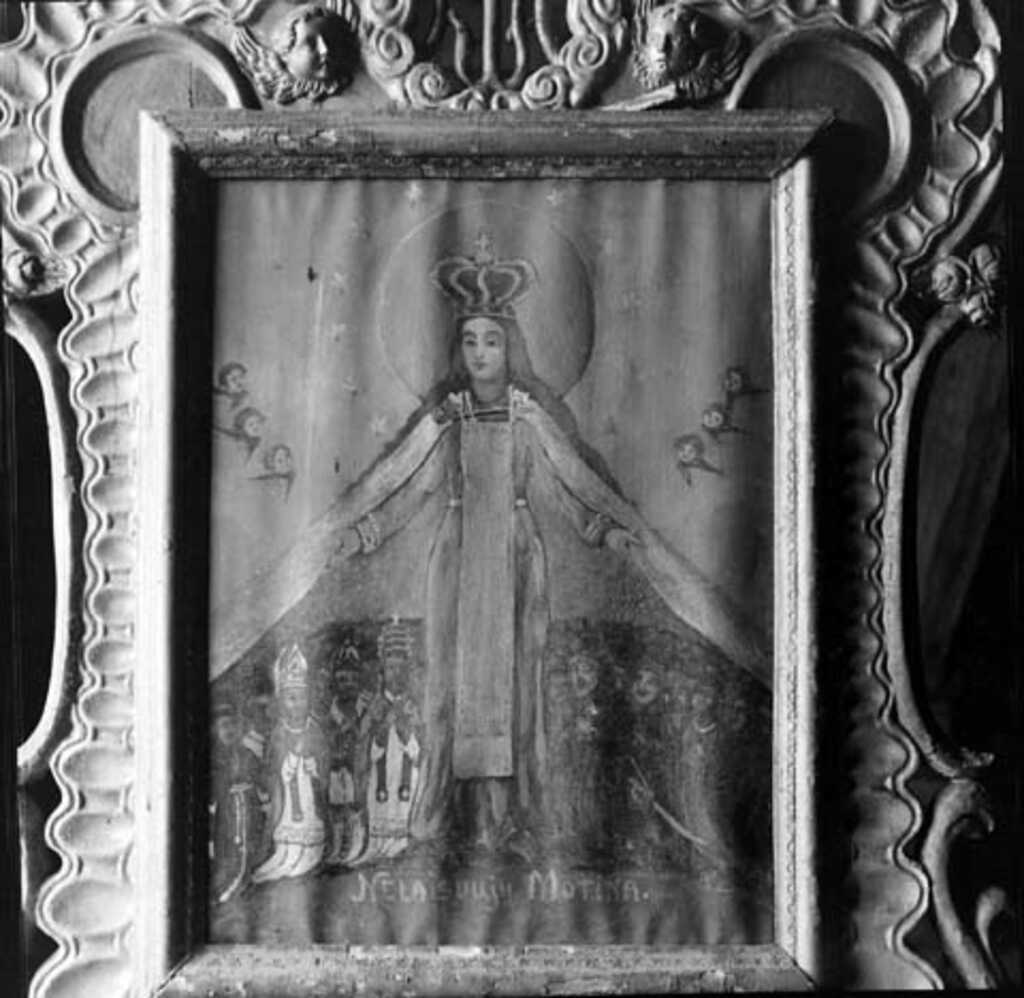
Judrėnų miestelio Šv. Antano Paduviečio bažnyčios paveikslas iš nešamo altorėlio. Ant paveikslo užrašas: „Nelaisvųjų Motina“.