About the Church
Its history began with the initiative of Juozas Stankevičius, landowner of Saudininkai, who built a wooden chapel that later became a filial church of the Lyduvėnai parish. In later years Ksaveras Stanevičius not only donated a plot of land for the church but also undertook to support a priest. Thanks to these noble acts, the community was able to continue nurturing its religious practice.
The church's history has also had darker periods, however. One of the most notable events was the exile to Siberia of the priest Adomas Galkevičius in 1864, for his active involvement in the uprising movement. Despite these hardships, the church remained important to the local community.
At the start of the 20th century a branch of the Lithuanian Catholic Temperance Society operated in Maironiai, promoting moral and social welfare values. Another significant event was in 1927, when the village that had formed on the land of the former Saudininkai manor was named Maironiai, in honour of the renowned Lithuanian poet Jonas Mačiulis-Maironis.
Architecturally, the Church of the Blessed Virgin Mary at Maironiai has a rectangular plan with a three-sided apse and a turret. The church has three altars, and one of its most valuable works of art is the 18th-century painting "The Three Kings". The architectural forms of this church excellently reflect the traditional aesthetics of the Lithuanian countryside, in which simplicity and spiritual beauty combine.
Today the Maironiai church remains not only a religious but also a cultural monument of the area, recalling the rich history of the region and the spirituality of its people.
Gallery and Resources
Archive captions are shown in Lithuanian.
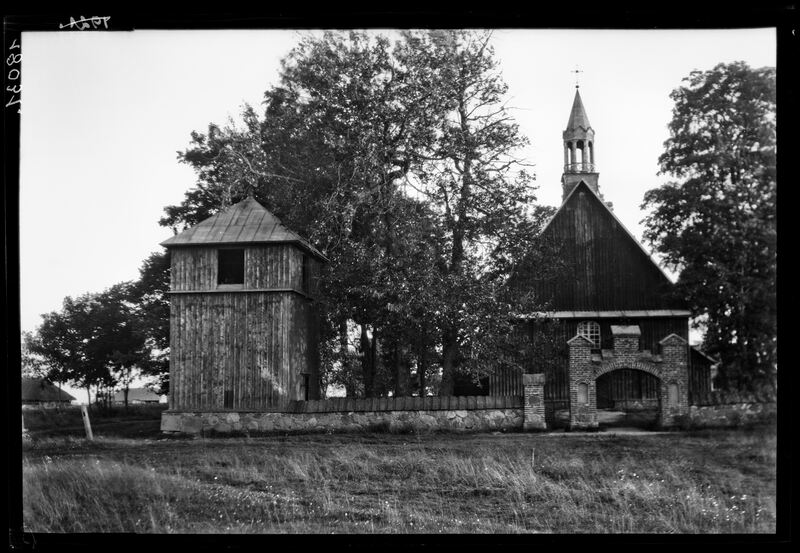
Medinė bažnyčia ir varpinė nufotografuotos kartu su akmenų mūro šventoriaus tvora ir plytų mūro vartais.

Paveikslą ,,Trys karaliai, garbinantys Kūdikėlį Jezų“ puošė aptaisai, dengę žvaigždę ir dvi ornamentuotas karūnas virš Švč. Mergelės Marijos (neišlikusi) ir Jėzaus galvų. Išlikusius du aptaisus (žvaigždę ir Jėzaus karūną) 2013 m. Kelmės krašto muziejui perdavė Maironių Švč. Mergelės Marijos parapijos klebonas. Į Maironių bažnyčią paveikslas pateko iš buvusios Kražių benediktinų vienuolyno (dabar Švč. Mergelės Marijos Nekaltojo Prasidėjimo) bažnyčios. Šioje bažnyčioje paveikslas 1893 m. per Kražių skerdynes buvo kazokų kulkų suvarpytas. 2000 m. paveikslas restauruotas. 2011 m. paveikslas be aptaisų laikinam eksponavimui buvo perduotas viešajai įstaigai „Tytuvėnų piligrimų centras“, kuris Tytuvėnų vienuolyne buvo surengęs liturginių reikmenų ir kūrinių parodą. 2012 m. sausio 26 d., kilus gaisrui Tytuvėnų vienuolyno pastate, paveikslas sudegė.
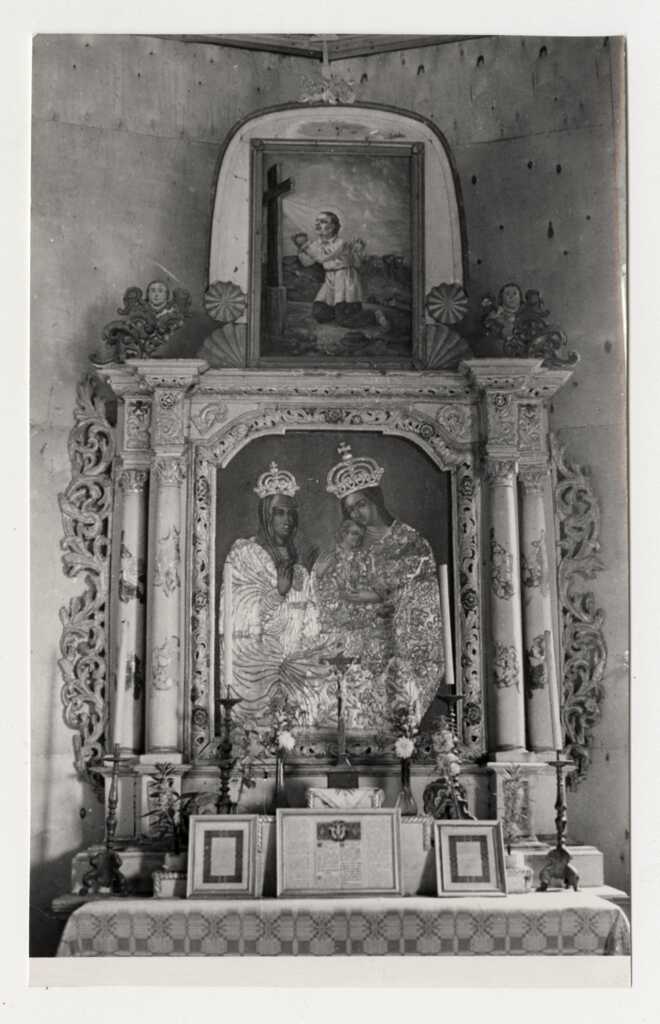
Altoriaus fragmentas, paveikslas. Maironių bažnyčia.