About the Church
Historical development.
The church's history begins in 1613, when the ruling Valavičius family decided to invite Bernardine friars to Tytuvėnai and to build them a monastery and a new Baroque church. The church was built in 1633 and became an important centre of religious pilgrimage. The monastery's first prior, Bernardinas Švabas, was the main organiser of the construction, while Tomas Kasparas oversaw the building works.
In the early 18th century, during the Great Northern War, the church and monastery suffered severe damage but were later rebuilt. In the mid-18th century, arcaded galleries were added, along with a spacious enclosed courtyard containing the Chapel of Christ's Stairs. The church and monastery of Tytuvėnai became one of the most valuable architectural complexes in Lithuania.
Architecture and art.
The church has a unique architectural style combining Gothic, Renaissance and Baroque features. It has two facade towers, a long chancel with a three-sided apse, and a tall roof. Inside, the church is divided into three naves with cross vaults. Of particular significance is the high altar with its 17th-century painting of the Virgin Mary of Tytuvėnai, considered one of the finest works at the meeting point of Renaissance and Baroque in Lithuania.
The monastery ensemble consists of three connected two-storey buildings facing the church's south facade. These massive buildings are of red brick, with tall roofs and cellars beneath them. The arcaded gallery linking these buildings is ornate and stands out for its Baroque architecture.
Key events and restorations.
Over its long history, the church and monastery suffered a number of misfortunes. During the Great Northern War, in the early 18th century, Russian troops plundered the church's treasury and badly damaged the buildings. At the end of the 19th century, the Russian authorities closed the monastery and turned it into a parish church. Despite this, the local community and the faithful managed to preserve and revive this sacred site.
A fire that broke out on 26 January 2012 severely damaged the church and monastery — the museum housed in the monastery, the roof and the monastery's second floor were destroyed. However, these misfortunes were followed by intensive restoration works that helped restore the church's beauty and functionality.
The chapel of Pope John Paul II.
One of the more recent additions to the church is the Chapel of Pope John Paul II, set up at the front of the church behind the high altar. It holds a relic of a drop of the Pope's blood, which was brought from Poland. The chapel was consecrated on 23 October 2016 and has since become another important site for pilgrims to visit.
Gallery and Resources
Archive captions are shown in Lithuanian.

Nuotrauka. Kelmės r. Tytuvėnų Švč. Mergelės Marijos bažnyčia. Joje Ričardas Mikutavičius klebonavo 1970–1983 m.
Tytuvėnų bažnyčia ir vienuolynas yra architektūrinis šedevras, laikomas vienu gražiausių baroko paminklų šiaurės rytų Europoje. Švč. Mergelės Marijos bažnyčia ir vienuolynas – unikalus architektūrinis ansamblis. Ansamblį sudaro bažnyčia, šventorius su Kristaus laiptų koplyčia, dviaukščio vienuolyno mūras ir šiam ansambliui priklausantys ūkinės paskirties pastatai. Tytuvėnų bažnyčios ir vienuolyno ansamblis – vienas iš kultūros paveldo objektų. Nuotraukoje matosi bažnyčios šonas, fasado dalis, balto mūro tvora su raudonų čerpių stogu ir arkinėm nišom, matosi Kristaus laiptų koplyčios fragmentas. Fotografuota pro skliautuotą vartų angą. Fotografija Zenono Baltrušio. 2005 m. Tytuvėnai
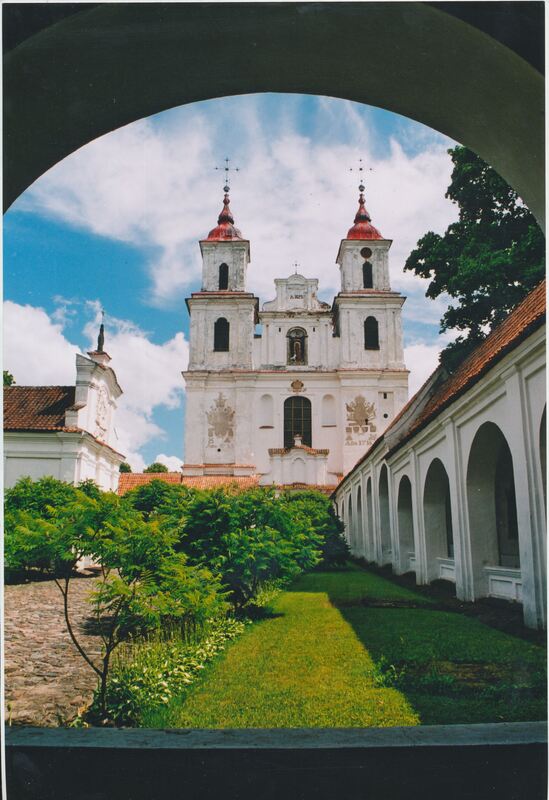
Kelmės r. Tytuvėnų Švč. Mergelės Marijos bažnyčia, kurioje R. Mikutavičius klebonavo 1970–1983 m. Fotografuota iš arkos. Matosi šviesios spalvos bažnyčia, su dviem bokštais. Bokštai raudonais kupolais, ant jų kryžiai. Bažnyčia tinkuota, tinkas aptrupėjęs. Abiejose pusėse, apatinėje bokštų dalyje du vienodi herbai ir užrašai „Ano 1788“. Dešinėje pusėje matosi vienuolyno sienos, kairėje – koplyčios dalis. Priekyje grįsta akmenimis, apsodinta krūmais, papuošta žalia pieva. Foto Z. Baltrušio, fotografuota 2005 m.
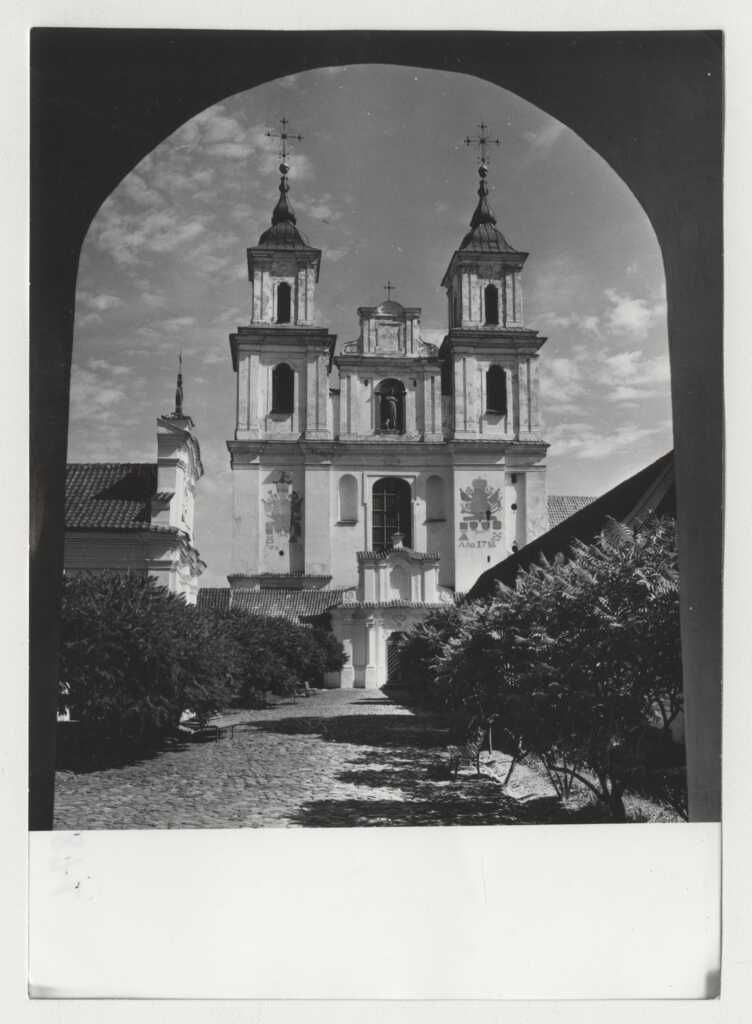
Tytuvėnų bažnyčia.