About the Church
The church's origins reach back to the 15th century, when in 1459 the first wooden church was built at Pašvitinys. Later, at the start of the 16th century, in 1609, a new church began to be built. Although a masonry church was built at the start of the 19th century, it soon cracked owing to poor foundations and was demolished. The present church was built in 1852 and was consecrated by the renowned bishop Motiejus Valančius in 1857.
The interior is likewise distinctive – the church has five wooden eclectic altars, and the floor is covered with tiles. A large organ with two manuals and nineteen stops was built by the Jēkabpils master A. Smaklists in the late 19th or early 20th century. Also impressive are the Stations of the Cross chapels adorning the churchyard.
Over a long period the Pašvitinys church became an important part of community life. On 14 August 1904 the future President of the Republic of Lithuania Antanas Smetona and Sofija Chodakauskaitė were married here. The church's history also records the priest Juozas Dabužis-Dabužinskas, who lived in Pašvitinys from 1928 to 1934 and was a significant figure in public life and in the press.
The church is constantly maintained and renovated. Archaeological research carried out in the churchyard in 2006 uncovered 16th–18th-century coins, ornaments and graves, further enriching the history of the building and its surroundings.
Today the Church of the Holy Trinity at Pašvitinys is not only a religious centre but also a site of cultural and historical importance, reflecting not just architectural beauty but also the rich past of our region.
Gallery and Resources
Archive captions are shown in Lithuanian.
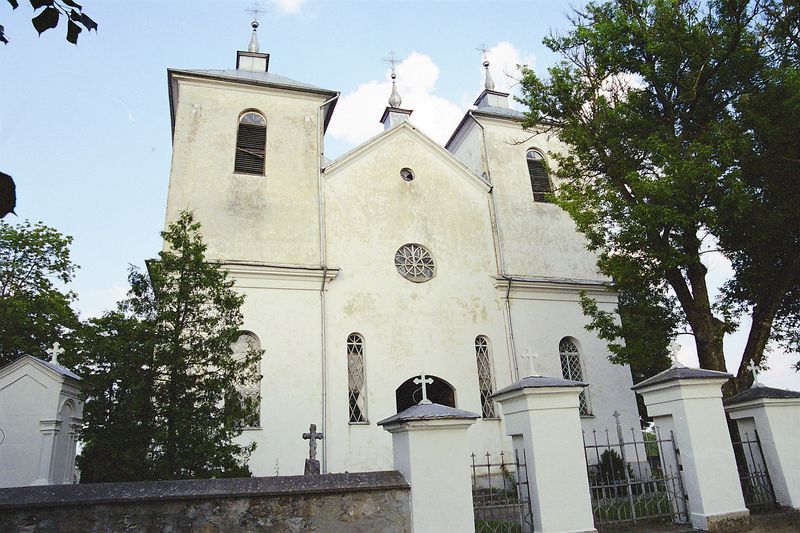
Spalvota, horizontalaus formato nuotrauka. Pašvitinio Švč. Trejybės bažnyčia, Kriukų g. 2, Pašvitinio mstl., Pašvitinio sen., Pakruojo r. sav. Vaizdas iš vakarų pusės. Fotografas Jonas Šimkus, Kretinga, 2001 m.
Bažnyčia tinkuoto mūro, neorenesansinė, stačiakampio plano, dvibokštė, su trisiene apside. Šventoriaus tvora akmenų mūrinė, su tinkuoto mūro stulpiniais vartais ir kaltinėmis ažūrinėmis sąvaromis. Priešais bažnyčią šventoriuje stovi tinkuoto mūro koplyčia.
Pastatyta 1852 m. miestelio centre vietoje 1825 m. pastatytos, tačiau dėl blogai išmūrytų pamatų perskylusios mūrinės bažnyčios. Ją 1857 m. konsekravo Žemaičių vyskupas Motiejus Valančius.
Priklauso Motiejaus Valančiaus vyskupavimo laikotarpiu (1850–1875) pastatytoms ar restauruotoms bažnyčioms.
Aprašymą parengė Algirdas Čėsna, 2014-06-05.
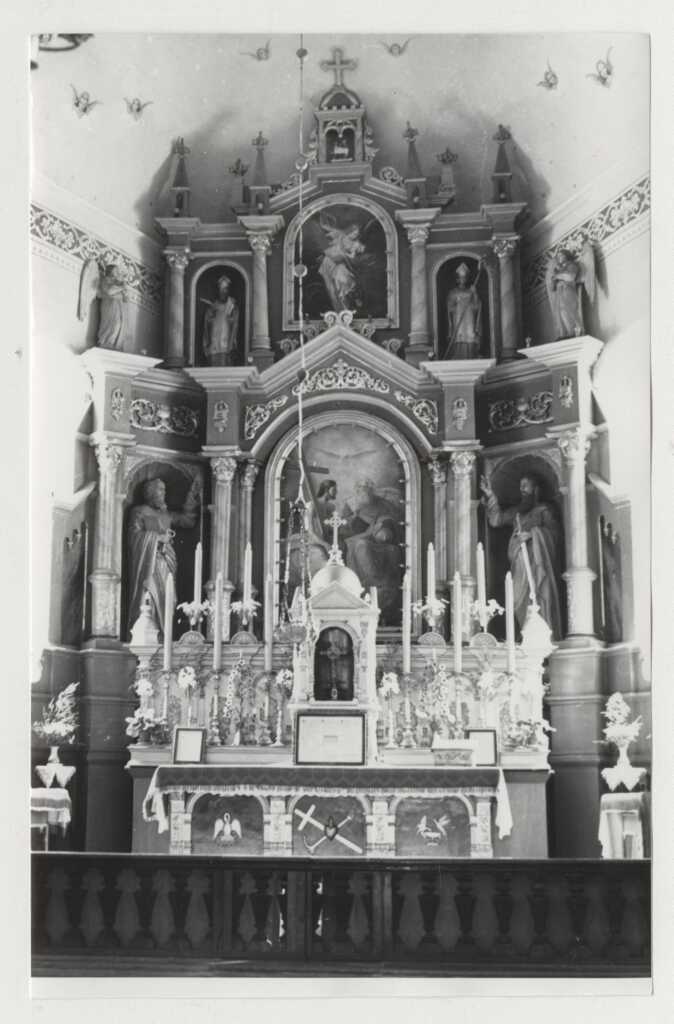
Pašvitinio bažnyčios didysis altorius.