About the Church
The Church of the Holy Trinity in Šaukotas is a true gem of vernacular architecture, standing in the town of Šaukotas in Radviliškis district. Close to the road linking Šaukotas with Papušynys, Antaniškiai and Akmenė, this wooden church attracts not only worshippers but also lovers of history and architecture.
The church's history began in 1767, when Simonas Petras Herubavičius, owner of the Kalnuotasis Šaukotas manor, began building a Catholic chapel at his own expense. Although it was not completed until 1795, it already held the status of a filial church or altaria of the church in Pašušvys from 1773. Interestingly, different dates can be found in the works of noted Lithuanian historians, but Motiejus Valančius gives 1773 as its founding date.
An inventory from 1802 records that the church was built of spruce logs, roofed with shingles, and had two small turrets with bells, while the altars were painted on boards. At that time a small cellar was built beneath the church. In 1814 a new dwelling house was built for the altarist.
Over the years the church underwent more than one transformation. In 1803 it was rebuilt and enlarged, and a new pulpit and bell tower were built. Several decades later, in 1839, repairs were carried out: the foundations were raised, the bottom logs replaced, the walls reinforced and the roof re-covered. In 1843 a new organ with 10 stops was installed.
This church became an important centre for the parishioners, who actively took part in the 1863 uprising and supported the book smugglers during the period of the press ban. For supporting the insurgents, the manor owner Ignotas Bušinskis and his son were exiled to Siberia, and the Baltasis Šaukotas manor was confiscated.
An almshouse and a parish school operated by the church until 1863. In the early 20th century a new church was planned, but for lack of funds the old one was merely repaired. From 1906 to 1915 the noted writer Marija Pečkauskaitė-Šatrijos Ragana lived and spent her summers at the presbytery. The parish was established around 1922.
Between 2009 and 2013 research and restoration work at the church restored this architectural monument, preserving its uniqueness and beauty.
Architecturally the Church of the Holy Trinity in Šaukotas is in the vernacular style, with a rectangular plan, a sacristy to the side and a five-sided apse. It has no tower, and a wooden bell tower from the 18th century stands in the churchyard, further underlining the church's historical significance.
This church is not only a place of religious practice but also a historical and cultural site, preserving many stories about the life of the local community and its struggles for freedom.
The church's history began in 1767, when Simonas Petras Herubavičius, owner of the Kalnuotasis Šaukotas manor, began building a Catholic chapel at his own expense. Although it was not completed until 1795, it already held the status of a filial church or altaria of the church in Pašušvys from 1773. Interestingly, different dates can be found in the works of noted Lithuanian historians, but Motiejus Valančius gives 1773 as its founding date.
An inventory from 1802 records that the church was built of spruce logs, roofed with shingles, and had two small turrets with bells, while the altars were painted on boards. At that time a small cellar was built beneath the church. In 1814 a new dwelling house was built for the altarist.
Over the years the church underwent more than one transformation. In 1803 it was rebuilt and enlarged, and a new pulpit and bell tower were built. Several decades later, in 1839, repairs were carried out: the foundations were raised, the bottom logs replaced, the walls reinforced and the roof re-covered. In 1843 a new organ with 10 stops was installed.
This church became an important centre for the parishioners, who actively took part in the 1863 uprising and supported the book smugglers during the period of the press ban. For supporting the insurgents, the manor owner Ignotas Bušinskis and his son were exiled to Siberia, and the Baltasis Šaukotas manor was confiscated.
An almshouse and a parish school operated by the church until 1863. In the early 20th century a new church was planned, but for lack of funds the old one was merely repaired. From 1906 to 1915 the noted writer Marija Pečkauskaitė-Šatrijos Ragana lived and spent her summers at the presbytery. The parish was established around 1922.
Between 2009 and 2013 research and restoration work at the church restored this architectural monument, preserving its uniqueness and beauty.
Architecturally the Church of the Holy Trinity in Šaukotas is in the vernacular style, with a rectangular plan, a sacristy to the side and a five-sided apse. It has no tower, and a wooden bell tower from the 18th century stands in the churchyard, further underlining the church's historical significance.
This church is not only a place of religious practice but also a historical and cultural site, preserving many stories about the life of the local community and its struggles for freedom.
Gallery and Resources
Archive captions are shown in Lithuanian.
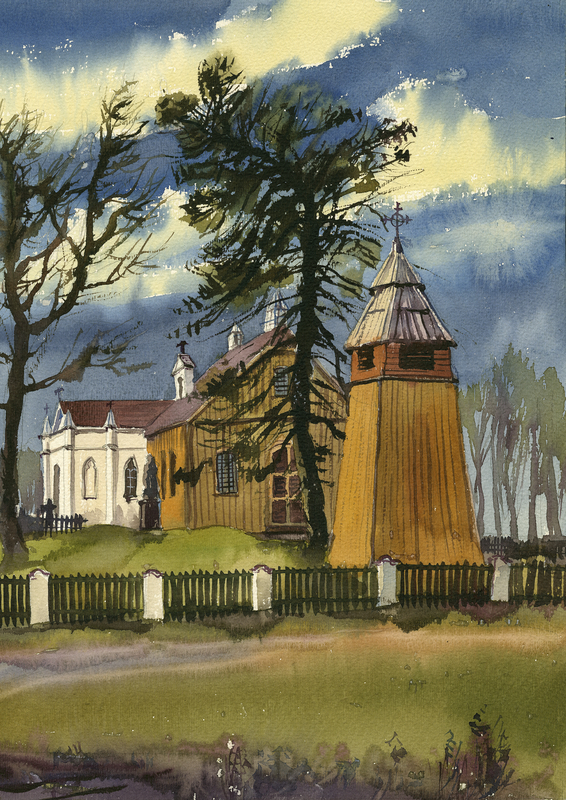
Kompozicijoje – Šaukoto Švč. Trejybės bažnyčia ir varpinė.
Nesignuotas.

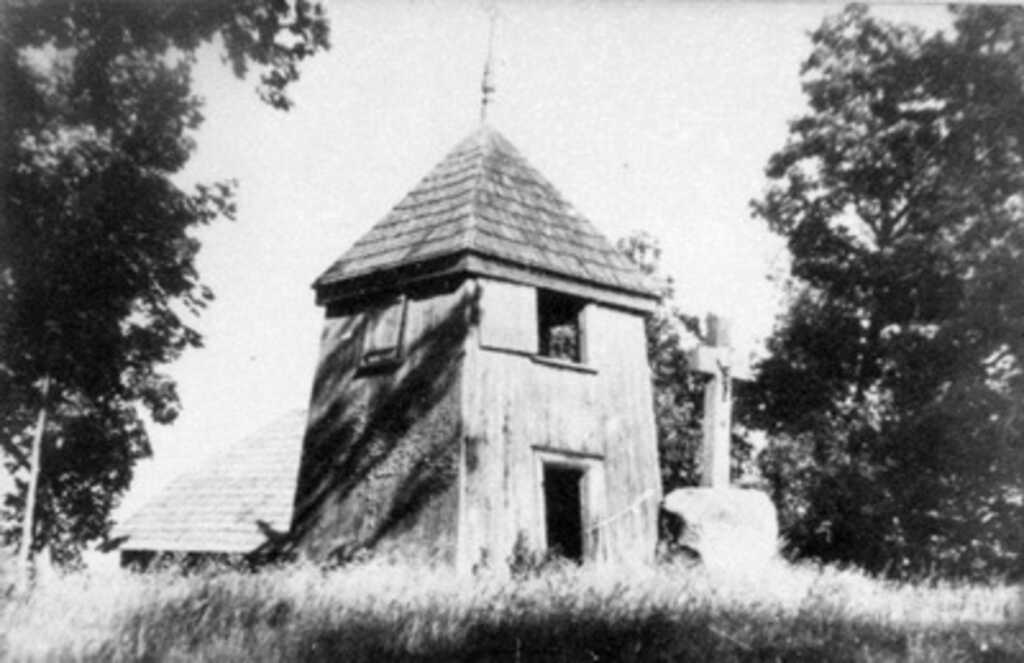
Varpinė Šaukoto bažnytkaimyje.