About the Church
The Church of St Ignatius of Loyola in Šiauliai is a striking religious and architectural monument, with an interesting history and significant changes.
The church's history began in 1930, when Jesuits arrived in Šiauliai and founded a mission. The first rector of this mission, the priest Benediktas Andruška, was the main driving force, and in 1935 he initiated and completed the construction of a masonry oratory. At first one priest and two Jesuit brothers worked here, and over time four rectors, who also headed the Jesuit mission, succeeded one another.
Unfortunately, in 1948 the Soviet authorities' repression affected not only people but also the church. The priest Antanas Šeškevičius was deported, and the church itself was closed. The building was turned into a warehouse, and later a sports hall. These were hard years both for the local community and for the building, which lost its original purpose.
In 1986 a new stage began in the church's history. Using the pretext of the need for a concert hall, the city authorities of the time obtained funding and began restoration work. In 1989 the first festival of church music took place in the church, and on 23 December 1990 the building was returned to the faithful and solemnly blessed.
Since then the church has become an important community centre. In 1995 the Benediktas Andruška primary school was founded in the former children's kindergarten next to the church, which, together with the community centre, contributes to the fostering of religious and cultural life.
An important date in this church's history is 7 September 1993, when Pope John Paul II prayed and rested here. To mark his visit, a sculpture dedicated to the Pope was unveiled and blessed in the church's courtyard on 4 November 2012.
The Church of St Ignatius of Loyola in Šiauliai is not only a religious site but also a living witness to history, which has survived hard times and now continues its mission as a spiritual centre, gathering the faithful and spreading religious and cultural light.
The church's history began in 1930, when Jesuits arrived in Šiauliai and founded a mission. The first rector of this mission, the priest Benediktas Andruška, was the main driving force, and in 1935 he initiated and completed the construction of a masonry oratory. At first one priest and two Jesuit brothers worked here, and over time four rectors, who also headed the Jesuit mission, succeeded one another.
Unfortunately, in 1948 the Soviet authorities' repression affected not only people but also the church. The priest Antanas Šeškevičius was deported, and the church itself was closed. The building was turned into a warehouse, and later a sports hall. These were hard years both for the local community and for the building, which lost its original purpose.
In 1986 a new stage began in the church's history. Using the pretext of the need for a concert hall, the city authorities of the time obtained funding and began restoration work. In 1989 the first festival of church music took place in the church, and on 23 December 1990 the building was returned to the faithful and solemnly blessed.
Since then the church has become an important community centre. In 1995 the Benediktas Andruška primary school was founded in the former children's kindergarten next to the church, which, together with the community centre, contributes to the fostering of religious and cultural life.
An important date in this church's history is 7 September 1993, when Pope John Paul II prayed and rested here. To mark his visit, a sculpture dedicated to the Pope was unveiled and blessed in the church's courtyard on 4 November 2012.
The Church of St Ignatius of Loyola in Šiauliai is not only a religious site but also a living witness to history, which has survived hard times and now continues its mission as a spiritual centre, gathering the faithful and spreading religious and cultural light.
Gallery and Resources
Archive captions are shown in Lithuanian.
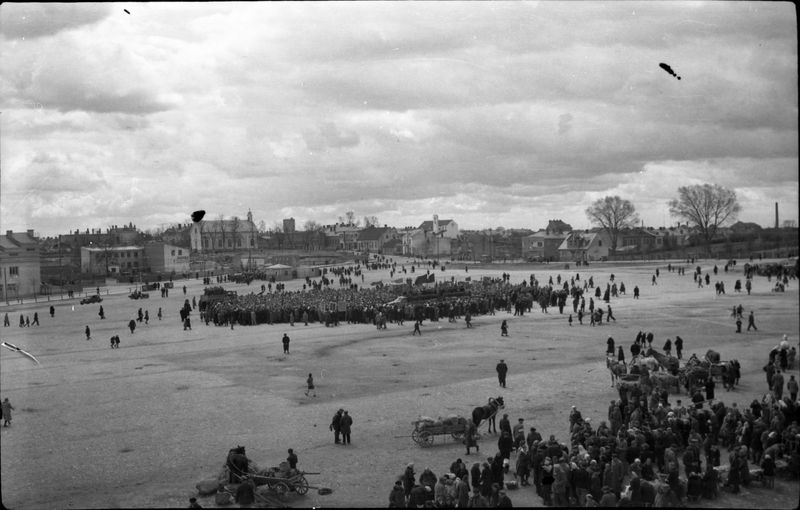
Pergalės prieš Vokietiją minėjimas naujojoje Šiaulių turgaus aikštėje. Tolumoje matyti nebaigtas statyti vandentiekio bokštas, į kairę nuo jo – Evangelikų liuteronų kirchė, į dešinę – Šv. Ignaco Lojolos bažnyčia. .
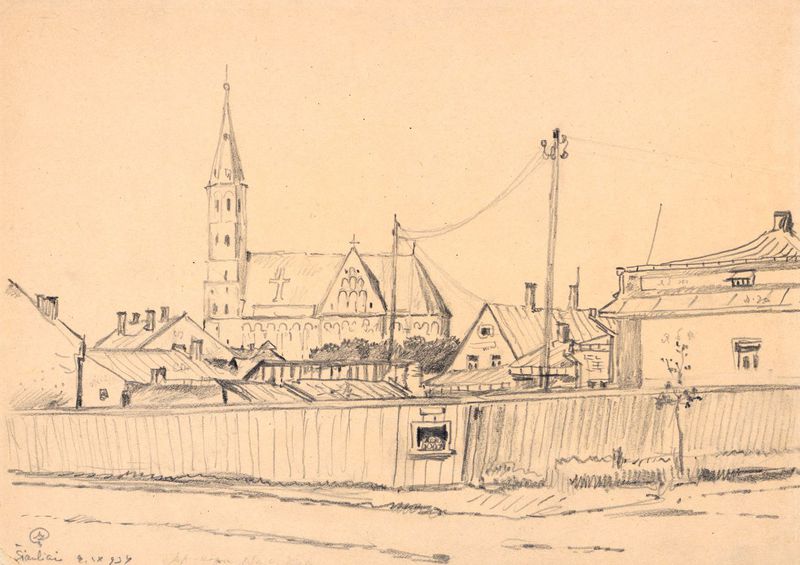
Šiauliai - miestas Lietuvos šiaurėje, ketvirtasis pagal gyventojų skaičių Lietuvoje. Miestas pradėjo kurtis XI a, Šiaulių žemė pirmą kartą paminėta Livonijos akte 1254, o Šiaulių vardas - 1524. Šiauliai - vyskupijos centras, mieste veikia keturios bažnyčios - Šv. apaštalų Petro ir Pauliaus katedra, Šv. Jurgio, Šv. Ignaco Lojolos (jėzuitų neparapinė) ir Švč. Mergelės Marijos Nekalto Prasidėjimo bažnyčia. Dobužinskis piešė Šv. Petro ir Pauliaus katedrą ir iš arčiau, bet čia jis nutolęs nuo mūsų. Bažnyčia statyta kaip tvirtovė, (XVII a. pradžia), iš kurios galima gintis - sienos storiausios, daug bokštelių su mažais kaip šaudymo angomis langelių. Laikoma ryškiu renesanso stiliaus paminklu, nors tas bažnyčios stiebimasis į dangų rodo, kad ji išaugo iki vėlyvosios gotikos.
Aprašė Irena Dobrovolskaitė.
Aprašė Irena Dobrovolskaitė.

Šv. Ignaco bažnyčia.