About the Church
St George's Church in Šiauliai is undoubtedly one of the city's architectural and historical gems, with an intriguing past and various historical events reflecting the complicated history of Lithuania.
The church's history begins back when Lithuania was part of the Russian Empire. In 1909, although the exact construction date is not entirely clear, the administration of the Russian army built a large masonry Orthodox church for its soldiers. Built near the Šiauliai railway station, it immediately became an important architectural landmark of the city. Various sources give different construction dates – from 1907 to 1910 – but the church was most likely completed and consecrated in 1908.
Interestingly, the church was given the name of St Nicholas the Wonderworker, but elsewhere it is sometimes referred to as St George's church. When the First World War began and the Russians withdrew from Lithuania, the church closed and for a time was used as a warehouse during the German occupation.
During the fight for independence, when the Lithuanian army was being formed, the Third Infantry Regiment was established in Šiauliai, whose chaplain, the priest Martynas Jonaitis, asked the Germans to hand the church over to the Lithuanian army. Thus on 6 July 1919 the priest Julijonas Jasienskis blessed it as the Roman Catholic Church of St George.
After the Lithuanian army withdrew from Šiauliai, the newly consecrated church was left without a permanent parish priest. It was only in December 1919 that the Samogitian bishop appointed the first permanent rector, Justinas Lapis. At that time the church lacked everything, from liturgical vessels to vestments. However, with funds from the parishioners and the Lithuanian-American community, the church was quickly supplied with the necessary items, and in 1923 it officially acquired the rights of a parish church.
Architecturally, St George's church is a fine example of the Neo-Byzantine style, with two impressive towers. Inside it holds such artistic treasures as Petras Kalpokas's painting "St Zita" and other works by the artist J. Janulis.
Over its history the church has also suffered misfortune – in 1976 it was scorched by fire, though the great tower and the altars suffered little damage. A year later the church was repaired and reopened to the faithful.
Today St George's church not only serves as a house of prayer but is also an important cultural and historical site, recalling the city's rich past. A visit to this place of worship undoubtedly lets one feel the pulse of Šiauliai's history and open new pages in the treasury of Lithuanian culture.
The church's history begins back when Lithuania was part of the Russian Empire. In 1909, although the exact construction date is not entirely clear, the administration of the Russian army built a large masonry Orthodox church for its soldiers. Built near the Šiauliai railway station, it immediately became an important architectural landmark of the city. Various sources give different construction dates – from 1907 to 1910 – but the church was most likely completed and consecrated in 1908.
Interestingly, the church was given the name of St Nicholas the Wonderworker, but elsewhere it is sometimes referred to as St George's church. When the First World War began and the Russians withdrew from Lithuania, the church closed and for a time was used as a warehouse during the German occupation.
During the fight for independence, when the Lithuanian army was being formed, the Third Infantry Regiment was established in Šiauliai, whose chaplain, the priest Martynas Jonaitis, asked the Germans to hand the church over to the Lithuanian army. Thus on 6 July 1919 the priest Julijonas Jasienskis blessed it as the Roman Catholic Church of St George.
After the Lithuanian army withdrew from Šiauliai, the newly consecrated church was left without a permanent parish priest. It was only in December 1919 that the Samogitian bishop appointed the first permanent rector, Justinas Lapis. At that time the church lacked everything, from liturgical vessels to vestments. However, with funds from the parishioners and the Lithuanian-American community, the church was quickly supplied with the necessary items, and in 1923 it officially acquired the rights of a parish church.
Architecturally, St George's church is a fine example of the Neo-Byzantine style, with two impressive towers. Inside it holds such artistic treasures as Petras Kalpokas's painting "St Zita" and other works by the artist J. Janulis.
Over its history the church has also suffered misfortune – in 1976 it was scorched by fire, though the great tower and the altars suffered little damage. A year later the church was repaired and reopened to the faithful.
Today St George's church not only serves as a house of prayer but is also an important cultural and historical site, recalling the city's rich past. A visit to this place of worship undoubtedly lets one feel the pulse of Šiauliai's history and open new pages in the treasury of Lithuanian culture.
Gallery and Resources
Archive captions are shown in Lithuanian.
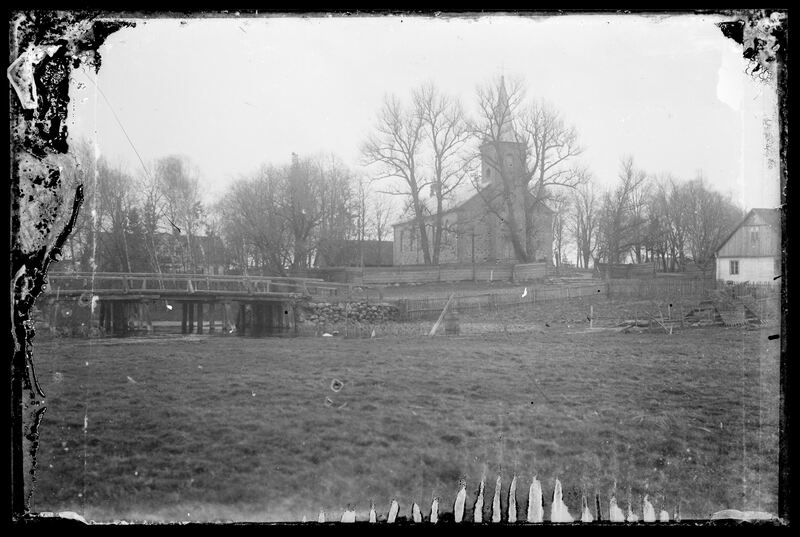
Negatyve įamžintas Daukšių miestelio kraštovaizdis su Daukšių Šv. Jurgio bažnyčia, tilteliu per Dovinės upę.
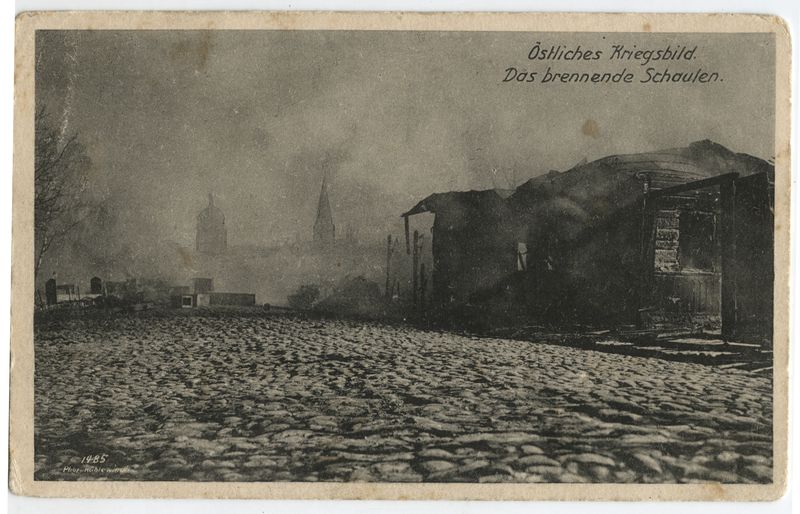
Averse - Šiaulių miesto akmenimis grįsta Stoties g. nuo Tilžės g. Tolumoje tarp dūmų matyti Šv. Jurgio bažnyčia.
Pavadinimas ant vaizdo. Reversas tipinis: dešinėje - plotas gavėjo adresui, kairėje leidėjo duomenys, plotas laiškui.
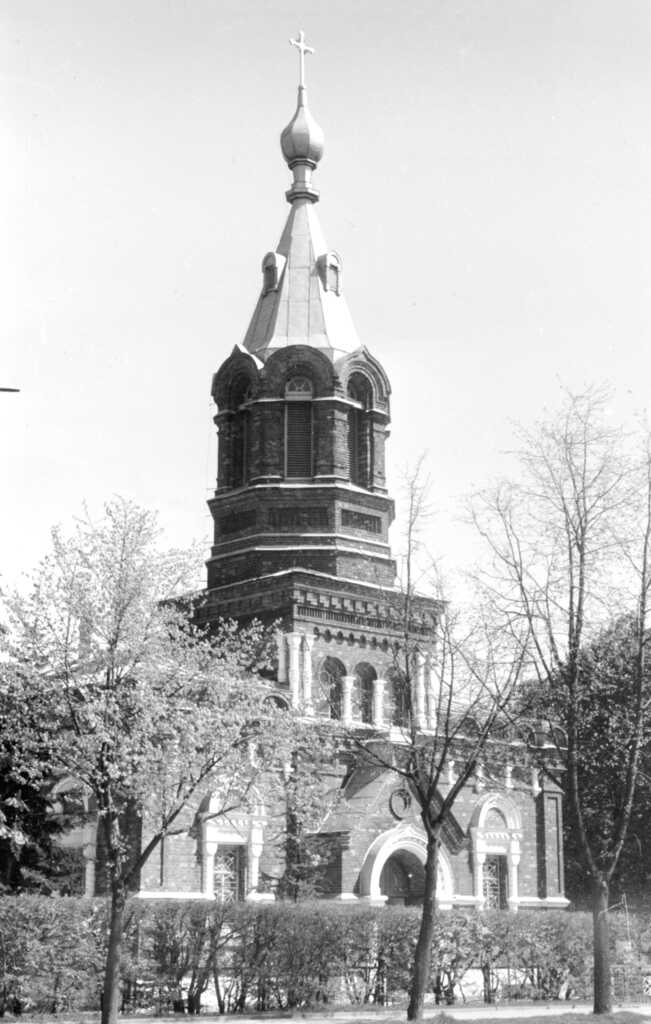
Šv. Jurgio bažnyčia Šiauliuose.