About the Church
The Church of the Annunciation of the Lord to the Blessed Virgin Mary in Kretinga is one of the most important and oldest churches in Samogitia, its history reaching back to the 17th century. This impressive masonry church, built in 1617, splendidly reflects features of Gothic and Renaissance architecture.
The church's history began in 1602, when the first wooden Catholic church was built in Kretingsodis and a Bernardine monastery was founded. But the site's true grandeur emerged in 1610–1617, when, on the initiative of Jonas Chodkevičius, elder of Samogitia and Hetman of the Grand Duchy of Lithuania, a new masonry church with a monastery was built. It was not only a house of prayer but also a cultural centre for the community.
In 1672 the church was renovated and enlarged. In the 18th century a parish school operated here, which became a state school in 1836. At that time the Franciscans built an altar in honour of St Anthony, consecrated on 22 July 1795 by Antanas Dominykas Tiškevičius, Bishop of Samogitia.
The 19th century brought great changes – in 1907–1912 the church was rebuilt to a design by the Kraków architect Slavomiras Odživolskis. Two side aisles were added, along with a transept with ornate gables and a new wooden tower with four smaller side turrets. Fr Antanas Bizauskas, professed as a religious in 1912, brought new spirit to the life of the monastery and contributed to the work of the gymnasium.
In the mid-20th century, during the Soviet occupation, the church endured hard trials. A fire in 1941 severely damaged the church and the monastery buildings. After the war, in 1950, the church was repaired, and in 1982, through the efforts of parish priest Bronislovas Burneikis, the collapsed tower was rebuilt and the churchyard wall restored.
Near the church, in 1933, a Lourdes grotto was built on the initiative of the Franciscans, and it was restored in 1989. In the same year the Franciscan friars returned to Kretinga and celebrated their first Mass on 19 November after a long break.
The church's architecture and interior are exceptionally rich. It has 7 Baroque altars, and the high altar is considered the largest wooden altar in Lithuania. The altar has a two-tiered composition, reaching a height of 16 metres and a width of 8 metres, and incorporates 21 sculptures. Beneath the church is a burial place of nobles, with memorial plaques and coats of arms.
The Kretinga church is also renowned for having the oldest dated organ in Lithuania, which, although rebuilt and restored several times, still retains its historical value.
By the church stand the Stations of the Cross shrines and a churchyard chapel, and in the nearby cemetery lies the renowned botanist Jurgis Pabrėža, in whose honour a monument was erected in 1993.
This church is not merely an architectural marvel – it is a living centre of history and culture, which remains an important part of the community to this day.
The church's history began in 1602, when the first wooden Catholic church was built in Kretingsodis and a Bernardine monastery was founded. But the site's true grandeur emerged in 1610–1617, when, on the initiative of Jonas Chodkevičius, elder of Samogitia and Hetman of the Grand Duchy of Lithuania, a new masonry church with a monastery was built. It was not only a house of prayer but also a cultural centre for the community.
In 1672 the church was renovated and enlarged. In the 18th century a parish school operated here, which became a state school in 1836. At that time the Franciscans built an altar in honour of St Anthony, consecrated on 22 July 1795 by Antanas Dominykas Tiškevičius, Bishop of Samogitia.
The 19th century brought great changes – in 1907–1912 the church was rebuilt to a design by the Kraków architect Slavomiras Odživolskis. Two side aisles were added, along with a transept with ornate gables and a new wooden tower with four smaller side turrets. Fr Antanas Bizauskas, professed as a religious in 1912, brought new spirit to the life of the monastery and contributed to the work of the gymnasium.
In the mid-20th century, during the Soviet occupation, the church endured hard trials. A fire in 1941 severely damaged the church and the monastery buildings. After the war, in 1950, the church was repaired, and in 1982, through the efforts of parish priest Bronislovas Burneikis, the collapsed tower was rebuilt and the churchyard wall restored.
Near the church, in 1933, a Lourdes grotto was built on the initiative of the Franciscans, and it was restored in 1989. In the same year the Franciscan friars returned to Kretinga and celebrated their first Mass on 19 November after a long break.
The church's architecture and interior are exceptionally rich. It has 7 Baroque altars, and the high altar is considered the largest wooden altar in Lithuania. The altar has a two-tiered composition, reaching a height of 16 metres and a width of 8 metres, and incorporates 21 sculptures. Beneath the church is a burial place of nobles, with memorial plaques and coats of arms.
The Kretinga church is also renowned for having the oldest dated organ in Lithuania, which, although rebuilt and restored several times, still retains its historical value.
By the church stand the Stations of the Cross shrines and a churchyard chapel, and in the nearby cemetery lies the renowned botanist Jurgis Pabrėža, in whose honour a monument was erected in 1993.
This church is not merely an architectural marvel – it is a living centre of history and culture, which remains an important part of the community to this day.
Gallery and Resources
Archive captions are shown in Lithuanian.
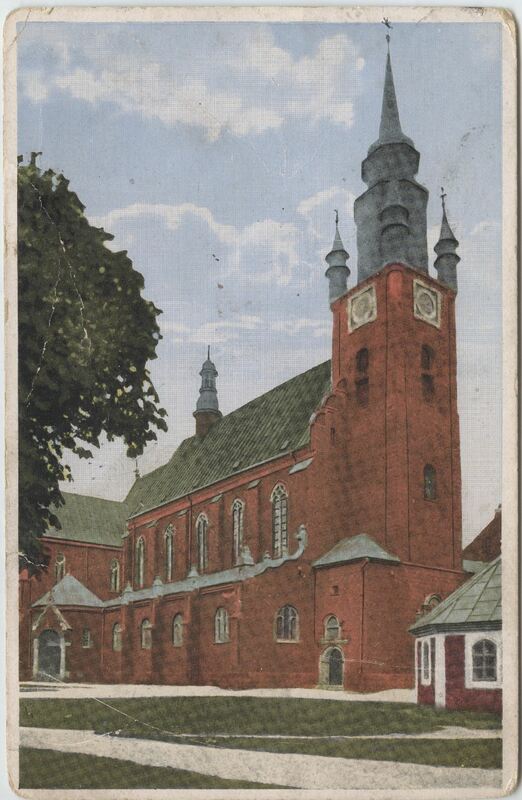
[Kretingos Viešpaties Apreiškimo Švč. Mergelei Marijai bažnyčia]
Nežinomas leidėjas, apie 1935-1938.
[Spėjama: leidėjas Ignas Stropus]
Spaustuvės numeracija adreso pusės dešiniajame apatiniame kampe: 9770.
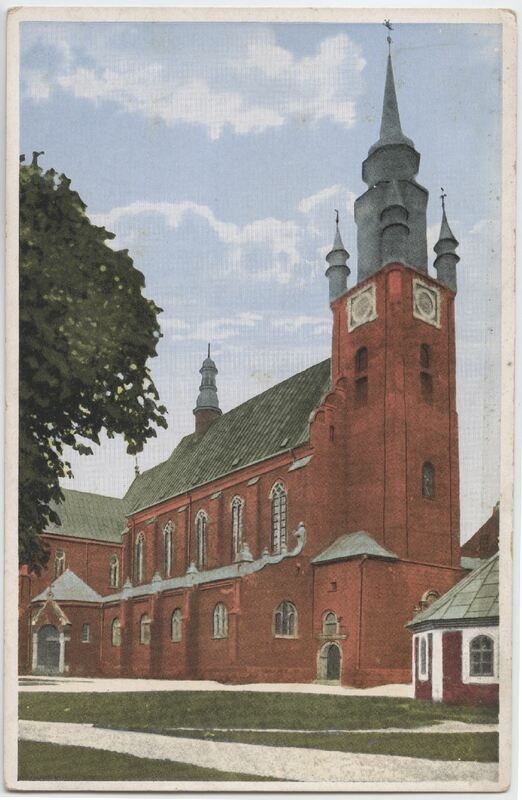
[Kretingos Viešpaties Apreiškimo Švč. Mergelei Marijai bažnyčia]
Nežinomas leidėjas, apie 1935-1938. [Spėjama: leidėjas Ignas Stropus]
Spaustuvės numeracija adreso pusės dešiniajame apatiniame kampe: 9770..