About the Church
The first church in Skilandžiai, as Salantai was then called, was built in 1630 by Mikalojus Pasamovskis, master of the horse to Sigismund Vasa. Interestingly, this church was granted three villages: Ablinga, Laigiai and Ližiai. Bishop Merkelis Giedraitis founded the parish at that time. Much later, in 1724, a new wooden church was built, which served the local community until the end of the 19th century.
At the beginning of the 19th century, when the old wooden church no longer met the community's needs, it was decided to build a masonry church. The design by the architect Karlas Eduardas Strandmanas was approved in 1902, and work began soon afterwards. The key organiser of the construction was the parish priest Pranciškus Urbonavičius, a contributor to the banned Lithuanian press. Construction continued for many years – from 1906 to 1911 – supervised by the architect Nikolajus Andrejevas.
The church's architecture is distinctive for its Gothic Revival style. It has a Latin-cross plan, a basilica form, with a two-towered facade. Inside the church three aisles can be seen, covered with cross vaults. An abundance of altars – as many as five wooden altars – adds authentic beauty and sacredness to the church interior.
No less important are the buildings belonging to the parish, such as the Chapel of St Barbara in Gargždelė and the Gaidys Chapel in Žvainiai, which also contribute to the rich religious life of Salantai.
Many distinguished people who contributed to the history of Salantai are buried in the church's churchyard. Among them is Fr Pranciškus Urbonavičius, one of the main builders of the church, and Fr Pranciškus Šatkus, a deportee and long-serving parish priest, who also contributed to the church's upkeep.
The Church of the Assumption of the Blessed Virgin Mary in Salantai is not merely a religious building; it is a crossroads of history, culture and spiritual life, telling of past experiences and present-day values.
Gallery and Resources
Archive captions are shown in Lithuanian.
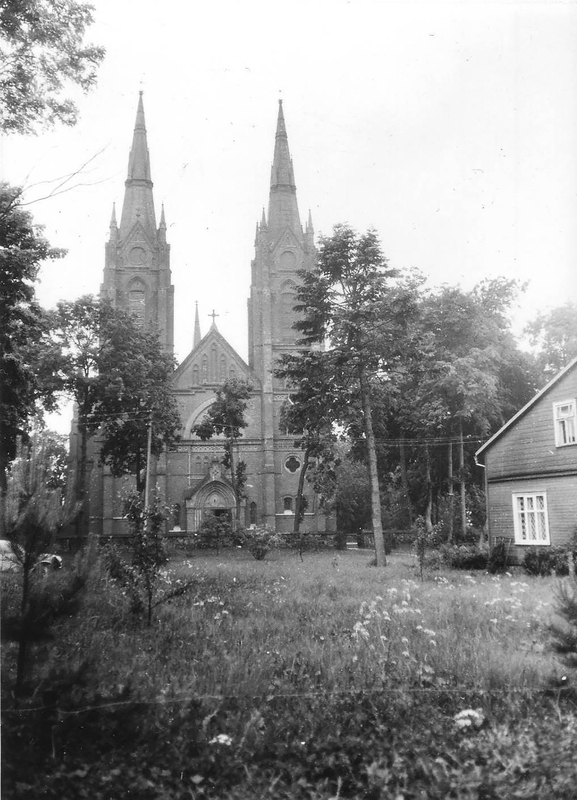
Salantų Švč. Mergelės Marijos Ėmimo į dangų bažnyčia, S. Dariaus ir S. Girėno g. 10, Salantai, Kretingos r. Pagrindinio fasado vaizdas iš šiaurės rytų pusės.
Istorizmo laikotarpio stiliaus, neogotikinė, dvibokštė, pastatyta 1906–1911 m. klebono, kanauninko Pranciškaus Urbonavičiaus ir parapijiečių rūpesčiu pagal architekto Karlo Eduardo Strandmano projektą.
Valstybės saugomas kultūros paveldo objektas (unikalus kodas 30631), turintis architektūrinį, sakralinį ir dailės vertingųjų savybių pobūdį.
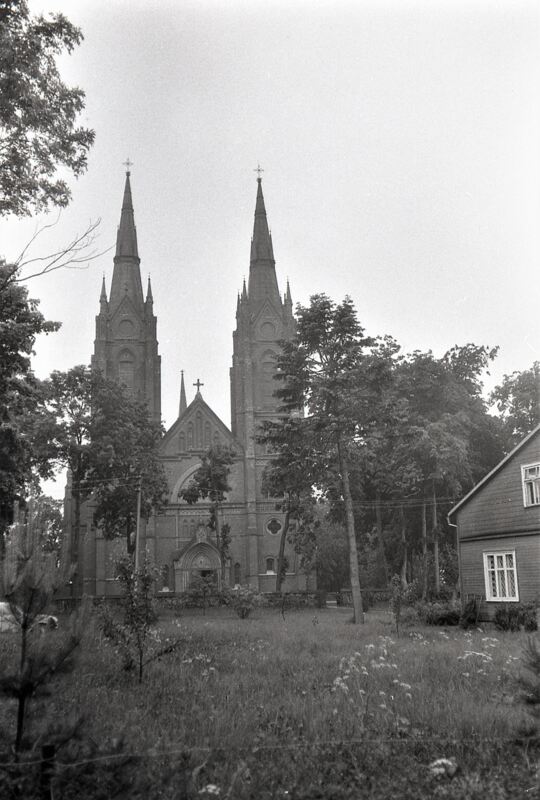
Nespalvotas, vertikalaus formato, perforuotas, siaurajuostis negatyvas. Nufotografuota Salantų Švč. Mergelės Marijos Ėmimo į dangų bažnyčia, Kretingos r. Bendras priekinio fasado vaizdas iš šiaurės rytų pusės. Fotografavo Julius Kanarskas, Kretingos muziejaus Istorijos skyriaus vedėjas, 1994 m.
Pirmame plane matosi klebonijos sklypas, kuriame dešinėje pusėje stovi medinis klebonijos pastatas. Antrame plane stūkso bažnyčia. Ji raudonų plytų mūro, istorizmo laikotarpio stiliaus, neogotikinė, dvibokštė.
Bažnyčia pastatyta 1906–1911 m. parapijos administratoriaus, kanauninko Pranciškaus Urbonavičiaus ir parapijiečių rūpesčiu pagal architekto Karlo Eduardo Strandmano projektą. Architektūrinį ir sakralinį vertingųjų savybių pobūdį turintis kultūros paveldo objektas.