About the Church
Its history began in 1624, when a Bernardine monastery was established nearby, and the first wooden church was built in 1650. After the building was destroyed in the town fire of 1702, a new wooden church rose on the site in 1738. The present masonry church was built in 1761–1794 and was consecrated in 1794 by Bishop Tadas Juozapas Bukota. In 1926, when the Diocese of Telšiai was established, it became a cathedral.
The cathedral combines features of the late Baroque and Classicism: it is a plastered masonry, rectangular-plan, single-towered building with a three-part apse; the interior is divided into three naves with cylindrical vaults. The craftsmen Jurgis Mažeika and Tomas Podgaiskis created seven altars. In the crypt beneath the cathedral rest bishops Justinas Staugaitis and Pranciškus Ramanauskas, and in 1999 the remains of the martyred bishop Vincentas Borisevičius were moved here. In 1938, the large organ built by the Czech craftsman Otto Kratokvilas added to the solemnity of this church.
Gallery and Resources
Archive captions are shown in Lithuanian.
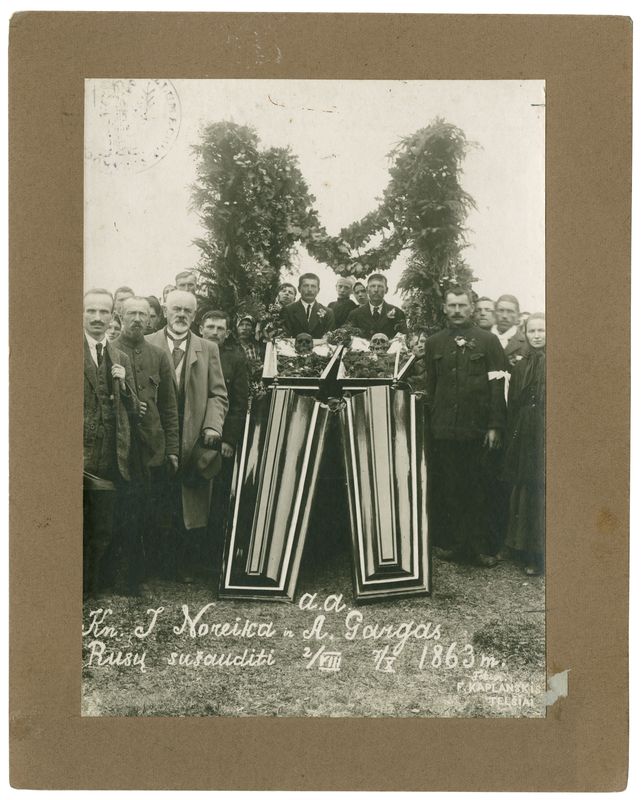
1863 m. sukilėlių Gargždų bažnyčios vikaro Izidoriaus Noreikos ir Varnių bažnyčios vikaro Antano Gargo (g. 1825) palaikų perlaidojimas. Fotografijos centre matyti karstuose sudėti kunigų palaikai, pastatytas augalų girliandų papuošimas, šalia stovi žmonės. Kunigai I. Noreika ir A. Gargas buvo sušaudyti 1863 m. spalio 7 d. Telšių miesto pakraštyje. Palaikai perlaidoti 1922 m. liepos 16 d. Telšių bažnyčios (dabar Šv. Antano Paduviečio katedra) šventoriuje.
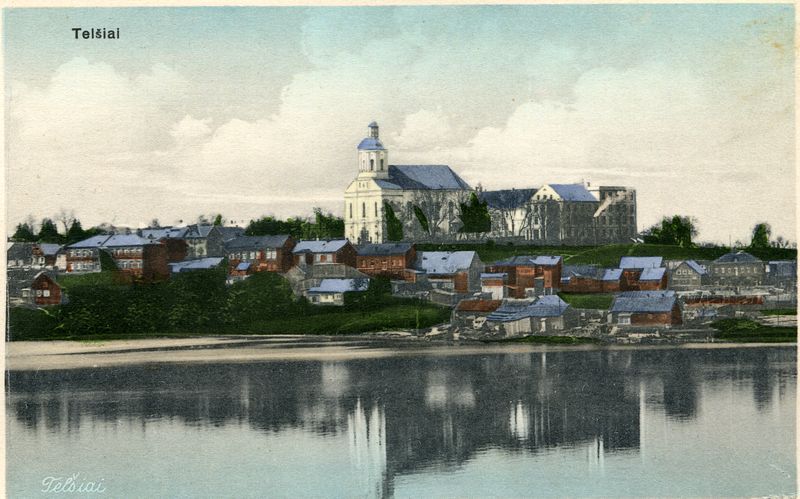
Averse – Telšių miesto vaizdas nuo Mąsčio ežero pusės, centre -Telšių Šv. Antano Paduviečio katedra, viršuje užrašas „Telšiai". Atvirukas spalvintas.
Reversas: vertikaliai – užrašas „Išleido F.Milevičiaus knygynas Telšiuose". Dešinė pusė suliniuota. Yra vieta pašto ženklui