About the Church
The church of the Finding of the Holy Cross at Ilguva stands in Ilguva village, on the picturesque left bank of the Nemunas, near the mouth of the Nyka stream, in the Šakiai Deanery. The wooden church, in vernacular architectural forms, with three towers and an apse, is protected as an architectural monument (No. 1612).
The first church was built in 1765 by the Upytė elder Pranciškus Grincevičius – at first it was a chapel of the Veliuona parish, and in 1794 it became an independent parish. In 1813 lightning struck the church and it burned down.
The present wooden church was raised in 1814 through the efforts of Julijonas Grincevičius, and in 1822 it was consecrated by suffragan bishop Augustinas Polikarpas Marcejevskis. In the early 20th century, in 1907–1909, a branch of the “Žiburys” society with a library operated here. The interior is divided into three naves, and in the churchyard stands a three-storey wooden bell tower – a homely riverside ensemble, recalling the legacy of the Grincevičius landowning family.
The first church was built in 1765 by the Upytė elder Pranciškus Grincevičius – at first it was a chapel of the Veliuona parish, and in 1794 it became an independent parish. In 1813 lightning struck the church and it burned down.
The present wooden church was raised in 1814 through the efforts of Julijonas Grincevičius, and in 1822 it was consecrated by suffragan bishop Augustinas Polikarpas Marcejevskis. In the early 20th century, in 1907–1909, a branch of the “Žiburys” society with a library operated here. The interior is divided into three naves, and in the churchyard stands a three-storey wooden bell tower – a homely riverside ensemble, recalling the legacy of the Grincevičius landowning family.
Gallery and Resources
Archive captions are shown in Lithuanian.
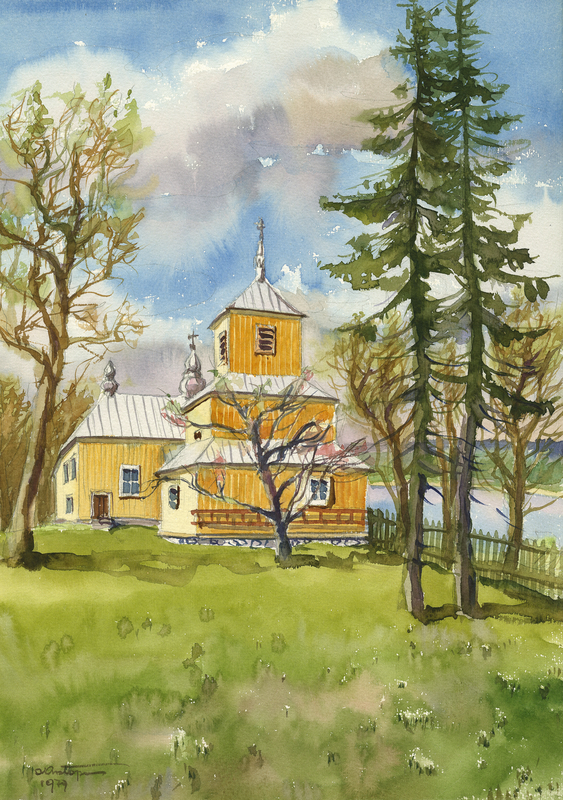
Kompozicijoje – Ilguvos Šv. Kryžiaus Atradimo bažnyčia.
Signuotas akvarele averso apatinėje dalyje kairėje.