About the Church
The site of the cathedral has a long and complicated history. Even before the establishment of the Christian religion, a pagan fire burned here and an altar stood dedicated to Perkūnas, the god of thunder. The first cathedral was built in the mid-13th century, when Mindaugas was baptised and became the first King of Lithuania. This early cathedral had features of the Romanesque and Gothic styles, and its remains can still be found in the cathedral's underground vaults.
In 1387, following the initiative to baptise Lithuania, Jogaila built a new cathedral, which became the country's principal church. Unfortunately this cathedral suffered from fires and wars more than once, but each time it was rebuilt, with its architectural design being altered and improved.
One of the most impressive elements of the cathedral is St Casimir's Chapel, built in the early 17th century on the initiative of Sigismund Vasa. It houses the coffin of St Casimir. The chapel's interior is faced with marble and decorated with Baroque detail — one of the most beautiful Baroque interiors in Lithuania.
The reconstruction of the cathedral was completed in the 18th century by the celebrated architect Laurynas Gucevičius. He gave the building the Classicist appearance it retains to this day. Gucevičius's six Doric columns of the portico facade and the sculptures on the pediment still radiate classical grandeur.
An inseparable part of the cathedral is the bell tower, which reaches a height of 57 metres. It is the best-preserved tower of the defensive wall of the Vilnius castles, recalling the city's history. The bells hanging in the tower create a special atmosphere during religious feasts and ceremonies.
The interior of the cathedral is also splendid: twelve columns support the choir, and the central nave, being taller than the side aisles, gives the building a sense of light and space. The walls are adorned with frescoes, paintings and sculptures, among which the works of Franciszek Smuglewicz are especially prized.
Vilnius Cathedral is not only a religious centre but also a cultural landmark, whose history takes in many important events and figures. Here the Grand Dukes of Lithuania were crowned, and important services and political events took place. Buried in its underground vaults are such notable figures as Vytautas the Great, St Casimir, Aleksandras Jogailaitis and Barbora Radvilaitė.
The cathedral is constantly renewed and restored, preserving its unique heritage and drawing both tourists and pilgrims. It is a place where history, architecture and spirit intertwine, captivating every visitor.
Gallery and Resources
Archive captions are shown in Lithuanian.
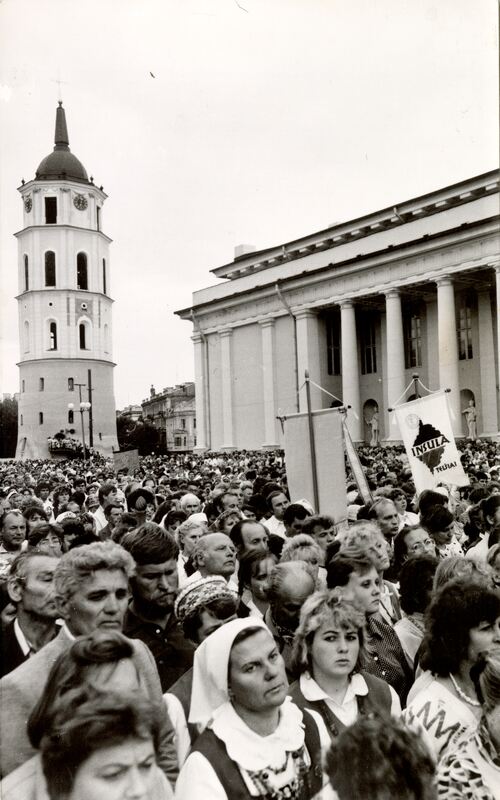
Dainų šventės dalyviams aukojamos šv. Mišios Katedros aikštėje Vilniuje.
Kairėje pusėje virš minios žmonių galvų matyti iškelta Telšių folkloro ansamblio „Insula“ vėliava.
Tolumoje dešinėje pusėje – Vilniaus šv. vyskupo Stanislovo ir šv. Vladislovo arkikatedra bazilika, kairėje – Vilniaus katedros varpinė.
Lietuvos tautinės dainų šventės Dainų dienos repertuaras buvo sudarytas tik iš Lietuvos kompozitorių kūrinių. Tradicinę šventės struktūrą papildė Tautinis vakaras, vėliau pavadintas Folkloro diena. Visų Lietuvos etninių regionų folkloro kolektyvai koncertavo Vilniaus senamiestyje.
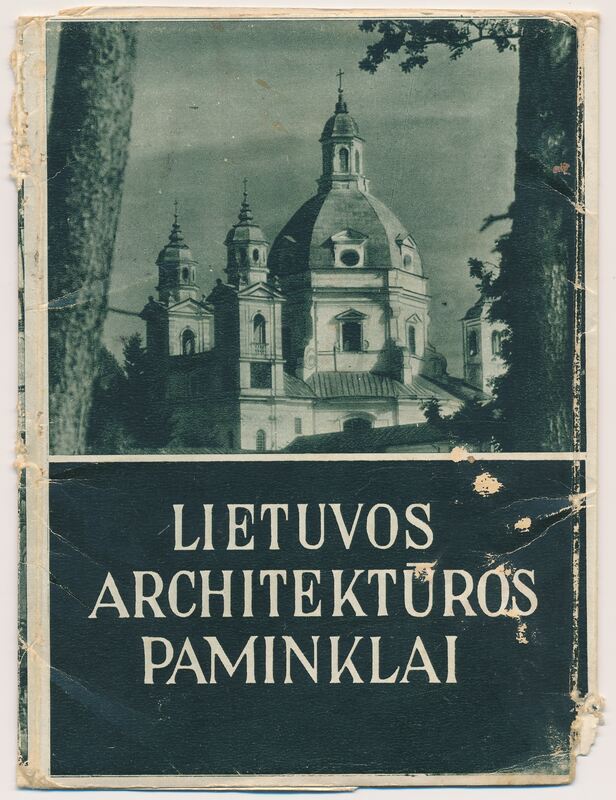
Atvirukų rinkinys. „Lietuvos architektūros paminklai“ (lietuvių, rusų ir anglų kalbomis). Monochrominis. Ant viršelio šios nuotraukos: Pažaislio vienuolyno bažnyčia (Švč. Mergelės Marijos Apsilankymo bažnyčia), Vilniaus šv. Stanislovo ir šv. Vladislovo arkikatedra bazilika (be 1950 m. nugriautų skulptūrų), Vilniaus šv. Onos bažnyčia.
Kaunas, Valstybinė K. Požėlos spaustuvė. Pasirašyta spaudai 1957.X.4. LV 07308.
Fotografijos S. Šimanskio.
Rinkiniui priklauso 16 atvirukų.
Lietuvos TSR visasąjunginės reikšmės architektūros paminklai. Turinys:
Trakai. Pilis saloje. XIV–XV amž.
Vilnius. Gedimino pilies bokštas. XV amž.
Jurbarko rajonas. Gelgaudų pilis. Arch. P. Nonhardtas. XVI–XVII amž.
Jurbarko rajonas. Raudonės pilis. XVI–XIX amž.
Vilnius. Šv. Mikalojaus bažnyčia. XIV–XVIII amž.
Vilnius. Bernardinų bažnyčia. XVI amž.
Vilnius. Šv. Onos bažnyčia. XVI amž.
Kauno rajonas. Šv. Jono bažnyčia Zapyškyje. XVI amž.
Vilnius. Aušros (Medininkų) vartai. XVI amž.
Vilnius. Šv. Mykolo bažnyčia. XVI–XVII amž.
Kaunas. Rotušės rūmai. Arch. B. Chojnauskas ir J. Matekeris. XVI–XVIII amž.
Tytuvėnai. Šv. panos Marijos bažnyčia ir vienuolynas. XVII amž.
Vilnius. Šv. Teresės bažnyčia. XVII amž.
Vilnius. Šv. Petro ir Povilo bažnyčia. Arch. J. Zaora. XVII amž.
Kaunas. Pažaislio vienuolyno bažnyčia. Arch. L. Fredo. XVII amž.
Vilnius. Šv. Stanislovo katedra. Arch. L. Stuoka-Gucevičius. XVIII amž.