About the Church
The church's history is full of various upheavals and renewals. In 1503 the Grand Duke of Lithuania Alexander assigned it to the parish of Kaunas, and in the middle of the 16th century a low tower was added. However, the church suffered misfortune more than once: in 1655 it was damaged, and it was not repaired until around 1680. In the 18th century, during the period when it was cared for by monks of the Order of St Roch, a significant renovation was carried out and an organ loft was even built.
At the end of the 18th century and the beginning of the 19th, the church faced difficulties once again – the fire of 1812 destroyed all the wooden buildings of the Roch order, and the church itself was also damaged. Finally, in 1824, the church and its hospital were handed over to the Sisters of Charity, who cared for the sick until their convent was closed in 1864.
In the 20th century the church underwent even more changes. In 1921 it was handed over to the Marian Fathers, who built a new monastery. Unfortunately, during the Soviet era the church was closed and turned into a store for medical equipment, while the Marian monastery building housed administrative offices. It was only in 1988, after the public opposed plans to demolish it, that restoration work began, following which the church reopened its doors for worship in 1991.
Architecturally St Gertrude's Church in Kaunas has a square plan and a single tower, with a narrower and lower square chancel. Its Gothic features are evident both outside and inside, giving this church a special historical and cultural value.
This small but very important church is an inseparable part of Kaunas, reflecting the complexity of the city's history and the efforts of its people to preserve their cultural heritage.
Gallery and Resources
Archive captions are shown in Lithuanian.
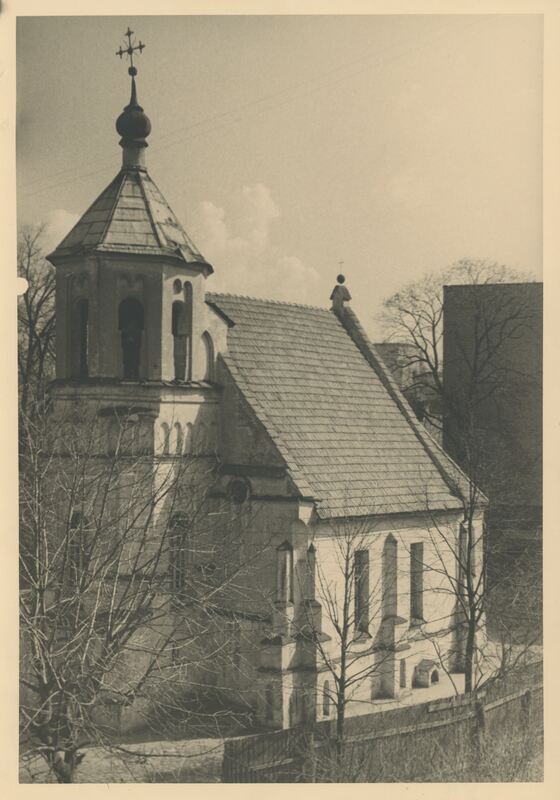
Kauno Šv. Gertrūdos bažnyčia (arba Marijonų bažnyčia, Šaričių bažnyčia) – gotikos stiliaus bažnyčia Kauno senamiesčio rytuose, Laisvės alėjos gale, nedideliame kieme. Manoma, kad ši viena seniausių gotikinių Lietuvos bažnyčių išmūryta XV a. antrojoje pusėje (istorinių žinių neišliko).
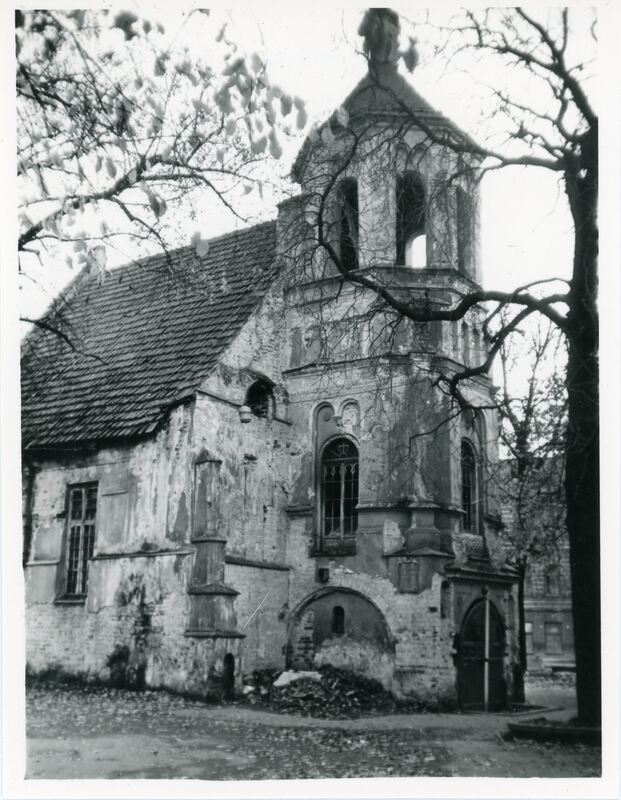
Fotografija. Šv. Gertrūdos bažnyčia. 1989 m. spalio mėn. Vaizdas į pietryčių pusę. Pirmame plane bažnyčios pastatas. Už bažnyčios baigiamas griauti LKP Požėlos rajono komiteto pastato priestatas. Šv. Gertrūdos bažnyčia laikoma viena seniausių gotikinių bažnyčių Lietuvoje (datuojama apie XV a.). Statyta etapais: XV a. – presbiterija, XVI a. pradžioje – kvadratinė nava, XVI a. viduryje – daugiakampis su kvadratiniu pagrindu bokštas, XVI a. antroje pusėje – zakristija. Bažnyčia iki XVIII a. vidurio buvo parapinė, vėliau – vienuolynų. 1750 m. atiduota rokitams, jie pastatė medinį vienuolyną. 1824 m. Bažnyčios vyresnybė bažnyčią atidavė šaritėms. 1842 m. Rusijos valdžia jų turtą konfiskavo, 1866 m. uždarė vienuolyną. 1922 m. bažnyčia ir vienuolynas atiduota marijonams; pastatytas naujas mūrinis vienuolynas. 1948 m. sovietų valdžia bažnyčią ir vienuolyną uždarė. Bažnyčia paversta medicinos įrangos sandėliu. Marijonų vienuolyne įsikūrė administracinės įstaigos, vėliau Požėlos rajono komunistų partijos ir vykdomasis komitetai. 1988 m. pradėjus statyti šių administracinių įstaigų priestatą ir rengiantis nugriauti bažnyčią, visuomenė pasipriešino. 1988 m. vasarą pradėti bažnyčios architektūriniai tyrimai (vadovės architektės Irma Grigaitienė, Irena Vaškelienė), o 1989 m. – restauravimas. Nuo 1991 m. bažnyčioje vyksta pamaldos. Fotografas Gintaras Vitulskis.