About the Church
The church of St Joseph at Leliūnai is a true gem of architectural and historic value, standing in the small town of Leliūnai, in Utena district. It is not only a place of religious worship but also an important cultural heritage site, whose history spans as much as three centuries.
The first wooden church at Leliūnai was built as far back as 1698, but its durability was hindered by time and the elements. In later years, in 1788, the manor owner Juozas Pomarnackas had another wooden church built, thanks to which a parish was established in 1793. Just a few years later, in 1795, a land unit (a valakas) called Starkiškis was donated to the church, and parish registers began to be kept from 1794, later becoming an important source for local history.
The wooden structure lost its durability over time, so in 1867 permission was granted to replace the rotten timbers of the church and to add two chapels. The design for the new masonry church was prepared by the engineer Nikolai Andreyev in 1900, and 21,000 roubles were allocated for its construction. The present masonry church was built in 1905 through the efforts of canon Antanas Masaitis. He served as parish priest at Leliūnai from 1899 to 1938, and his dedication and patronage brought about the church's revival.
The church's interior is also worth attention. It was repainted in 1908, and in 1913 a 21-stop organ, made in Königsberg, was installed here. This organ was one of the first pneumatic organs in Lithuania and had a unique Neo-Gothic case. It was also restored in 2011–2012, recovering its former splendour.
Although in 1931 lightning struck the church tower and three bells fell, two of which broke, in 1940, thanks to parish priest Jonas Gudonis, the bells were recast. However, the Second World War brought further misfortune – one bell was taken away. During the period of independence, with Petras Senulis serving as parish priest (1956–1982), the church remained the spiritual centre of the local community.
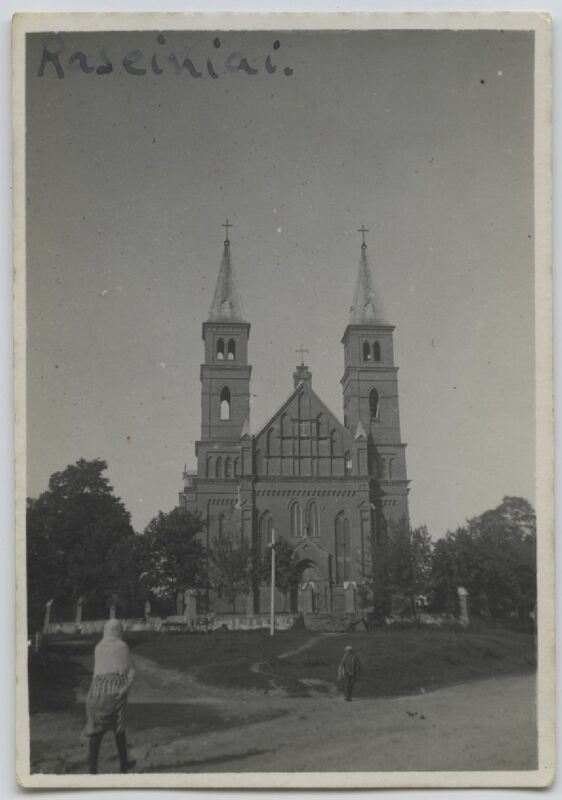
The church delights with its architecture. The Historicist, cross-plan building with an apse and two towers is 37.5 metres long and 21.5 metres wide. Inside there are three aisles and three altars. The churchyard is enclosed by a stone-and-brick wall with iron railings, and a small brick chapel stands in its corner.
Without doubt, the church of St Joseph at Leliūnai is not only a sacred site but also a treasury of Lithuanian culture, full of history and tradition. Its architectural elements, musical instruments and special atmosphere attract both local residents and tourists wishing to feel the spirit of historic Lithuania.
The first wooden church at Leliūnai was built as far back as 1698, but its durability was hindered by time and the elements. In later years, in 1788, the manor owner Juozas Pomarnackas had another wooden church built, thanks to which a parish was established in 1793. Just a few years later, in 1795, a land unit (a valakas) called Starkiškis was donated to the church, and parish registers began to be kept from 1794, later becoming an important source for local history.
The wooden structure lost its durability over time, so in 1867 permission was granted to replace the rotten timbers of the church and to add two chapels. The design for the new masonry church was prepared by the engineer Nikolai Andreyev in 1900, and 21,000 roubles were allocated for its construction. The present masonry church was built in 1905 through the efforts of canon Antanas Masaitis. He served as parish priest at Leliūnai from 1899 to 1938, and his dedication and patronage brought about the church's revival.
The church's interior is also worth attention. It was repainted in 1908, and in 1913 a 21-stop organ, made in Königsberg, was installed here. This organ was one of the first pneumatic organs in Lithuania and had a unique Neo-Gothic case. It was also restored in 2011–2012, recovering its former splendour.
Although in 1931 lightning struck the church tower and three bells fell, two of which broke, in 1940, thanks to parish priest Jonas Gudonis, the bells were recast. However, the Second World War brought further misfortune – one bell was taken away. During the period of independence, with Petras Senulis serving as parish priest (1956–1982), the church remained the spiritual centre of the local community.
The church delights with its architecture. The Historicist, cross-plan building with an apse and two towers is 37.5 metres long and 21.5 metres wide. Inside there are three aisles and three altars. The churchyard is enclosed by a stone-and-brick wall with iron railings, and a small brick chapel stands in its corner.
Without doubt, the church of St Joseph at Leliūnai is not only a sacred site but also a treasury of Lithuanian culture, full of history and tradition. Its architectural elements, musical instruments and special atmosphere attract both local residents and tourists wishing to feel the spirit of historic Lithuania.
Gallery and Resources