About the Church
The Šačiai Church of St John the Baptist is a true architectural gem, giving fame to the small village of Šačiai in Skuodas district. Its history begins as early as the 17th century, when in 1670 the first church was built by Jonas Volskis. This was a small wooden church, granted three valakai of land in 1690 – a sign of strong support from the local community and its wish to have its own church.
The church's history was an eventful one: in 1771 A. Sapiega built a new wooden church, which later became the centre of the local religious community. At the beginning of the 19th century, in 1802, an altaria was established, and in 1806 a parish school began operating, showing the church's importance not only in religious but also in educational life. A parish was officially established in 1851.
Construction of a masonry church began somewhat later, at a time when a wave of church building in the Renaissance and Baroque styles was spreading across Lithuania. Permission to build a masonry church was obtained only in 1880, but on the initiative of the parish priest Simonas Lukoševičius the present church was built between 1882 and 1886. This beautiful church was consecrated by the Samogitian suffragan bishop Aleksandras Kazimieras Beresnevičius.
Architecturally, the Šačiai Church of St John the Baptist is a rectangular-plan, two-towered masonry building. It stands out not only for its size but also for the wealth of its interior detail. Inside there are 23 windows, 6 doors, 14 artistic Stations of the Cross, a pulpit, and three altars. The high altar, built in 1891 through the efforts of the parish priest Ignacas Stankūnas, is adorned with two paintings: of St John the Baptist and of Our Lady, Protectress of Captives. The side altars were installed in 1904, and the church's organ, with 17 stops, was acquired in 1906.
In the church's churchyard the grave can also be found of the priest Vincentas Senkus, who after his exile lived in Šatės from 1956 until his death in 1986. Senkus was not only a clergyman but also a political exile, who helped strengthen the local community.
The Šačiai Church of St John the Baptist is not only a centre of religious life, but also an important cultural and historical site, bearing witness to the local community's long-standing faithfulness to faith and tradition.
The church's history was an eventful one: in 1771 A. Sapiega built a new wooden church, which later became the centre of the local religious community. At the beginning of the 19th century, in 1802, an altaria was established, and in 1806 a parish school began operating, showing the church's importance not only in religious but also in educational life. A parish was officially established in 1851.
Construction of a masonry church began somewhat later, at a time when a wave of church building in the Renaissance and Baroque styles was spreading across Lithuania. Permission to build a masonry church was obtained only in 1880, but on the initiative of the parish priest Simonas Lukoševičius the present church was built between 1882 and 1886. This beautiful church was consecrated by the Samogitian suffragan bishop Aleksandras Kazimieras Beresnevičius.
Architecturally, the Šačiai Church of St John the Baptist is a rectangular-plan, two-towered masonry building. It stands out not only for its size but also for the wealth of its interior detail. Inside there are 23 windows, 6 doors, 14 artistic Stations of the Cross, a pulpit, and three altars. The high altar, built in 1891 through the efforts of the parish priest Ignacas Stankūnas, is adorned with two paintings: of St John the Baptist and of Our Lady, Protectress of Captives. The side altars were installed in 1904, and the church's organ, with 17 stops, was acquired in 1906.
In the church's churchyard the grave can also be found of the priest Vincentas Senkus, who after his exile lived in Šatės from 1956 until his death in 1986. Senkus was not only a clergyman but also a political exile, who helped strengthen the local community.
The Šačiai Church of St John the Baptist is not only a centre of religious life, but also an important cultural and historical site, bearing witness to the local community's long-standing faithfulness to faith and tradition.
Gallery and Resources
Archive captions are shown in Lithuanian.
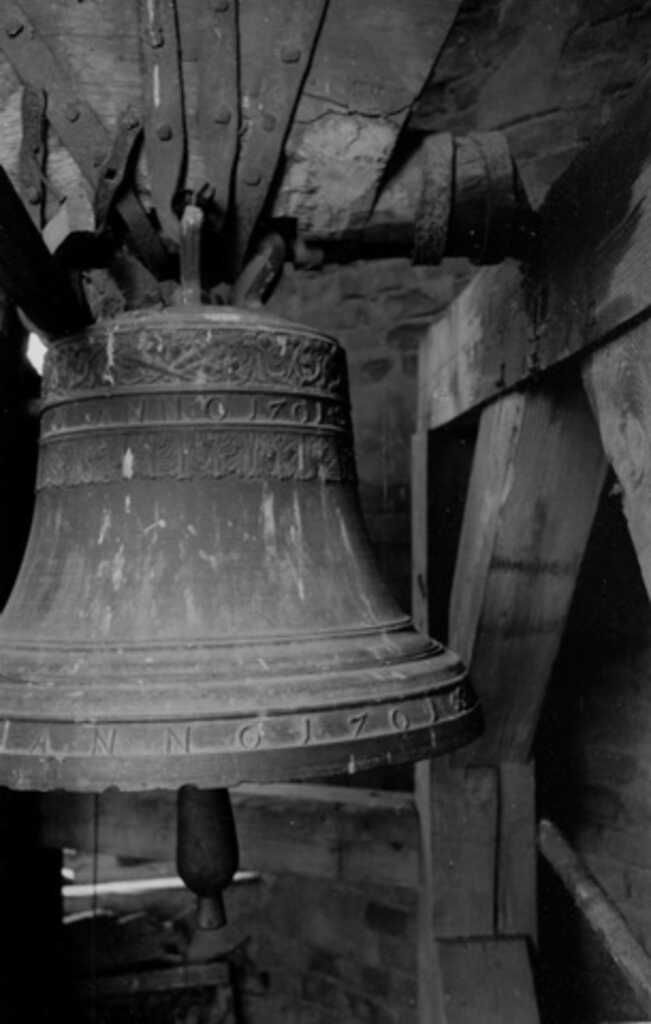
Šačių bažnyčios varpas.