About the Church
Sts Peter and Paul's Church in Vilnius, standing in Antakalnis, is one of the most beautiful and impressive Baroque churches in Lithuania. Its history goes back to the 15th century, when the first wooden church was built on this site. Although over the centuries the church suffered fires and wars, it was always rebuilt, and the present masonry structure was raised in the 17th century.
The church was first destroyed by fire in 1594, and several waves of rebuilding followed. However, the decisive turning point came in the 18th century, when Mykolas Kazimieras Pacas began building the present masonry church at his own expense, to a design by the Polish architect Jan Zaor. This was a symbolic gesture, commemorating the Russian occupation of Vilnius.
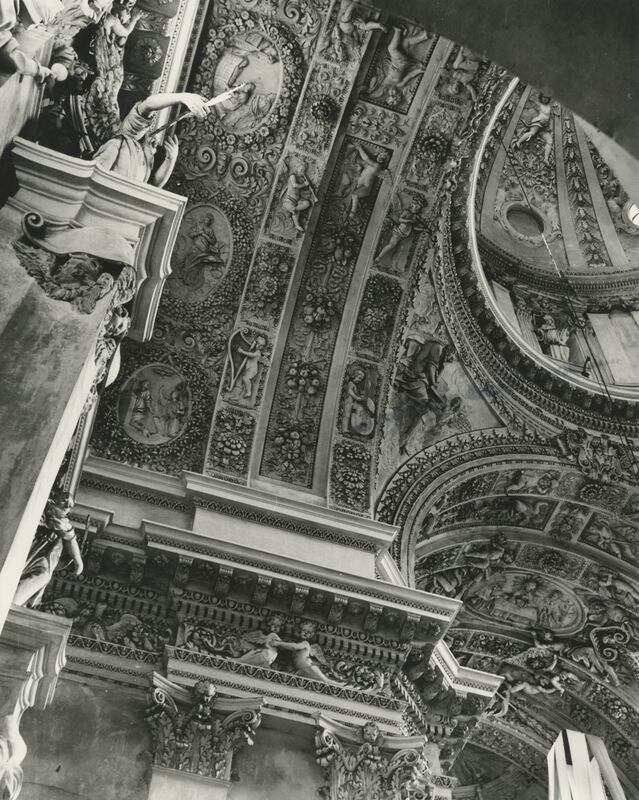
The church is famous for its unique interior, combining the work of the Italian Baroque masters Pietro Perti, Giovanni Maria Galli and Johann Gotthard Berghof. The interior is dominated by a multitude of stucco figures — there are as many as around two thousand of them here! There are also impressive reliefs, frescoes and religious paintings, among which the images of St Mary and the "Plague of Vilnius" are especially prized.
A distinctive feature of the church is a ship-shaped chandelier, which not only symbolises the church's connection with the fishermen's patrons Sts Peter and Paul but also adds a special charm to the interior. The church's pulpit is in the Rococo style, gilded, and likewise well worth attention.
The building's architecture is also impressive: a two-towered basilica with a dome and a semicircular apse, a Latin-cross plan, and a three-nave interior with barrel vaults. One of its distinctive features is the free-standing columns on the main facade, used here for the first time in Lithuanian church architecture.
Over its long history the church has undergone more than one reconstruction. In the 19th century a high altar was installed here, with a painting by Franciszek Smuglewicz, "The Farewell of Sts Peter and Paul". Despite various historical hardships, such as attempts by the Russian authorities to close the church or damage caused by war, it remained an important spiritual and cultural centre. Even during the Soviet era, when most churches were closed, Sts Peter and Paul's Church remained open to the faithful.
A visit to Sts Peter and Paul's Church is not only a religious but also a cultural journey, allowing one to admire a wonderful example of Baroque art and architecture.
The church was first destroyed by fire in 1594, and several waves of rebuilding followed. However, the decisive turning point came in the 18th century, when Mykolas Kazimieras Pacas began building the present masonry church at his own expense, to a design by the Polish architect Jan Zaor. This was a symbolic gesture, commemorating the Russian occupation of Vilnius.
The church is famous for its unique interior, combining the work of the Italian Baroque masters Pietro Perti, Giovanni Maria Galli and Johann Gotthard Berghof. The interior is dominated by a multitude of stucco figures — there are as many as around two thousand of them here! There are also impressive reliefs, frescoes and religious paintings, among which the images of St Mary and the "Plague of Vilnius" are especially prized.
A distinctive feature of the church is a ship-shaped chandelier, which not only symbolises the church's connection with the fishermen's patrons Sts Peter and Paul but also adds a special charm to the interior. The church's pulpit is in the Rococo style, gilded, and likewise well worth attention.
The building's architecture is also impressive: a two-towered basilica with a dome and a semicircular apse, a Latin-cross plan, and a three-nave interior with barrel vaults. One of its distinctive features is the free-standing columns on the main facade, used here for the first time in Lithuanian church architecture.
Over its long history the church has undergone more than one reconstruction. In the 19th century a high altar was installed here, with a painting by Franciszek Smuglewicz, "The Farewell of Sts Peter and Paul". Despite various historical hardships, such as attempts by the Russian authorities to close the church or damage caused by war, it remained an important spiritual and cultural centre. Even during the Soviet era, when most churches were closed, Sts Peter and Paul's Church remained open to the faithful.
A visit to Sts Peter and Paul's Church is not only a religious but also a cultural journey, allowing one to admire a wonderful example of Baroque art and architecture.
Gallery and Resources
Archive captions are shown in Lithuanian.
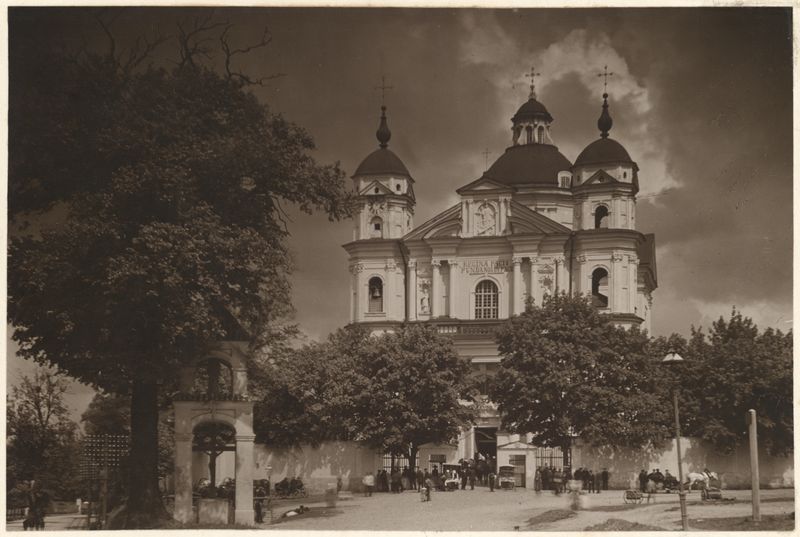
Vilniaus Šv. apaštalų Petro ir Povilo bažnyčia Antakalnyje.