About the Church
The Church of St Raphael the Archangel in Vilnius is one of the most impressive Baroque churches in Vilnius, located in the Šnipiškės district, near the right bank of the river Neris. With its history and architecture, this church attracts not only pilgrims but also tourists and city residents.
The church's history begins in 1697, when the Voivode of Vilnius, Kazimieras Sapiega, donated the territory of Šnipiškės to the Jesuits. In 1702, Mykolas Kazimieras Radvila and Mykolas Košicas began building a new church on this site. Construction was led by the Jesuit master builders Hiacintas Ptakas and Jurgis Šikas. Seven years later, in 1709, the walls and two tiers of one tower had been built up in masonry.
The 18th century brought considerable changes to the church. In 1752, the third and fourth tiers of the tower were built to a design by the architects J. Dyderšteinas and J. Nezemkauskas, and later a second tower was added. That same year the high altar was also installed. At around the same time, between 1703 and 1740, a monastery was built next to the church, and outbuildings followed between 1715 and 1739.
In 1773 the church and monastery were handed over to the Piarists. A parish was established here in 1791, but only eight years later the tsarist authorities turned the monastery into barracks, and the church was closed. It was not until 1824 that the church was repaired and reconsecrated. Unfortunately, after the uprisings of 1831–1832, the church became a military storehouse.
In the 20th century, the church was revived once more: the monastery was rebuilt in 1857–1858, and the church itself was renovated in 1860. The church has also witnessed significant events in Lithuanian history. For example, on 14 August 1904, the future first President of Lithuania, Antanas Smetona, married Sofija Chodakauskaitė-Smetonienė here.
The church's architecture is an excellent example of late Baroque with Rococo features. The church has a basilica-type structure on a rectangular plan with two towers. Inside there are three naves, separated by piers, and the fence surrounding the church is built of plastered masonry.
In 1975 the church was restored once again, to a design by the architect Giedrius Laucius, in order to preserve and restore this historic and religious treasure.
A visit to the Church of St Raphael the Archangel in Vilnius offers the chance to immerse oneself in the deep and rich history of Lithuania, to discover a distinctive heritage of Baroque architecture, and to sense the particular spirit of this place.
The church's history begins in 1697, when the Voivode of Vilnius, Kazimieras Sapiega, donated the territory of Šnipiškės to the Jesuits. In 1702, Mykolas Kazimieras Radvila and Mykolas Košicas began building a new church on this site. Construction was led by the Jesuit master builders Hiacintas Ptakas and Jurgis Šikas. Seven years later, in 1709, the walls and two tiers of one tower had been built up in masonry.
The 18th century brought considerable changes to the church. In 1752, the third and fourth tiers of the tower were built to a design by the architects J. Dyderšteinas and J. Nezemkauskas, and later a second tower was added. That same year the high altar was also installed. At around the same time, between 1703 and 1740, a monastery was built next to the church, and outbuildings followed between 1715 and 1739.
In 1773 the church and monastery were handed over to the Piarists. A parish was established here in 1791, but only eight years later the tsarist authorities turned the monastery into barracks, and the church was closed. It was not until 1824 that the church was repaired and reconsecrated. Unfortunately, after the uprisings of 1831–1832, the church became a military storehouse.
In the 20th century, the church was revived once more: the monastery was rebuilt in 1857–1858, and the church itself was renovated in 1860. The church has also witnessed significant events in Lithuanian history. For example, on 14 August 1904, the future first President of Lithuania, Antanas Smetona, married Sofija Chodakauskaitė-Smetonienė here.
The church's architecture is an excellent example of late Baroque with Rococo features. The church has a basilica-type structure on a rectangular plan with two towers. Inside there are three naves, separated by piers, and the fence surrounding the church is built of plastered masonry.
In 1975 the church was restored once again, to a design by the architect Giedrius Laucius, in order to preserve and restore this historic and religious treasure.
A visit to the Church of St Raphael the Archangel in Vilnius offers the chance to immerse oneself in the deep and rich history of Lithuania, to discover a distinctive heritage of Baroque architecture, and to sense the particular spirit of this place.
Gallery and Resources
Archive captions are shown in Lithuanian.
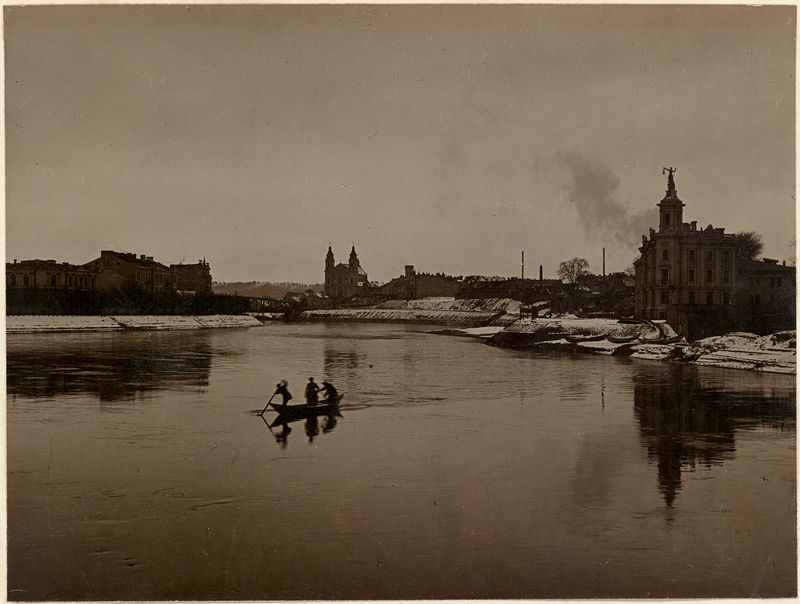
Vilniaus miesto elektrinė ir Šv. Arkangelo Rapolo bažnyčia dešiniajame Neries krante.
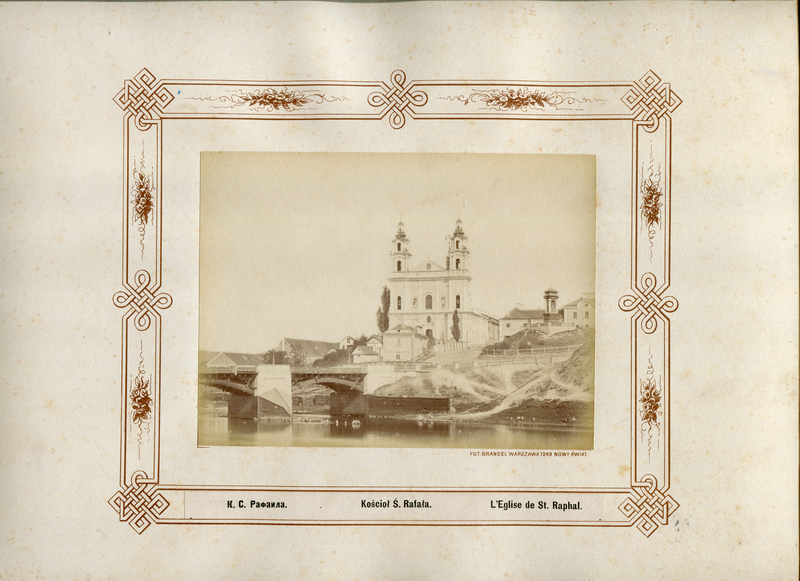
Nespalvota, horizontalaus formato fotografija. Vilniaus miesto vaizdai: Vilniaus Šv. arkangelo Rapolo bažnyčia Neries dešiniajame krante. Fotografas Konradas Brandelis (Konrad Brandel (1838-1920)), Varšuva.
Nuotrauka priklijuota prie kartono, aprėminta geometrinio ir augalinio motyvo ornamentu. Apačioje atspaustas fotografo užrašas:" FOT.BRANDEL WARSZAWA 1249 SWIAT" (Fotografas Brandelis, Varšuva, Nowy Swiat g., 1249). Kartono apačioje priklijuota popieriaus juostelė su užrašu. Užrašas pateiktas trimis kalbomis - rusų, lenkų,prancūzų:" К С Рафаила / Kosciol S.Rafala / L'Eglise de St.Rapfal"