About the Church
The Church of the Holy Name of the Blessed Virgin Mary at Rozalimas is a distinctive monument of architecture and history, situated in the heart of the small town of Rozalimas. It is striking for its vernacular architecture, which skilfully combines elements of Gothic Revival and Baroque.
The church's history begins in 1765, when it was built by the landowners Rozalija Drabišienė-Bielozaraitė and Adomas Drabišius. This was a period when wooden sacred architecture traditions predominated in Lithuania. As early as 1771 the church was granted 8 valakas of land together with the villages of Gikoniai and Janoniai, and a priest soon began serving here. A couple of years later, in 1773, a parish was established.
In 1794 a new wooden church was built, which can still be seen today. It bears witness to the construction techniques and aesthetic choices of past periods. In 1797 the elder of Paežeriai granted an additional valakas of land to the Rozalimas chaplaincy, thereby strengthening the parish's material base. Over the years the church was served by various parish priests who contributed to its upkeep. For example, Titas Gedvila (parish priest 1885–1893) repaired the churchyard fence and installed the organ, while Konstantinas Olšauskas (1900–1905) repainted the church, established an almshouse for the elderly and promoted temperance.
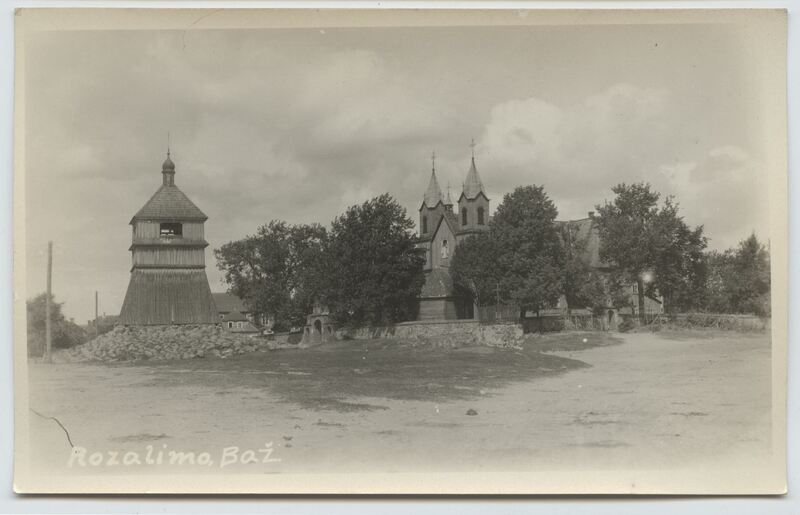
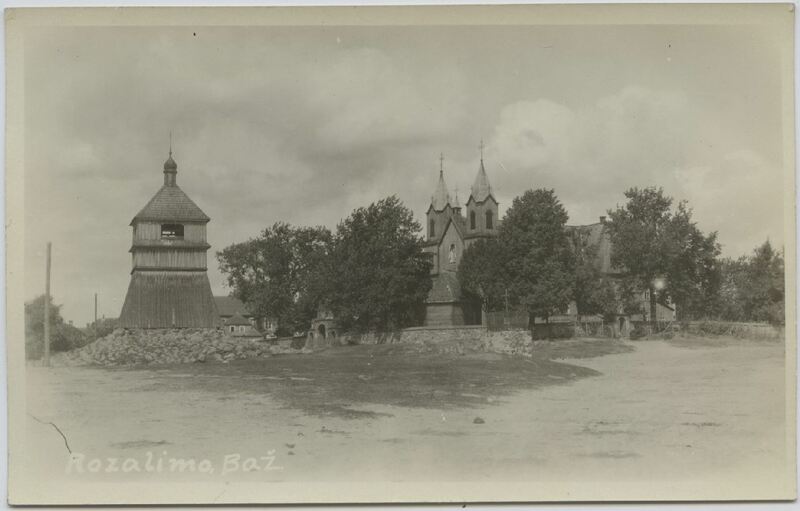
Interestingly, in 1930 a large fire destroyed the wooden bell tower – as many as three bells melted, though one new bell was cast from them. This symbolises the parish's resilience and its ability to rebuild what was lost. During the Soviet period the church suffered persecution: the priest Petras Kuzmickas was arrested in 1947 and sentenced to imprisonment in Vorkuta, from where he did not return until 1953.
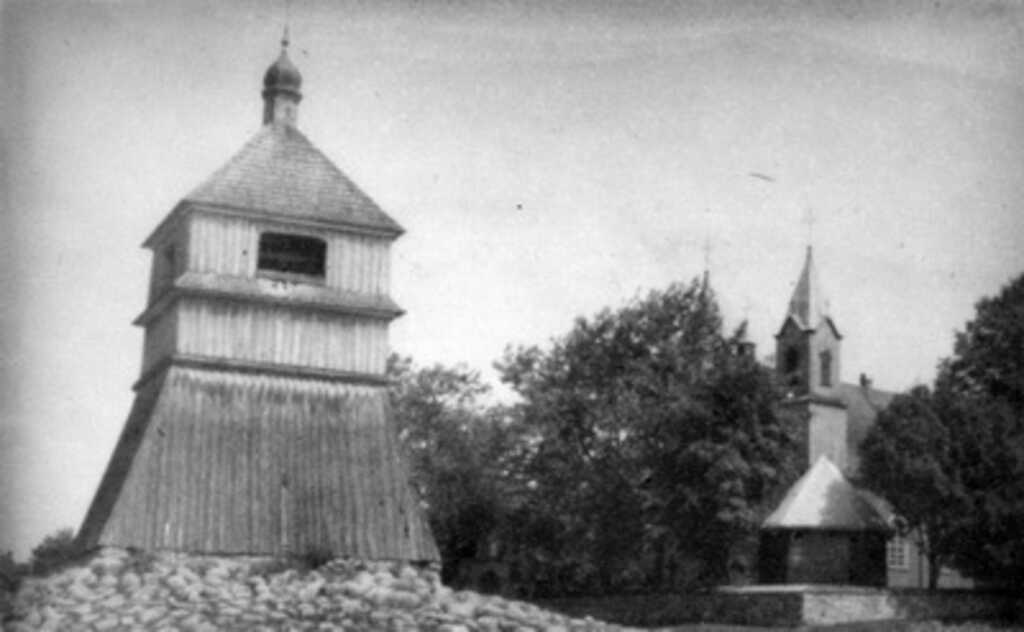
The church's architectural elements are distinctive. The building has a cruciform plan, twin towers, and a churchyard fence of stone masonry. A wooden churchyard chapel also serves as a bell tower. The interior is dominated by five Baroque altars, reflecting the skill of Lithuanian Baroque artists. Especially worthy of attention is the high altar with its image of Our Lady of Trakai.
The church's organ has an intriguing history. The first organ was built in 1796, but the authentic instrument has not survived. A new organ was installed in 1893 by the master Friedrich Weissenborn of Jēkabpils. Unfortunately, neither the bells nor the drums that supplemented the instrument have survived to our day.
The Church of the Holy Name of the Blessed Virgin Mary at Rozalimas is not only a house of prayer but also a piece of cultural heritage, vividly recounting past times and people's determination to preserve their faith and traditions.
The church's history begins in 1765, when it was built by the landowners Rozalija Drabišienė-Bielozaraitė and Adomas Drabišius. This was a period when wooden sacred architecture traditions predominated in Lithuania. As early as 1771 the church was granted 8 valakas of land together with the villages of Gikoniai and Janoniai, and a priest soon began serving here. A couple of years later, in 1773, a parish was established.
In 1794 a new wooden church was built, which can still be seen today. It bears witness to the construction techniques and aesthetic choices of past periods. In 1797 the elder of Paežeriai granted an additional valakas of land to the Rozalimas chaplaincy, thereby strengthening the parish's material base. Over the years the church was served by various parish priests who contributed to its upkeep. For example, Titas Gedvila (parish priest 1885–1893) repaired the churchyard fence and installed the organ, while Konstantinas Olšauskas (1900–1905) repainted the church, established an almshouse for the elderly and promoted temperance.
Interestingly, in 1930 a large fire destroyed the wooden bell tower – as many as three bells melted, though one new bell was cast from them. This symbolises the parish's resilience and its ability to rebuild what was lost. During the Soviet period the church suffered persecution: the priest Petras Kuzmickas was arrested in 1947 and sentenced to imprisonment in Vorkuta, from where he did not return until 1953.
The church's architectural elements are distinctive. The building has a cruciform plan, twin towers, and a churchyard fence of stone masonry. A wooden churchyard chapel also serves as a bell tower. The interior is dominated by five Baroque altars, reflecting the skill of Lithuanian Baroque artists. Especially worthy of attention is the high altar with its image of Our Lady of Trakai.
The church's organ has an intriguing history. The first organ was built in 1796, but the authentic instrument has not survived. A new organ was installed in 1893 by the master Friedrich Weissenborn of Jēkabpils. Unfortunately, neither the bells nor the drums that supplemented the instrument have survived to our day.
The Church of the Holy Name of the Blessed Virgin Mary at Rozalimas is not only a house of prayer but also a piece of cultural heritage, vividly recounting past times and people's determination to preserve their faith and traditions.
Gallery and Resources
Archive captions are shown in Lithuanian.
Rozalimo varpinė ir bažnyčia.